Why in news?
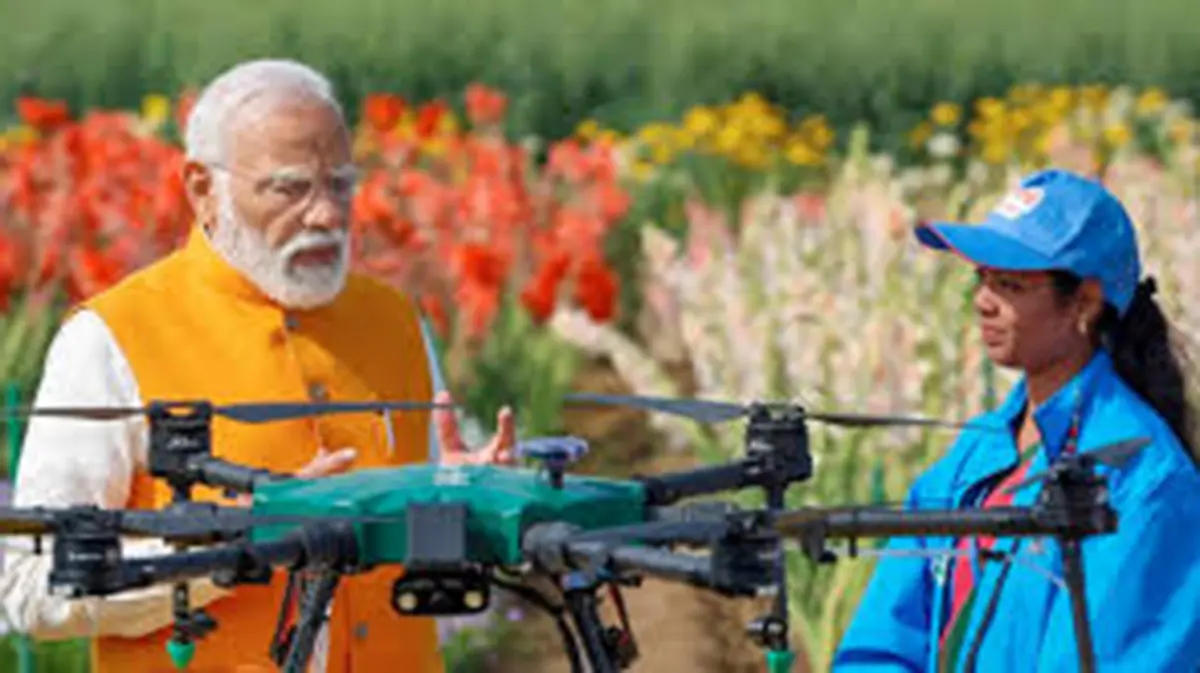
On 29 March 2026 the Union Cabinet approved the Namo Drone Didi scheme with an outlay of ₹1,261 crore for 2023‑24 to 2025‑26. The programme aims to provide 15,000 drones to women self‑help groups (SHGs), enabling them to offer agricultural services and create rural entrepreneurship.
Background
India has been promoting drone use in agriculture for tasks such as fertiliser spraying, seed broadcasting and crop monitoring to improve efficiency and reduce farmers’ exposure to chemicals. The Namo Drone Didi scheme builds on earlier initiatives like the Drone Prerana project and Drone Shakti programme. It seeks to empower SHGs—especially women—by combining technology with livelihood support.
Key features
- Financial assistance: The government will fund 80 percent of the drone cost (up to ₹8 lakh per drone), with the remaining amount financed through bank loans or SHG contributions.
- Training and support: Each beneficiary SHG will nominate one pilot and one assistant to receive training in drone operation, maintenance and basic entrepreneurship. The package includes the drone, spare batteries, sprayer equipment and maintenance contracts.
- Scale: About 500 drones have already been supplied in pilot districts. The approved plan envisages distributing up to 15,000 drones across India by 2025‑26, prioritising regions with high agricultural activity.
Expected benefits
- Enhances precision agriculture by applying inputs uniformly and reduces health risks associated with manual spraying.
- Creates income‑generating opportunities for women, fostering rural entrepreneurship and financial independence.
- Facilitates adoption of modern technology and improves productivity, potentially increasing crop yields and lowering input costs.
Source: Press Information Bureau · Indian Chemical News · Global Agriculture