

Why in news?
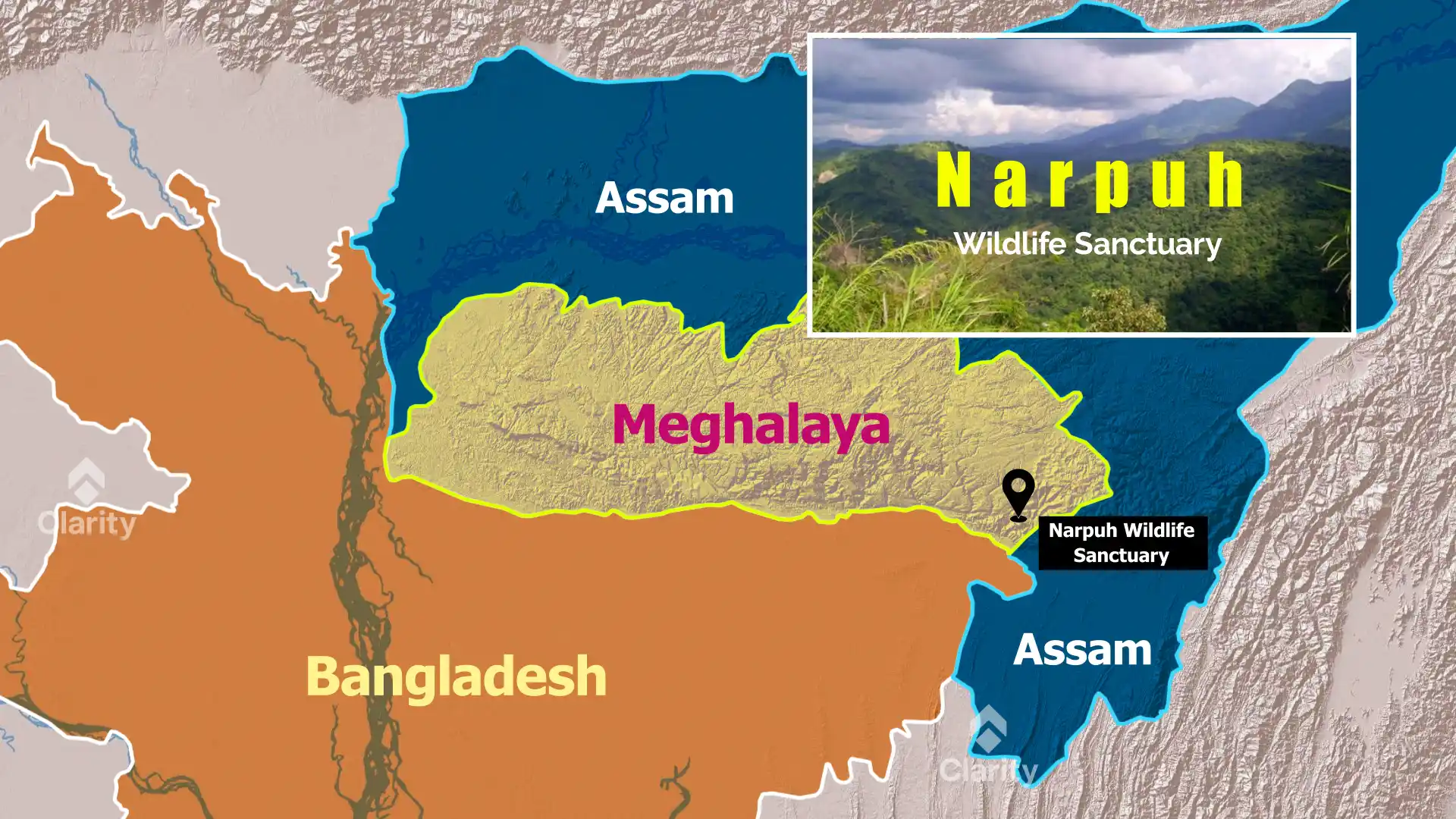
Narpuh Wildlife Sanctuary in Meghalaya’s East Jaintia Hills has attracted attention due to concerns about limestone mining near its eco‑sensitive zone and the need for updated management plans. Conservationists warn that unchecked development could threaten the sanctuary’s rich biodiversity.
Background
Declared a wildlife sanctuary in 2014, Narpuh spans about 59.9 square kilometres of semi‑evergreen and evergreen forests along the Indo‑Myanmar biodiversity hotspot. Rivers such as the Lukha and Myntdu flow through its undulating terrain. The sanctuary provides habitat for many species including western hoolock gibbons, sambar, barking deer, slow lorises, black bear, leopards, hornbills and numerous orchids and epiphytic plants.
Current issues
- Mining threat: Local organisations have opposed a proposed expansion of limestone mining near Brishyrnot village. The proposed site lies barely 250 metres from the sanctuary’s eco‑sensitive zone and could pollute the Lukha River. Activists argue that environmental approvals were granted without proper consultation and that mining would destroy forests and livelihoods.
- Management challenges: A recent evaluation of Meghalaya’s protected areas rated Narpuh as “good” but pointed out that its management plan had expired and needs updating. The report called for better tourism facilities, education programmes and community involvement to ensure long‑term protection.
- Illegal activities: Timber extraction, shifting cultivation and hunting continue to exert pressure on the sanctuary. Strengthening patrolling and involving local villagers in eco‑tourism can help counter these threats.
Importance of Narpuh
- Ecological corridor: The sanctuary forms part of a larger forested landscape linking the Himalayas with the Indo‑Myanmar ranges. It allows species to migrate and maintain genetic diversity.
- Community stewardship: Many villages around Narpuh practise traditional forest protection. Recognising and supporting community conservation initiatives are crucial for the sanctuary’s success.
- Eco‑tourism potential: With its tall canopies, waterfalls and birdlife, Narpuh offers opportunities for low‑impact tourism that can generate income for locals while creating awareness about conservation.
Conclusion
Narpuh Wildlife Sanctuary showcases Meghalaya’s natural splendour but faces mounting pressures from mining and development. A robust management plan, strict environmental safeguards and community‑led conservation can ensure that this biodiverse haven thrives for future generations.
Sources: HubNetwork