

Why in news?
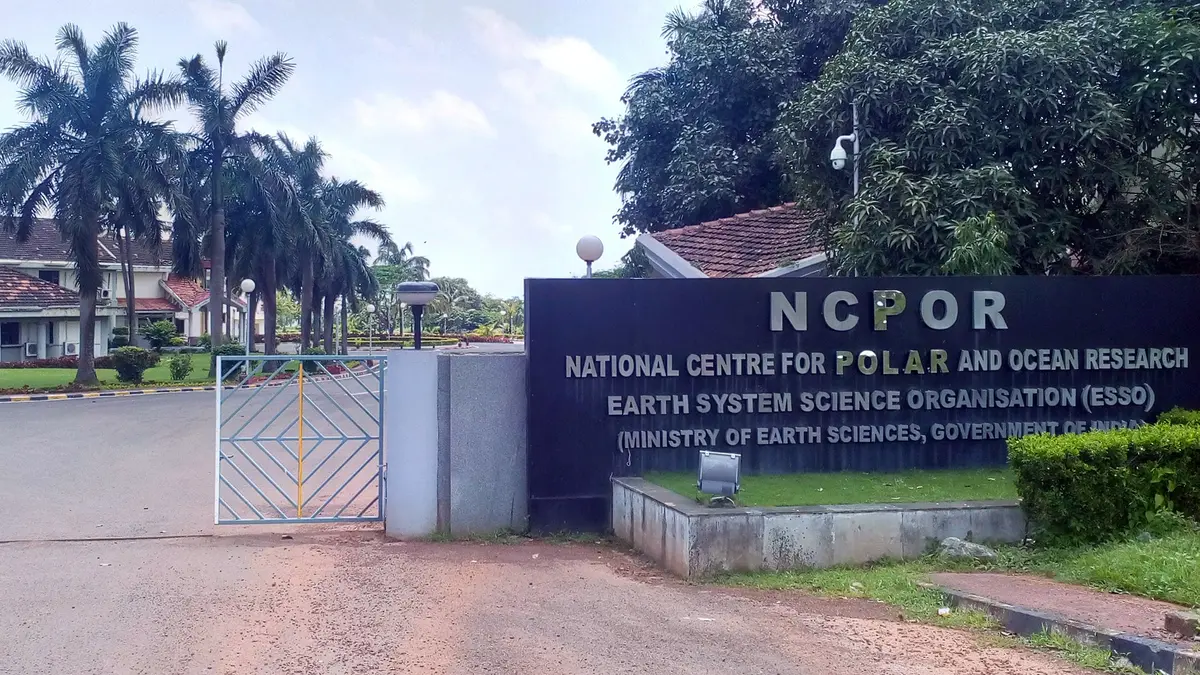
The National Centre for Polar and Ocean Research hosted an international ocean and polar science meeting in Goa. The eighth Brazil, Russia, India, China and South Africa (BRICS) working-group session ran from 12 to 14 August 2026. It formed part of India’s BRICS presidency. Participants also considered projects for future fieldwork and data exchange across very different ocean regions.
Scientists and officials from eight member countries discussed joint research, capacity building and shared infrastructure. They represented Brazil, China, Egypt, Indonesia, Russia, South Africa, the United Arab Emirates and India. The agenda covered future cooperation in ocean exploration and polar studies. NCPOR organised the meeting under the Ministry of Earth Sciences.
What NCPOR is
The National Centre for Polar and Ocean Research is an autonomous research institution. The Government established it on 25 May 1998 under the former Department of Ocean Development. It later came under the Ministry of Earth Sciences. The centre was earlier called the National Centre for Antarctic and Ocean Research. Its headquarters are at Headland Sada in Goa.
NCPOR coordinates India’s polar and Southern Ocean research. It plans expeditions, supports scientists and manages difficult logistics. The centre also conducts marine geoscience and resource studies. Its work includes surveys in India’s Exclusive Economic Zone and extended continental shelf. Deep-sea drilling and studies of gas hydrates form other parts of its mandate.
Why Goa is a suitable base
Goa lies on India’s west coast beside the Arabian Sea. Its long maritime tradition and port access support ocean institutions. NCPOR occupies a plateau near Vasco da Gama and Mormugao Harbour. The location connects laboratories with ships, airports and research partners. It is still thousands of kilometres from the polar field sites it manages.
Polar logistics usually connect India with gateway ports in other countries. Antarctic teams often travel through Cape Town in South Africa. Arctic work uses international facilities around Svalbard in Norway. NCPOR coordinates supplies, personnel and data across these distant routes. Such research therefore depends on diplomacy as much as scientific equipment.
India’s Antarctic and Arctic presence
NCPOR maintains Maitri and Bharati, India’s active year-round Antarctic stations. Maitri stands in the Schirmacher Oasis of Dronning Maud Land. Bharati lies about 3,000 kilometres east in the Larsemann Hills near Prydz Bay. Their wide separation allows research across different Antarctic settings. Both stations need year-round power, communications and environmental management.
Dakshin Gangotri was India’s first Antarctic station. Ice eventually buried it, and regular operation ended by 1990–91. Maitri became active in 1989. Bharati was commissioned in March 2012. In the Arctic, India operates Himadri at Ny-Ålesund in Norway’s Svalbard archipelago. NCPOR also supports Himalayan research through the Himansh station.
What the BRICS working group does
The Working Group on Ocean and Polar Science and Technology began in 2018. It promotes scientific exchange, joint research and capacity building. Seven meetings preceded the Goa session. India had hosted the third meeting during its 2020 presidency. Brazil led the seventh session in 2025 and advanced a cooperation roadmap through 2030.
Ocean and polar science require expensive ships, sensors and remote stations. Shared use can reduce duplication and widen access. Joint cruises also allow consistent measurements across borders. Training can help newer members build technical capacity. However, data standards and publication rules must be agreed before collection. Clear governance prevents later disputes over access or credit.
Scientific areas for cooperation
The Goa agenda included ocean exploration, polar processes and future joint programmes. Earlier group discussions covered marine biodiversity, coastal systems and deep-sea environments. Climate modelling and disaster prediction are also relevant. The oceans and polar regions exchange heat, carbon and freshwater. Changes there can influence weather and sea level far away.
Joint observations can fill major geographic gaps. Southern Ocean measurements improve understanding of heat and carbon uptake. Arctic observations track rapid warming and sea-ice decline. Coastal research supports fisheries and disaster resilience. Deep-sea studies require special care because ecosystems recover slowly. Scientific cooperation should therefore include environmental safeguards and open baseline data.
Why polar science matters to India
India is far from both geographic poles, but their changes still affect the country. Antarctic ice loss contributes to global sea-level rise. Ocean circulation connects polar water with the Indian Ocean. Arctic warming may influence atmospheric patterns, although specific monsoon links remain under study. Long records help researchers distinguish natural variability from lasting change.
India’s long coastline and island territories face sea-level and storm risks. Better global observations can improve climate projections for those areas. Polar ice also stores a record of past atmospheres. Ice cores, sediments and biological samples reveal environmental change across long periods. This evidence can strengthen national adaptation planning when used with regional observations.
Science, strategy and rules
Polar regions also carry strategic and resource interests. Antarctica is governed through the Antarctic Treaty System, which protects peaceful scientific cooperation. Environmental rules restrict mineral activities and manage human impacts. The Arctic includes national jurisdictions and international waters. Research partnerships should respect these different legal settings. Science should not become a cover for unsupported territorial claims.
BRICS now contains countries with very different polar capacities and interests. Shared projects need transparent objectives and voluntary participation. Sensitive technology and data may require agreed limits. At the same time, climate information should serve the wider public. Practical cooperation works best when it produces measurable cruises, datasets and training rather than broad declarations.
Cooperation must become usable science
The Goa meeting created a forum for planning joint work. Its value will depend on funded projects, shared standards and accessible results. Ocean and polar systems cross political boundaries. Reliable collaboration can improve both climate knowledge and disaster preparedness.
Conclusion
NCPOR’s hosting role reflects India’s mature polar and ocean programme. The centre connects Goa with Antarctica, the Arctic and the Southern Ocean. BRICS cooperation can widen ship access, training and observation coverage. These gains require detailed scientific plans and clear data rules. A working group should ultimately be judged by research delivered.
The meeting also reminds readers that polar science has direct national relevance. Ice, oceans and climate form one connected system. Better observations can improve projections for India’s coasts, fisheries and weather risks. Cooperation should remain peaceful, open and environmentally responsible. That approach gives scientific diplomacy its strongest public purpose.