

Why in news?
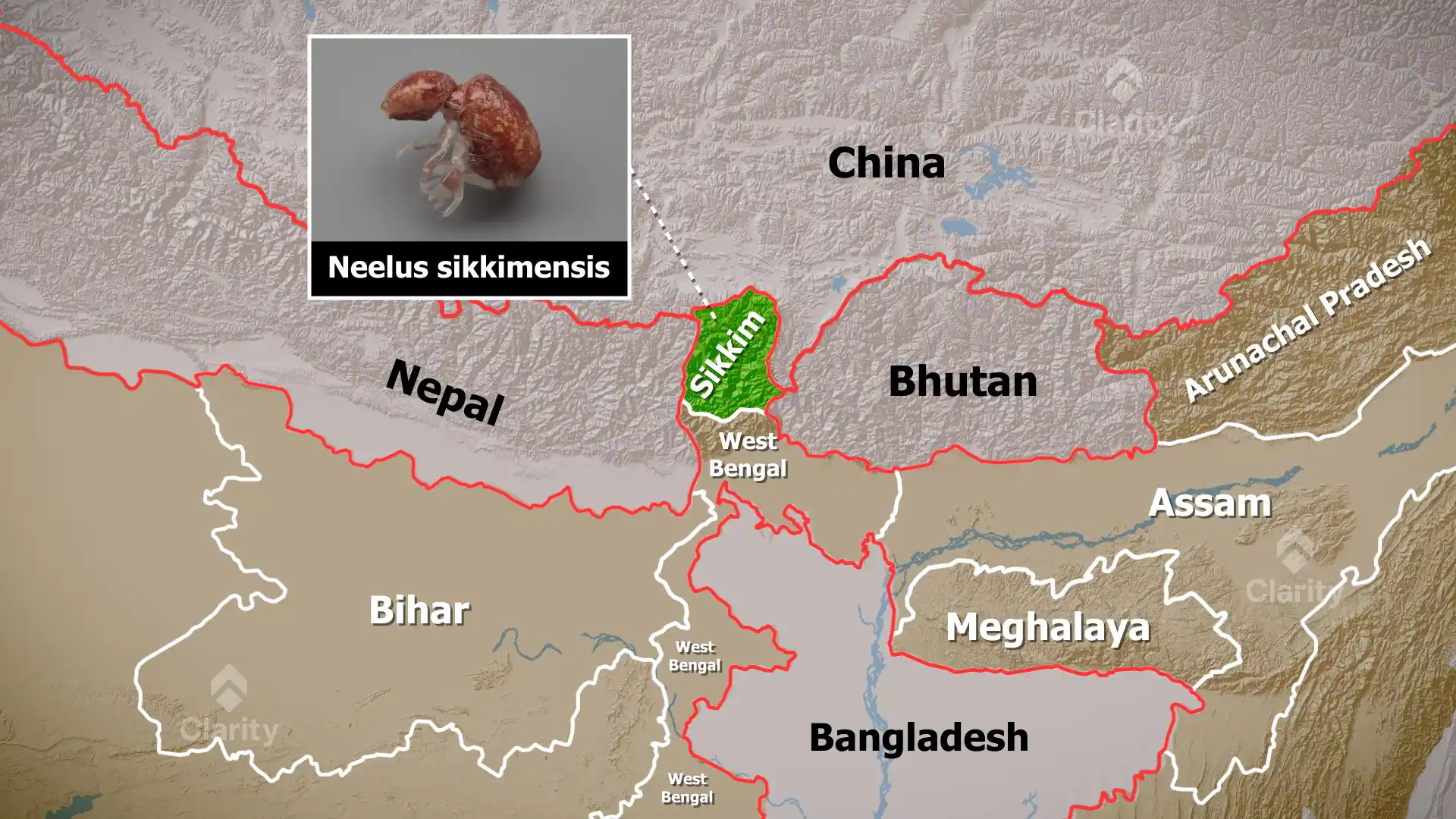
Scientists from the Zoological Survey of India discovered a tiny springtail species named Neelus sikkimensis near a hot spring in North Sikkim. It is the first time the genus Neelus has been recorded in India, raising the global count of species in this genus to eight.
Background
What are springtails? Springtails are minute, wingless hexapods belonging to the order Collembola. Measuring just a few millimetres, they live in soil, leaf litter, moss and decaying wood. They feed on fungi, bacteria and decomposing plant material, helping to recycle nutrients and maintain soil health.
- Discovery site: The species was collected from the soil near the Turum hot spring at an altitude of about 2,700 metres in North Sikkim. Researchers used a Tullgren funnel, a device that gently dries the sample so that tiny organisms move downward into a collecting container.
- Distinctive features: Neelus sikkimensis measures only 0.3–0.5 mm long. It has a saw‑like hair on its upper lip (labrum) and a curved bristle on its mouthparts that set it apart from its relatives. The body is slender and adapted to life in moist, mossy microhabitats.
- Genus significance: Prior to this discovery, only seven species of Neelus were known worldwide, mainly from Europe and East Asia. The Indian specimen thus extends the genus’s range into the Himalayas.
- Ecological role: Springtails help decompose organic matter and serve as bio‑indicators of soil quality. Their diversity reflects the health of high‑altitude ecosystems, which are vulnerable to climate change.
Significance
- Biodiversity documentation: New species discoveries highlight the rich, often overlooked diversity of micro‑arthropods in India.
- Soil health awareness: Understanding the roles of small organisms like springtails is essential for conserving soil fertility and ecosystem services.
- Research opportunities: The find encourages further taxonomic and ecological studies in the Himalayas, a global biodiversity hotspot.
Source: TELE