

Why in news?
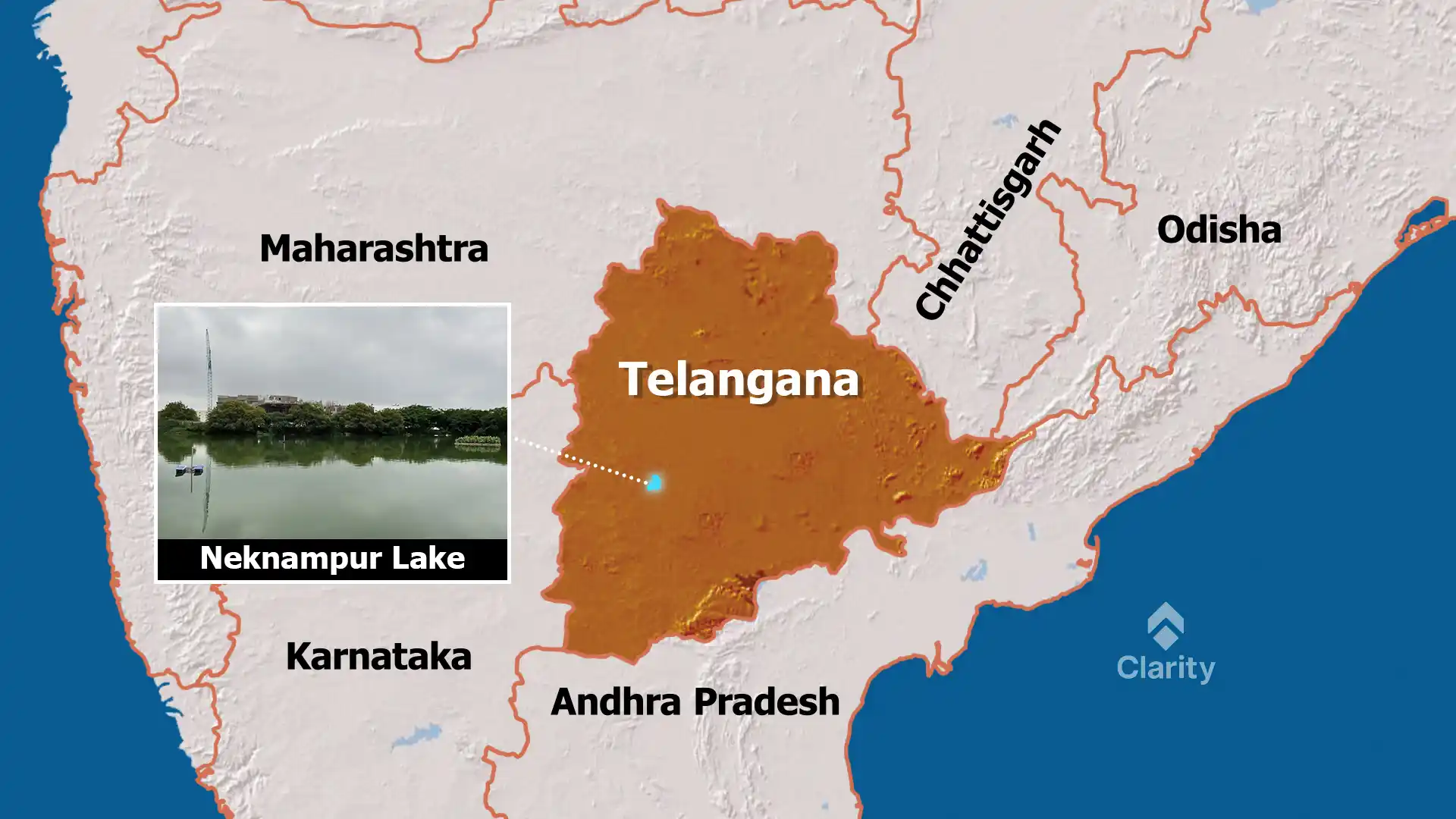
During the Telangana International Hot Air Balloon Festival held in January 2026, social media posts claimed that a balloon made an emergency landing near Neknampur Lake in Hyderabad. Organisers clarified that the landing was a scheduled procedure carried out by licensed pilots and that no mishap occurred. This brought attention back to the lake and its remarkable restoration using floating wetlands.
Background
Neknampur Lake, also known as Ibrahim Bagh Cheruvu, is an approximately 100‑acre water body on the outskirts of Hyderabad. It was created in the late 16th century during the rule of Ibrahim Qutb Shah and later expanded by Abdullah Qutb Shah. Over time, urban development and sewage inflow polluted the lake. In 2016, the NGO Dhruvansh partnered with the Hyderabad Metropolitan Development Authority (HMDA) to clean and rejuvenate it.
Restoration efforts
- Floating Treatment Wetland (FTW): In February 2018, a 3,000 square‑foot floating raft made of bamboo, empty bottles and mesh was launched. It holds around 3,500 saplings of wetland plants such as vetiver, citronella, and cattails. The plants absorb excess nutrients and pollutants, acting as a natural bio‑filter.
- Integrated approach: Before installing the FTW, volunteers removed tonnes of garbage and hyacinth. Aerators and fountains were installed to improve oxygen levels. The FTW uses harvested hyacinth as compost, creating a circular system.
- Biodiversity revival: The lake now hosts greater numbers of fish, migratory birds and native plants. Local residents enjoy boating and scenic views at Chinna Cheruvu, while Pedda Cheruvu remains under restoration.
- Recognition: NITI Aayog and the Centre for Science and Environment have cited Neknampur’s FTW as a model for urban lake restoration.
Significance
- Low‑cost solution: Floating wetlands offer a low‑maintenance method to treat sewage and revive polluted water bodies without expensive equipment.
- Community participation: The project demonstrates how civil society, government and residents can work together for ecological restoration.
- Urban resilience: Restored lakes improve groundwater recharge, mitigate urban flooding and provide recreational spaces.
Conclusion
Neknampur Lake has transformed from a neglected sewage sink into a vibrant urban oasis thanks to floating treatment wetlands and sustained community action. The recent hot‑air balloon festival highlighted the area’s resurgence, reminding citizens of the importance of preserving urban lakes.
Sources: TH