

Why in news?
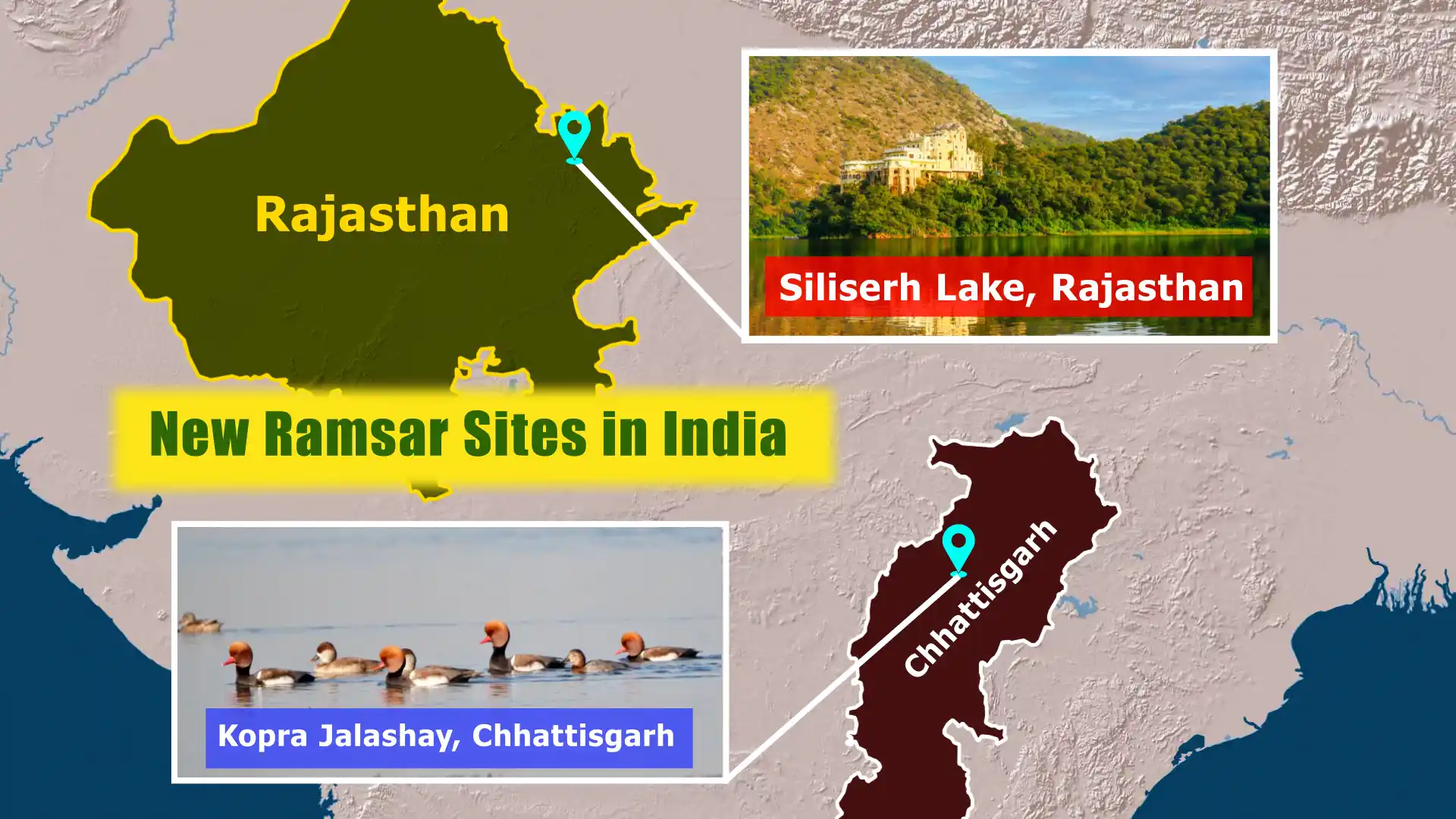
Two wetlands in India have recently been recognised as Ramsar Sites—Siliserh Lake in Rajasthan and the Kopra Reservoir near Bilaspur in Chhattisgarh. The international designation honours wetlands of global importance and obliges governments to protect and manage them wisely. With these additions India now has more than ninety Ramsar wetlands, underlining the country’s commitment to conservation.
Background
The Ramsar Convention, signed in 1971 in the Iranian city of Ramsar, is a global treaty for the conservation and sustainable use of wetlands. India joined the convention in 1982 and has since been identifying lakes, marshes and reservoirs that support rich biodiversity. A Ramsar Site must meet criteria such as supporting endangered species, hosting large numbers of birds or providing critical ecosystem services like groundwater recharge and flood control. Once designated, the wetland receives international attention and technical support for conservation.
About Siliserh Lake
- Historical reservoir: Siliserh Lake was built in 1845 by Maharaja Vinay Singh of Alwar. The ruler dammed a tributary of the River Ruparel to create a large freshwater lake that could supply drinking water to the city of Alwar and irrigate nearby farms.
- Location and size: The lake lies in Rajasthan’s Alwar district, covering about seven square kilometres at the foothills of the Aravalli range. Its picturesque setting has made it a popular picnic spot and a backdrop for films.
- Biodiversity hotspot: Over the years Siliserh has become a haven for wildlife. It supports hundreds of resident and migratory birds such as herons, cormorants, kingfishers and spot‑billed ducks. Fish, turtles and small mammals also thrive here. The surrounding forests shelter leopards, sambar deer and nilgai.
- Benefits for people: Besides supplying water, the lake moderates the local climate, recharges groundwater and offers livelihoods through fishing and tourism. Ramsar status will attract funds for pollution control, habitat restoration and eco‑tourism initiatives.
About Kopra Reservoir
- First Ramsar site of Chhattisgarh: The Kopra Reservoir, also known locally as Kopra Jalashay, is situated in the Bilaspur district of Chhattisgarh. It was built to store water for irrigation and supply drinking water to nearby villages. Its recognition as the state’s first Ramsar Site showcases Chhattisgarh’s rich wetland heritage.
- Ecological importance: The reservoir supports aquatic plants, fish, amphibians and birds. During the winter months it hosts migratory species such as bar‑headed geese and open‑billed storks. Wetlands like Kopra provide natural flood control and help recharge local aquifers.
- Social and economic role: Surrounding communities rely on the reservoir for fishing, irrigation and drinking water. Ramsar designation is expected to boost eco‑tourism and create new livelihood opportunities through birdwatching tours and community‑managed homestays.
Significance
- Conservation commitment: By recognising Siliserh Lake and Kopra Reservoir, India strengthens its network of protected wetlands. The international tag helps secure resources for management and raises awareness about the need to protect aquatic ecosystems.
- Supporting biodiversity: Wetlands are among the most productive habitats on earth. They provide food, shelter and breeding grounds for numerous species. Ramsar status encourages scientific research and community participation in monitoring wildlife.
- Sustainable livelihoods: Healthy wetlands support fisheries, agriculture and tourism. Involving local residents in conservation can improve their incomes while preserving natural heritage.
Conclusion
The addition of Siliserh Lake and Kopra Reservoir to the Ramsar list underscores the value of wetlands not just for birds and fish but for people as well. Protecting these ecosystems will maintain water security, support livelihoods and preserve cultural heritage for future generations.
Source: Times of India · Hindustan Times · TOI