

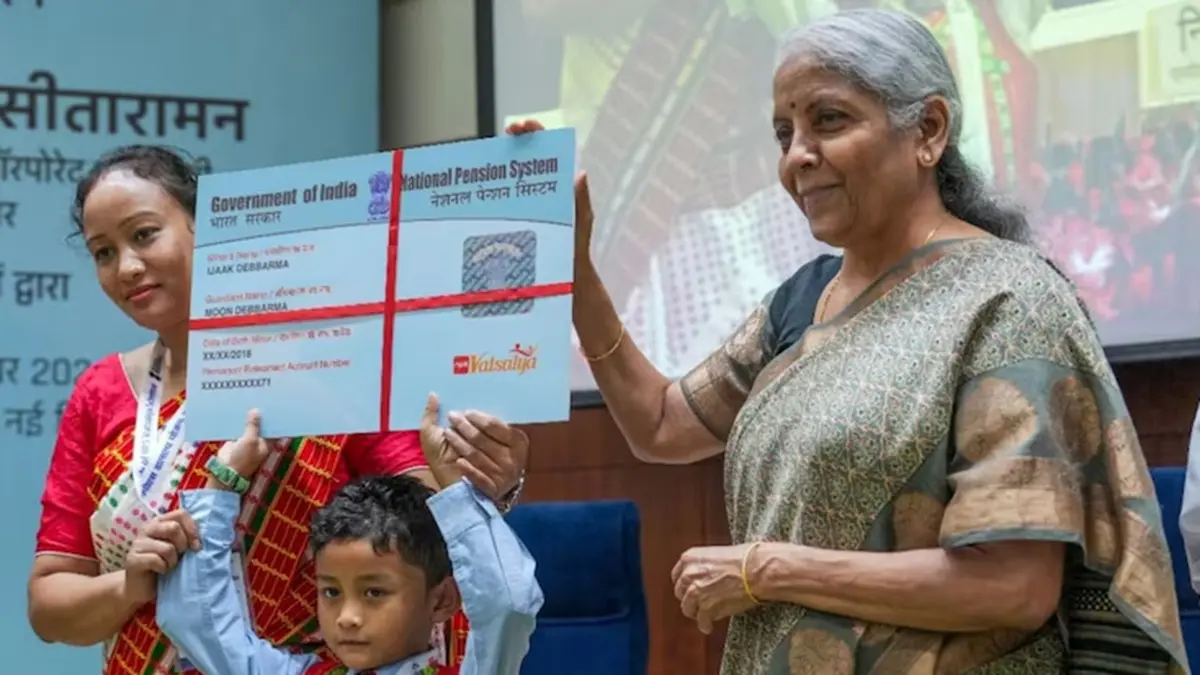
Why in news?
The Pension Fund Regulatory and Development Authority (PFRDA) released guidelines for the NPS Vatsalya scheme in 2025, and by early 2026 over 1.3 lakh children had been enrolled. The scheme, announced in the Union Budget 2024–25, allows parents and guardians to build a long‑term pension corpus for minors, encouraging a culture of saving from a young age.
Background
NPS Vatsalya is part of India’s National Pension System. It targets children below 18 years of age, including those who are non‑resident Indians or Overseas Citizens of India. The account is opened in the minor’s name but operated by a parent or legal guardian until the child attains adulthood. The scheme aims to provide financial security and teach the value of long‑term investment.
Key features
- Eligibility: Any Indian citizen or NRI/OCI can open an NPS Vatsalya account for a child under 18. A guardian can open accounts for multiple children.
- Contributions: To open an account, a minimum initial deposit (around ₹1,000) is required. Subsequent contributions are flexible with no upper limit. Payments can be monthly, quarterly or in lump sums, and the guardian may choose among registered pension funds.
- Partial withdrawal: After the account has been active for at least three years, up to 25 percent of the contributions (excluding returns) can be withdrawn for specific purposes such as education or treatment of a serious illness of the child.
- Transition at adulthood: When the beneficiary turns 18, the account remains active but requires a fresh know‑your‑customer (KYC) process. The young adult may continue under the standard NPS Tier‑I scheme, exit and withdraw up to 60 percent of the corpus (with the remainder used to purchase an annuity), or transfer the funds to a different pension account.
- Tax benefits: Contributions qualify for deductions under Sections 80C and 80CCD(1B) of the Income Tax Act, allowing an additional ₹50,000 deduction over and above the ₹1.5 lakh limit. Investment returns are market‑linked, and tax applies only when money is withdrawn.
- Financial education: The scheme includes initiatives to train Anganwadi and ASHA workers and other community volunteers to spread awareness about retirement savings. It seeks to instil saving habits across generations and promote inclusivity in the pension system.
Significance
By creating a pension account in childhood, NPS Vatsalya harnesses the power of compounding over decades. It helps families secure a retirement corpus for their children, offers tax incentives and spreads financial literacy. The flexibility in contributions and withdrawal rules makes it attractive for households with varying incomes. However, guardians should choose investment options based on risk tolerance and regularly review the account once the child becomes an adult.
Source: Press Information Bureau