
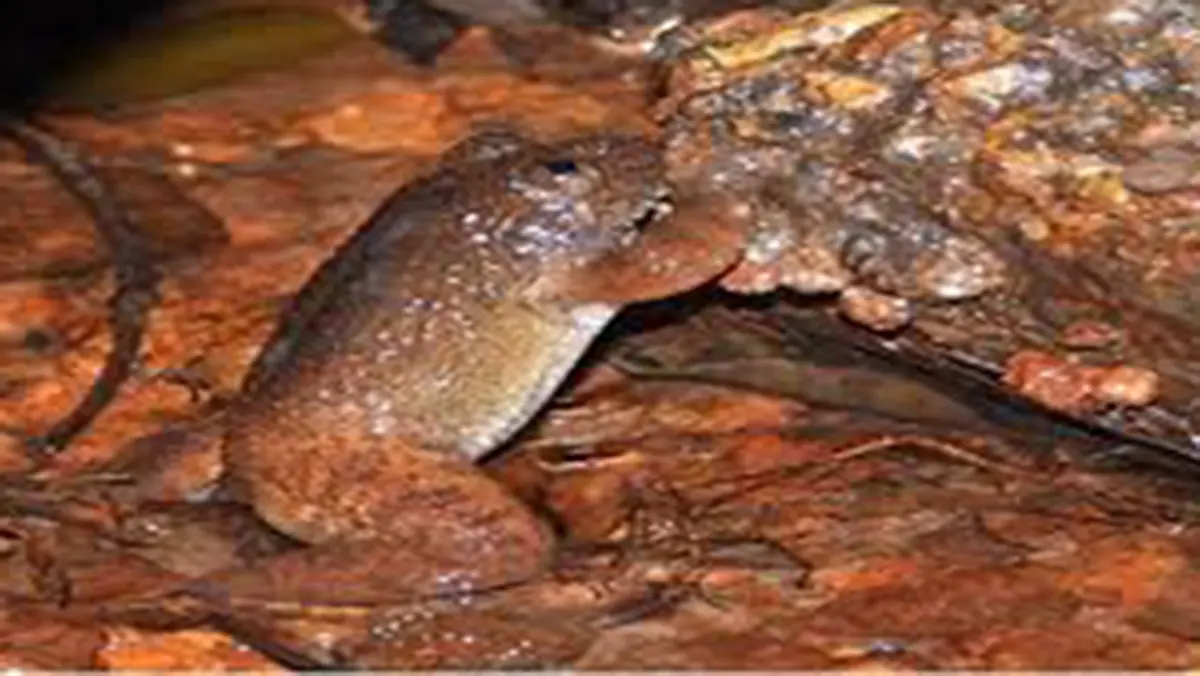
Why in news?
Researchers announced the discovery of Nyctibatrachus kali, a cryptic species of night frog, from the Castlerock region of the Kali Tiger Reserve in Karnataka. The finding, made with the help of forest frontline staff, adds to India’s growing list of endemic amphibians and highlights the role of local communities in scientific research.
Background
The genus Nyctibatrachus comprises small frogs that are most active at night and inhabit fast‑flowing streams in the Western Ghats. Their dark colours and secretive habits make them difficult to spot. Scientists first noticed the distinct call of this frog during a biodiversity survey in the Kali Tiger Reserve. Through detailed morphological measurements, call recordings and genetic analysis, they established that it was a new species.
Characteristics of Nyctibatrachus kali
- Appearance: The frogs are small, about 26–28 mm long, with brownish skin and granular warts. They resemble the closely related N. kumbara but differ subtly in finger lengths and toe webbing.
- Unique calls: Male frogs produce two types of advertisement calls – a low‑frequency “knock” resembling wood‑chopping and a high‑frequency trill. These calls help females locate mates and distinguish species.
- Genetics: DNA sequencing revealed more than 5 percent divergence in 16S rRNA and over 10 percent in the ND1 gene from their nearest relatives, confirming species status.
- Habitat: The frogs live near clear, fast‑flowing hill streams in evergreen forests. Their range appears restricted to the Castlerock area of Kali Tiger Reserve, making them vulnerable to habitat disturbance.
Why this discovery matters
Nyctibatrachus kali is the 35th species of night frog described from India. Amphibians globally are declining due to habitat loss, pollution and climate change. Discovering and describing new species is essential for conservation planning. The discovery also underscores the invaluable contributions of forest guards: a forest watcher first recorded the frog’s call, and another helped researchers locate specimens. Engaging local communities fosters stewardship of natural heritage.

