

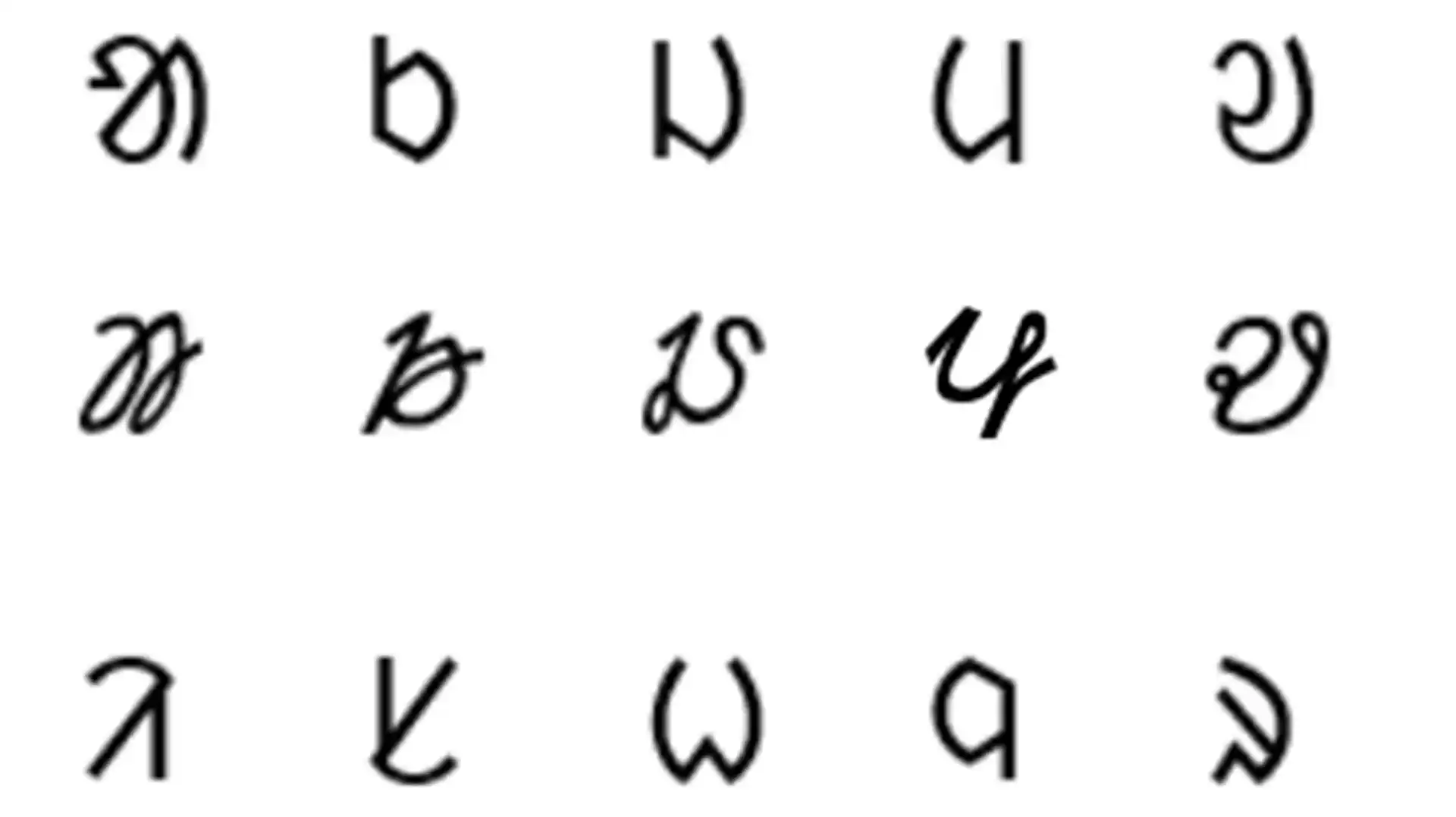
Why in news?
On 29 December 2025, President Droupadi Murmu attended the 22nd Santali “Parsi Maha” (language day) in Jamshedpur and celebrated 100 years of the Ol Chiki script. She urged people to cherish their mother tongues and released a copy of the Constitution of India translated into Santali using Ol Chiki. The event marked a milestone for the language and recognised the contributions of its inventor, Pandit Raghunath Murmu.
Background
Ol Chiki, also known as Ol Cemet’ or the Santali alphabet, is the official script for the Santali language, a Munda language spoken by about seven million people across Jharkhand, Odisha, West Bengal, Bihar and neighbouring countries. Unlike most Indian scripts, Ol Chiki is a true alphabet in which vowels and consonants have equal status. Pandit Raghunath Murmu created it in 1925 and first publicised it in 1939 to give the oral Santali language a written form.
Features of the script
- Thirty letters: Ol Chiki consists of 30 basic letters whose shapes are inspired by everyday objects or actions. Each letter’s name is a Santali word, and the shape often reflects the meaning — for example, the letter for /l/ resembles a hand holding a pen.
- Styles: There are two styles: the Chapa or print hand used in publications and the Usaraà or cursive hand used for handwriting.
- Writing direction: The script is written left‑to‑right. It is unicameral, meaning there is no distinction between uppercase and lowercase.
- Cultural significance: Before Ol Chiki, Santali was written using Bengali, Odia, Devanagari and Roman scripts, none of which captured its sounds accurately. Ol Chiki became a symbol of Santal identity and pride, promoting literacy and preserving folklore and traditions. The language was added to the Eighth Schedule of the Indian Constitution in 2003.
Conclusion
The centenary celebration of Ol Chiki highlights the importance of linguistic diversity and indigenous knowledge. Recognising and supporting scripts like Ol Chiki ensure that tribal languages continue to thrive and that future generations remain connected to their heritage.
Source: Ol Chiki Script (Wikipedia)