

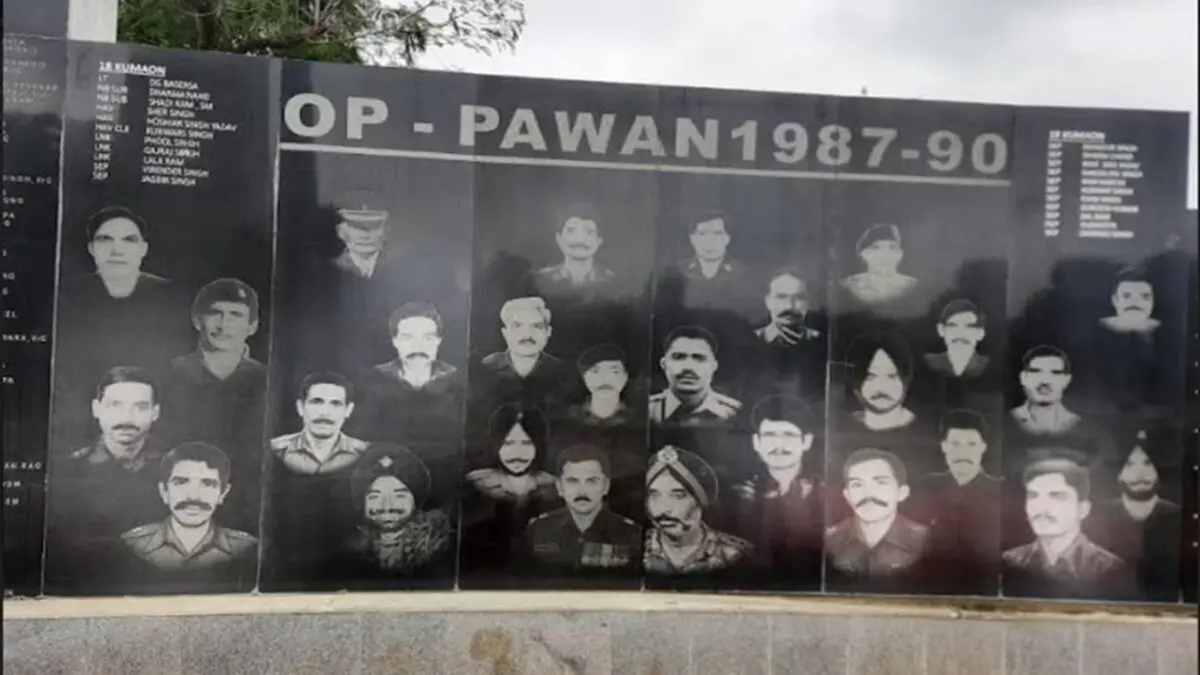
Why in news?
The Indian Army held its first official commemoration of Operation Pawan at the National War Memorial in New Delhi. Veterans and families gathered alongside senior officers to honour the soldiers who served in the mission. The ceremony marked a long‑awaited recognition for the more than 1,100 Indian troops who died during peacekeeping operations in Sri Lanka in the late 1980s.
Background
Operation Pawan was launched in July 1987 after India and Sri Lanka signed the Indo‑Sri Lanka Accord. Under the agreement, India deployed nearly 100,000 troops from the Indian Peace Keeping Force (IPKF) to disarm Tamil militant groups, primarily the Liberation Tigers of Tamil Eelam (LTTE), and stabilise the island nation. Initially envisaged as a peacekeeping mission, it quickly turned into a bloody counter‑insurgency campaign as the LTTE resisted disarmament.
Key events
- Battle of Jaffna: In October 1987 IPKF forces captured the LTTE stronghold of Jaffna in a fierce battle that resulted in heavy casualties on both sides.
- Casualties: By the time the mission ended in March 1990, 1,171 Indian soldiers had been killed and over 3,500 wounded. Major Ramaswamy Parameswaran was posthumously awarded the Param Vir Chakra for leading a bayonet charge during the conflict.
- Withdrawal: Political changes in India and Sri Lanka and mounting casualties led to the withdrawal of the IPKF. Sri Lankan forces later resumed the fight against the LTTE, which continued for two more decades.
Commemoration
For decades the mission was rarely acknowledged in India’s official military narrative. On 25 November 2025, Army Chief General Upendra Dwivedi led the first formal remembrance ceremony. Veterans welcomed the gesture as overdue recognition of their sacrifices and a step toward healing for families. The event also fostered discussion about the complexities of peacekeeping operations and the need to support troops deployed in politically sensitive conflicts.
Sources: TH ·