

Why in news?
On 19 January 2026 around 20,000 residents of Maharashtra’s Palghar district marched nearly five kilometres to the district Collector’s office, demanding the cancellation of the proposed Vadhavan port and several allied projects. The protest, organised by local fisherfolk and tribal unions, accused the government of ignoring environmental and social concerns.
Background
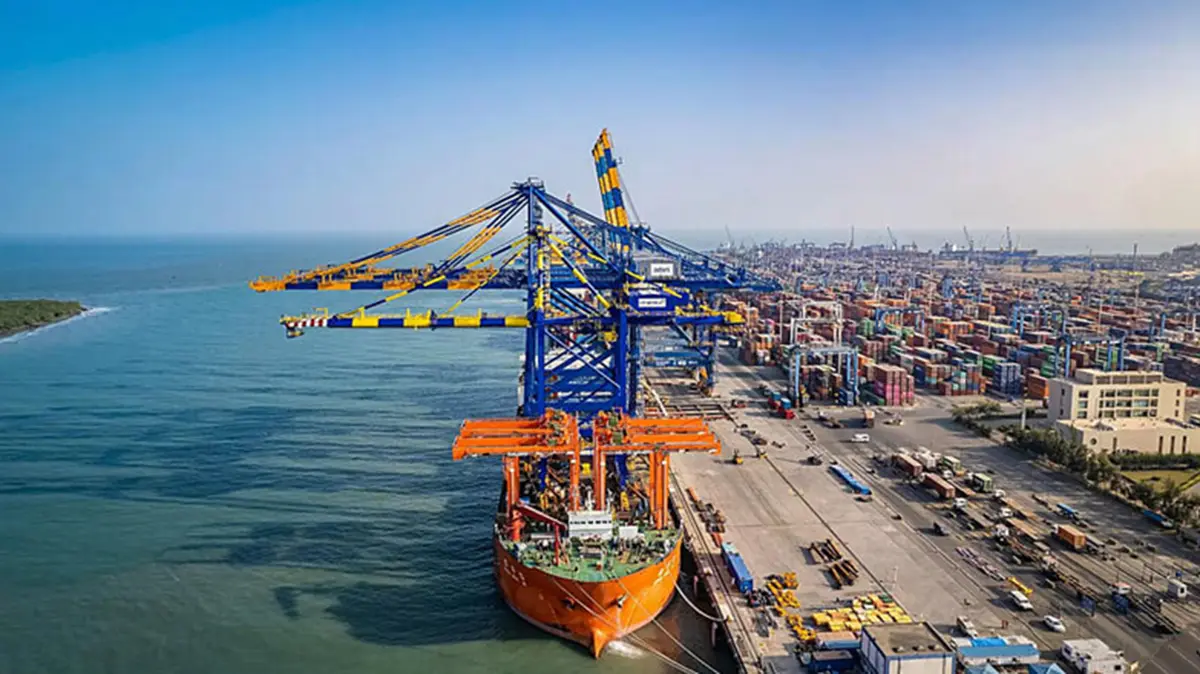
Vadhavan port is a planned deep‑draft greenfield port 140 km north of Mumbai on the Arabian Sea coast. It will be built by Vadhavan Port Project Limited, a joint venture of the Jawaharlal Nehru Port Authority (74 % share) and the Maharashtra Maritime Board (26 %). With an estimated cost of ₹76,220 crore, the project aims to create one of the world’s top ten ports by 2034, handling 298 million tonnes of cargo annually. The design includes nine container terminals, four multipurpose berths, liquid‑cargo berths, a roll‑on/roll‑off berth and a Coast Guard berth. A 20‑metre natural depth will accommodate the largest container ships. The port site is close to a dedicated rail freight corridor and the Mumbai–Vadodara Expressway, promising good connectivity for export–import trade.
The protest
- Participants: Fisherfolk, farmers, adivasis and women from Palghar district marched under the banner of the Vadhavan Bandar Virodhi Sangharsh Samiti.
- Demands: Protesters called for scrapping the Vadhavan port, a proposed regional airport, a textile park at Kelve and another port at Murbhe. They submitted a memorandum to the Collector alleging that environmental impact assessments were flawed and that the projects would destroy livelihoods.
- Legal concerns: The memo cited a 1998 order by the Dahanu Environmental Protection Authority declaring the region an eco‑sensitive zone. It noted that cases challenging the port are pending in the Supreme Court, yet preparatory work continues.
- Government response: Project proponents argue that the port will boost trade and create jobs. They claim to be conducting impact studies and consultations. However, protesters say local opinions have been ignored.
About Vadhavan port
- Strategic location: Situated near the dedicated rail freight corridor and the Mumbai–Vadodara Expressway, enabling efficient movement of goods to industrial hubs in Maharashtra, Gujarat and beyond.
- Capacity: Designed to handle approximately 23.2 million twenty‑foot equivalent units (TEUs) of containers and a total of 298 million tonnes of cargo per year.
- Infrastructure: Involves reclaiming 1,448 hectares of sea area and constructing more than 10 km of breakwaters and cargo storage yards.
- Trade corridors: Expected to support freight flows along the India‑Middle East–Europe Economic Corridor (IMEEC) and the International North‑South Transport Corridor (INSTC).
Conclusion
The confrontation over Vadhavan port illustrates the balancing act between development and environmental justice. While the project promises to boost India’s maritime trade, local communities fear irreversible damage to coastal ecosystems and livelihoods. Transparent impact assessments and meaningful dialogue will be essential to resolve the impasse.
Source: The Indian Express