

Why in news?
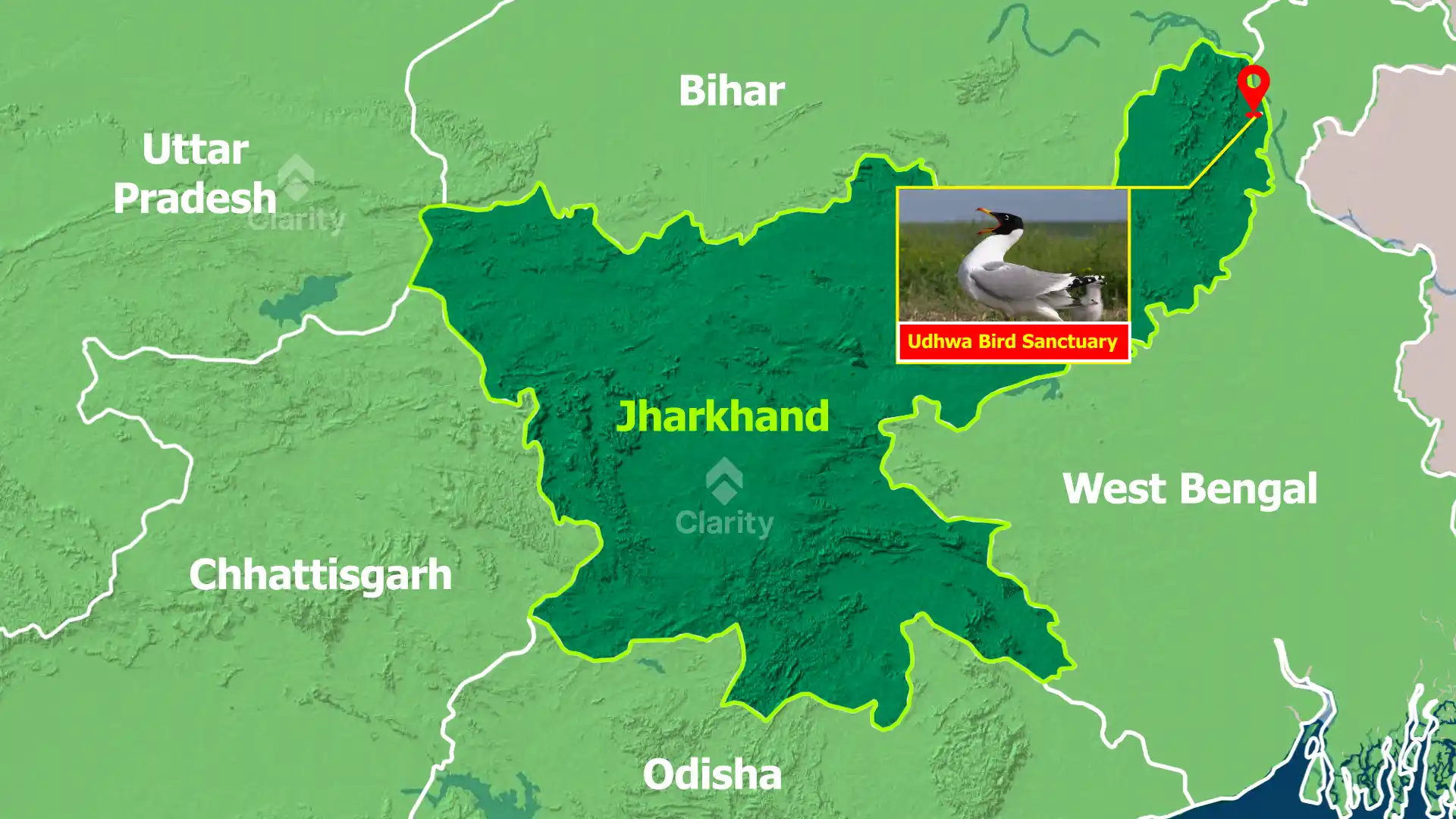
A Pallas’s Gull – the world’s largest black‑headed gull – was recently sighted at Jharkhand’s Udhwa Bird Sanctuary after almost ten years. Forest officials celebrated the event as a sign that the sanctuary’s wetlands remain healthy enough to attract rare migratory birds. The gull’s presence has rekindled interest in the conservation of this important stopover along the Central Asian flyway.
Background
Pallas’s Gull (Ichthyaetus ichthyaetus) breeds in the marshes and islands of southern Russia and Mongolia. After the breeding season it migrates southwards, wintering around the Mediterranean Sea, the Arabian Peninsula and parts of India. Adults measure 55–72 centimetres in length with a wingspan of up to 170 centimetres. In summer they are distinguished by a striking black hood, grey wings with white “mirrors” at the tips, yellow legs and an orangey‑yellow bill tipped with red. They feed mainly on fish but also eat insects, crustaceans, reptiles and small mammals. The species is listed as Least Concern on the IUCN Red List, but its populations depend on the availability of undisturbed wetlands.
About Udhwa Bird Sanctuary
- Location: Situated in Sahebganj district of Jharkhand, Udhwa Bird Sanctuary comprises two interconnected wetlands – Pataura Lake and Berhale Lake – nestled among the Rajmahal Hills along the floodplain of the Ganga River.
- Ramsar status: In February 2025 the sanctuary was designated a Ramsar site, recognising its international importance as a wetland ecosystem.
- Biodiversity: Over 146 species of birds have been recorded here, including the band‑tailed fish eagle, lesser adjutant stork and common pochard. Aquatic plants, fish, reptiles such as otters and fishing cats, and numerous insects thrive in its waters.
- Flyway significance: The sanctuary lies along the Central Asian migratory flyway. Migratory birds use it as a feeding and resting site during their long journeys.
Significance
- Indicator of wetland health: The return of the Pallas’s Gull after a decade suggests that Udhwa’s wetlands continue to provide sufficient food and undisturbed habitat for sensitive migratory species.
- Boost to conservation efforts: The sighting highlights the importance of protecting Ramsar sites and maintaining the ecological integrity of wetland complexes across India.
- Public awareness: News of the gull’s appearance encourages birdwatchers and local communities to value and conserve their natural heritage.
Conclusion
The Pallas’s Gull is both a spectacular bird and an ambassador for wetland conservation. Its recent visit to Udhwa Bird Sanctuary shows that even heavily used rivers like the Ganga can support rich biodiversity when wetlands are protected. Continued monitoring and community participation will help ensure such migratory visitors return in the years to come.
Sources: DEVD