

Why in news?
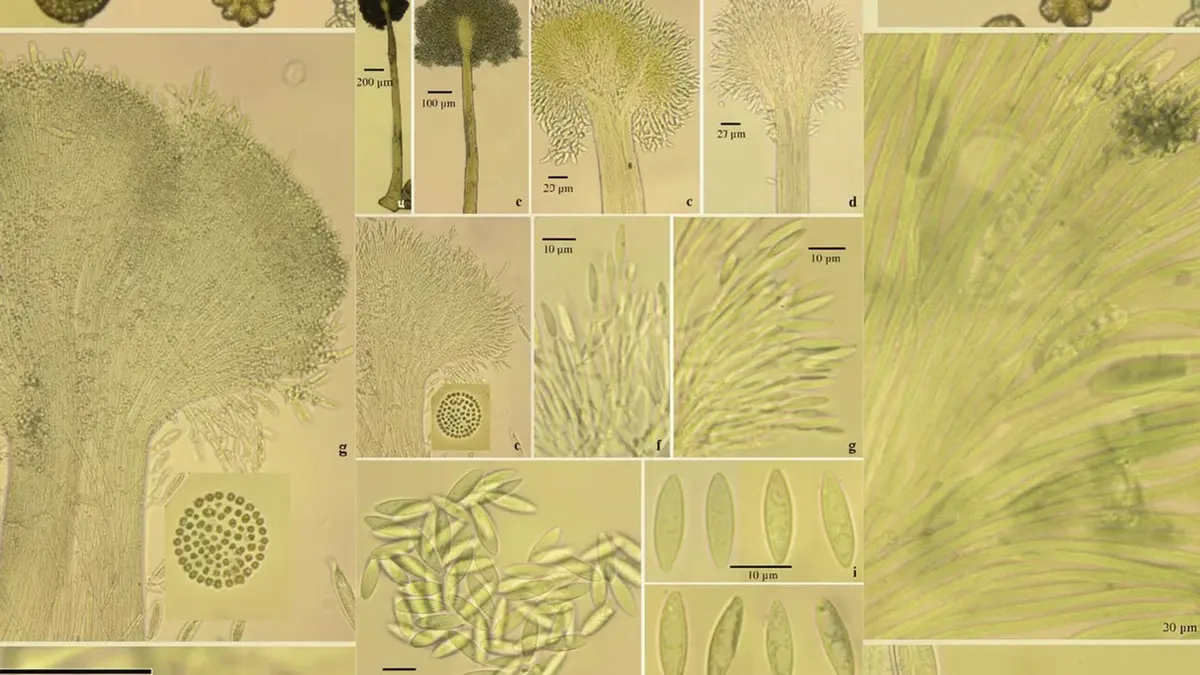
Researchers surveying bamboo forests near Mawsynram in Meghalaya have discovered a previously unknown fungus. The species, named Parasynnemellisia khasiana, represents both a new species and a new genus.
Background
The fungus was found on dead stems of the thorny bamboo species Chimonocalamus griffithianus. Mawsynram, famous for receiving some of the highest rainfall on Earth, supports dense bamboo groves. Scientists collected specimens in 2025 and conducted detailed laboratory analyses.
Key findings
- New genus and species: Microscopic examination and DNA sequencing showed that the fungus did not fit into any known genus. Researchers therefore proposed Parasynnemellisia as a new genus, with P. khasiana as its first species. The name honours the Khasi Hills region.
- Distinctive morphology: The fungus produces minute, synnematous (bundled) fruiting structures and hyaline, lanceolate spores. These features distinguish it from superficially similar bamboo‑associated fungi in Asia.
- Ecological significance: The discovery highlights the rich but under‑explored fungal diversity of the eastern Himalayas. Fungi play critical roles as decomposers, mutualists and pathogens in forest ecosystems.
About fungi
- Fungi are eukaryotic organisms distinct from plants and animals. Their cells contain a nucleus and complex internal membranes.
- They can be unicellular (such as yeasts) or multicellular (moulds, truffles and mushrooms). All fungi have cell walls made of chitin, a strong polysaccharide.
- Fungi are extremely diverse, with millions of species worldwide, most of which remain undescribed. They occupy nearly every habitat and are vital decomposers and recyclers of nutrients.
Conclusion
The discovery of Parasynnemellisia khasiana adds to the growing list of fungi known from India. Continued exploration of under‑studied habitats like bamboo forests can reveal new organisms that enhance our understanding of biodiversity and ecosystem functioning.
Sources: Hub News