

Why in news?
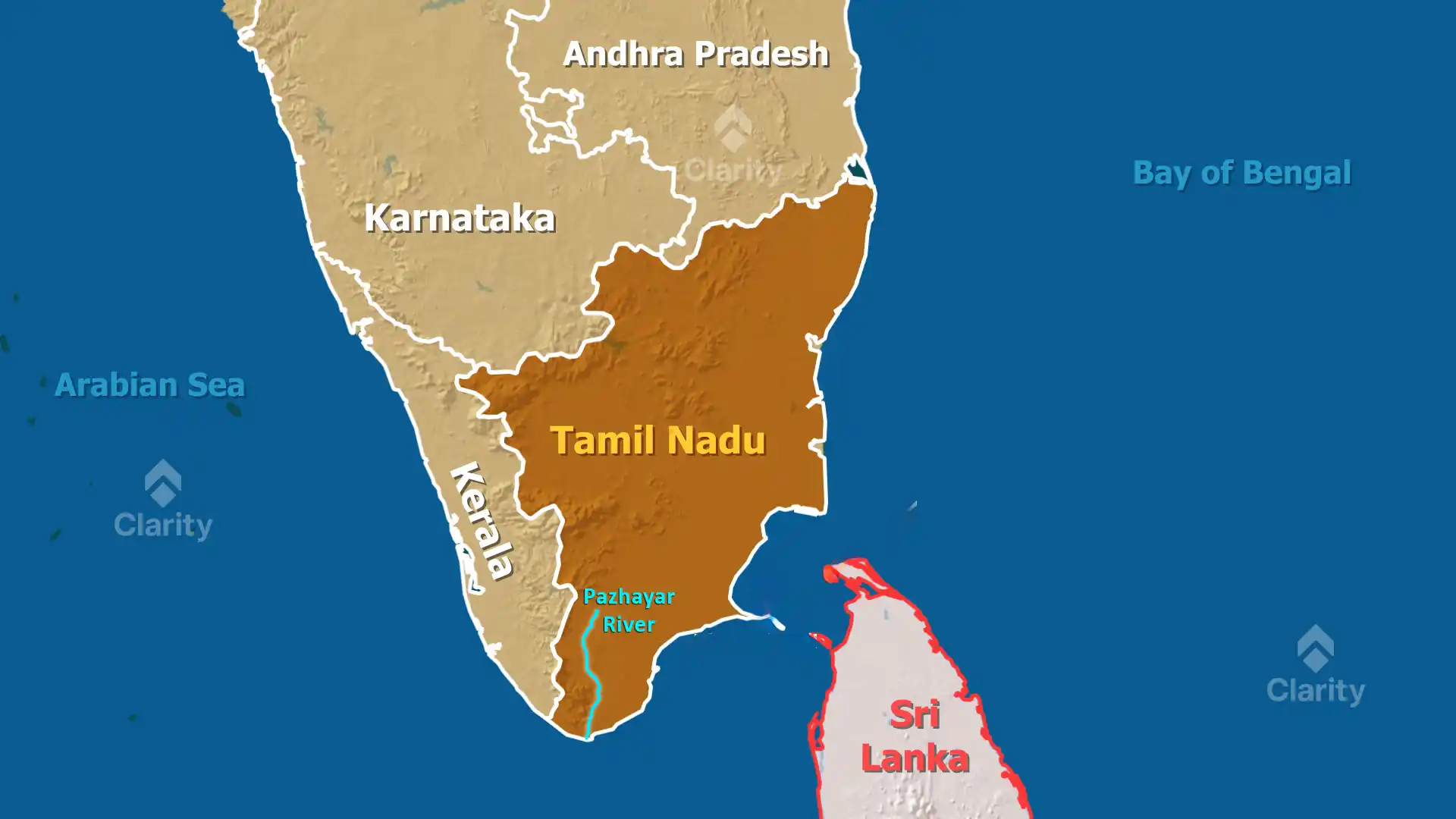
Residents of Tamil Nadu’s Kanyakumari district have launched a grassroots campaign to revive the Pazhayar or Pahrali River. The river has shrunk due to pollution, encroachments and siltation, leading to floods in nearby villages and loss of agricultural productivity. The movement aims to restore its natural flow and protect the ecology of the adjoining Manakudi estuary.
Background
The Pazhayar River originates in the Mahendragiri hills, part of the southern Western Ghats, and flows about 35 kilometres through Thovalai and Agastheeswaram taluks before entering the Manakudi lagoon near the Arabian Sea. It is the southernmost major river on the Indian mainland and has traditionally irrigated paddy fields and supported fishing communities. Over the past decades, untreated sewage from Nagercoil town, dumping of solid waste and construction along the banks have choked the river. Eleven check dams built to regulate flow have fallen into disrepair, further reducing water movement.
What’s happening now?
- Community mobilisation: Local volunteers under the “Namadhu Pazhayaru” (Our Pazhayar) movement are surveying the river’s course, planting markers to identify boundaries and petitioning authorities to remove illegal structures.
- Restoring check dams: Activists are urging the government to repair existing check dams and clear silt so that water can flow steadily without overflowing during heavy rains.
- Pollution control: Calls have been made to divert sewage away from the river and install treatment plants. Public awareness campaigns highlight the health hazards of dumping waste into water bodies.
- Protecting the estuary: The Manakudi estuary, where the river meets the sea, is a rich mangrove and bird habitat. Cleaning the upstream river is essential for the estuary’s survival and for reducing salinity intrusion into farmlands.
Challenges
- Encroachments: Houses, shops and fish markets have been built along the riverbanks. Removing them requires political will and resettlement plans for affected residents.
- Funding constraints: Repairing dams, desilting and installing sewage treatment plants need financial support from local and state governments.
- Climate variability: Changing rainfall patterns due to climate change can cause sudden floods or prolonged dry spells, complicating restoration efforts.
Significance
- Food security: Rejuvenating the river will restore irrigation to paddy fields, coconut groves and vegetable farms, improving livelihoods for thousands of farmers.
- Flood mitigation: A free‑flowing river can carry stormwater to the sea, reducing flooding in surrounding villages.
- Ecological benefits: Cleaner water supports fish populations, mangroves and migratory birds, enhancing biodiversity.
Conclusion
The Pazhayar River’s decline is a reminder of how urbanisation and neglect can damage fragile ecosystems. Community efforts offer hope that with coordinated action and government support, the river can be restored to its former vitality.
Source: TH,