
Why in news?
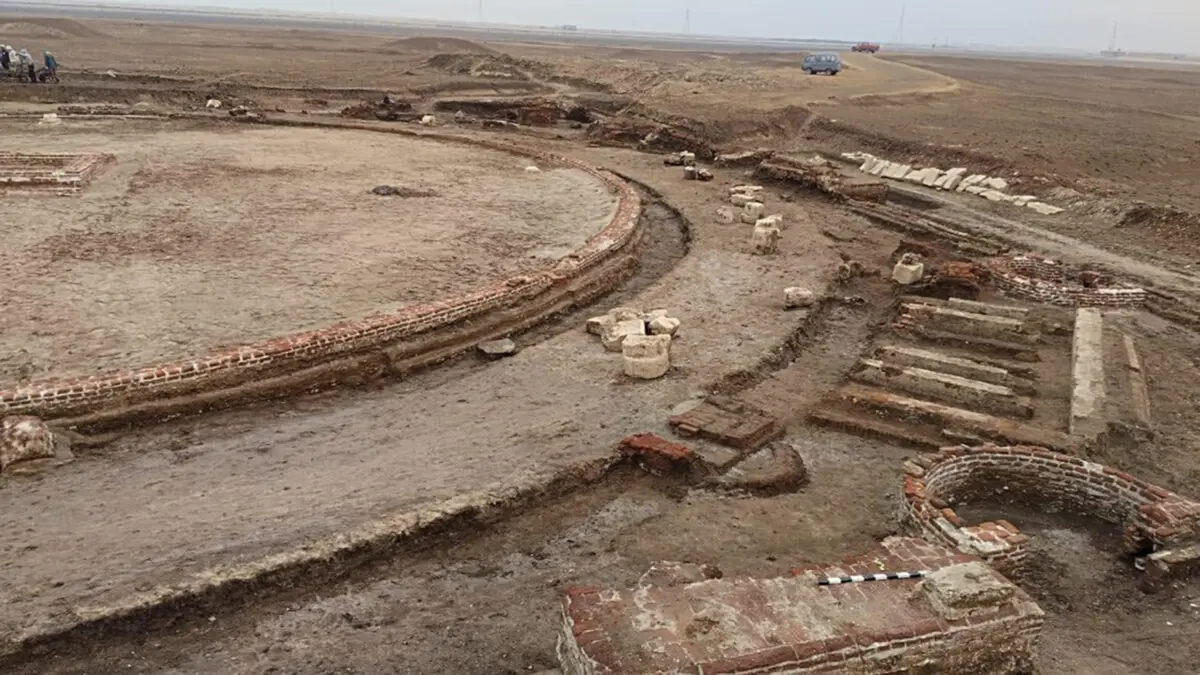
Archaeologists working at Tell el‑Farama in Egypt’s northern Sinai have completed the excavation of a unique circular temple dedicated to water and fertility in the ancient city of Pelusium. Built between the second and sixth centuries CE, the temple features a 35‑metre‑diameter basin and once stored water from the Nile. The structure’s unusual design blends Egyptian, Greek and Roman elements and sheds light on the religious practices of Pelusium’s cosmopolitan inhabitants.
Background
Pelusium (called Sa’inu or Per‑Amun in ancient Egyptian) sat at the easternmost mouth of the Nile, guarding Egypt’s frontier with the Levant. Founded by the Pharaonic kings, the city served as a vital port and customs post and later became an important Byzantine bishopric. Its strategic position meant that armies from Persia, Greece, Rome and the Arab caliphates repeatedly clashed here. In 525 BCE the Persian king Cambyses II defeated the Egyptians at the Battle of Pelusium, an event that opened Egypt to Persian rule.
Highlights of the excavation
- Round design: Unlike typical Egyptian temples with rectangular layouts, the newly discovered structure is circular and built of red bricks. A central basin was used to store and possibly distribute Nile water during festivals and droughts.
- Multicultural influences: Architectural details, such as column capitals and decorative motifs, combine Pharaonic, Hellenistic and Roman styles, reflecting Pelusium’s role as a melting pot of cultures.
- Hydraulic technology: Channels and conduits connected the temple to the Nile, demonstrating the city’s advanced knowledge of water management and its reliance on the river for ritual and daily life.
About the ancient city
- Strategic location: Pelusium controlled the gateway between Africa and Asia. It protected Egypt from eastern invaders and was the first city encountered by travellers coming from the Levant.
- Military history: In addition to the Persian conquest, Pelusium saw battles during the reign of Pharaoh Sethi I, when Egyptian forces repelled incursions by the Sea Peoples, and later during the Roman and Byzantine periods. The city declined after the silting of its harbour and Arab conquests.
- Economic role: Ancient texts record Pelusium as a centre of flax production and trade. It exported linen textiles and served as a customs point for goods entering or leaving Egypt.
Conclusion
The discovery of a circular water temple at Pelusium enriches our understanding of ancient Egypt’s frontier cities. It highlights the blending of cultures on the Mediterranean littoral and emphasises the importance of water in ritual life. Continued excavation may reveal further details about this once‑thriving gateway between two continents.
Sources: TOI

