

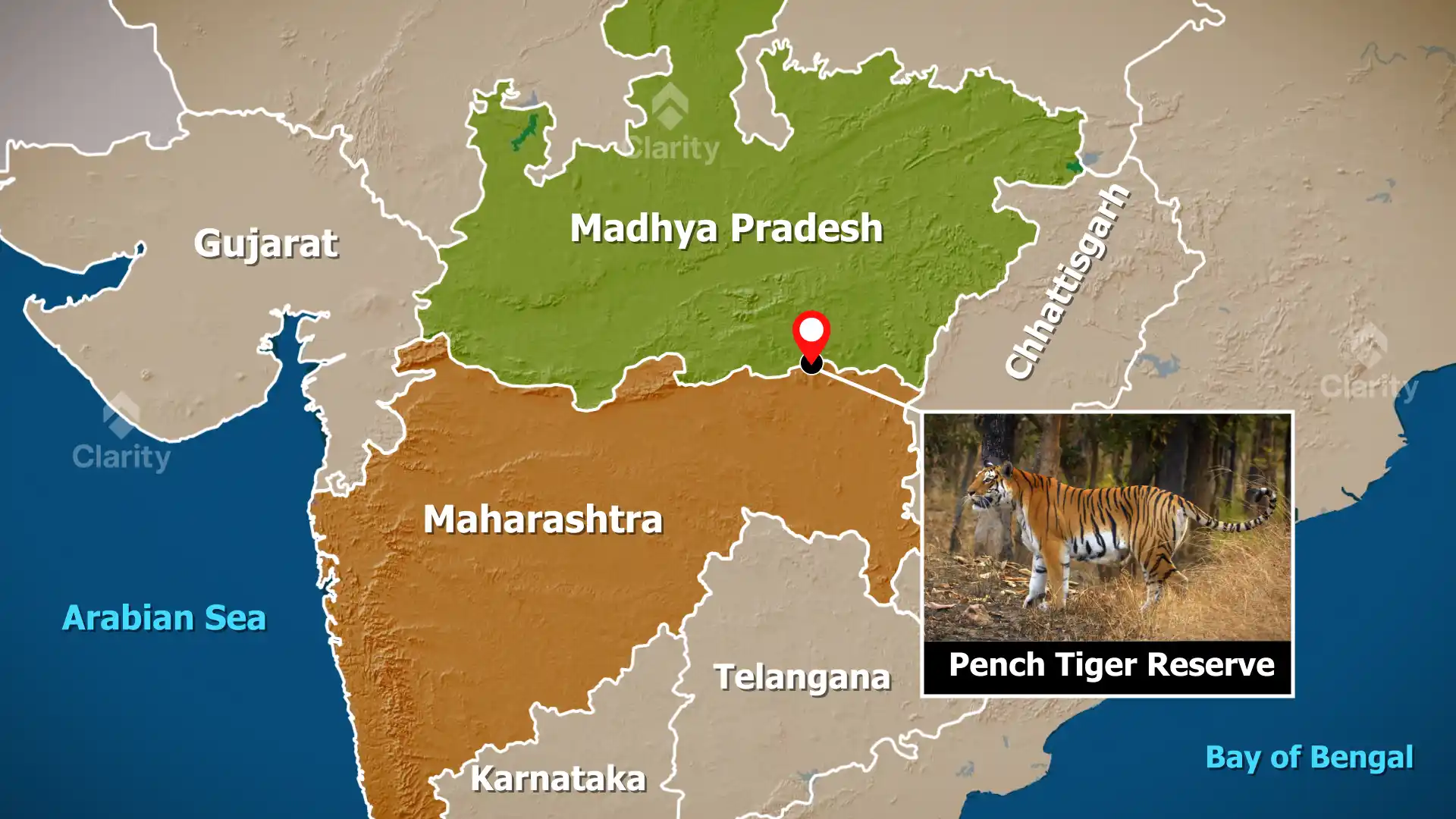
Why in news?
A captive‑bred long‑billed vulture tagged J132, released from the Pench Tiger Reserve on 11 December 2025, astonished researchers by flying more than 750 kilometres to Nashik within two weeks. Bombay Natural History Society (BNHS) scientists tracked the bird via a GPS transmitter as it roosted on cliffs, fed en route and eventually joined wild vultures near Anjaneri hills. The dispersal has highlighted the success of vulture reintroduction programmes in central India.
Background
Pench Tiger Reserve straddles the border of Madhya Pradesh and Maharashtra and is named after the Pench River that flows through it. The reserve’s core comprises 411 square kilometres of national park and sanctuary, with another 768 square kilometres of buffer forests. It boasts a mosaic of moist and dry deciduous woods harbouring more than 1,200 plant species. The reserve inspired Rudyard Kipling’s “The Jungle Book” and hosts species such as tigers, leopards, wild dogs, gaur and deer.
Flora and fauna
- Diverse vegetation: Mixed forests of teak, bamboo and broad‑leaved species create open canopies with shrubs and grasslands, supporting a high density of herbivores.
- Herbivores: Chital (spotted deer), sambar, nilgai, wild boar and gaur graze in the park, providing prey for carnivores.
- Predators: Tigers are the apex predator, joined by leopards, dhole (wild dogs), jackals and jungle cats.
- Birdlife: Over 300 bird species have been recorded, including crested serpent eagles, grey-headed fishing eagles and vultures such as white‑rumped and long‑billed varieties.
Vulture reintroduction
Vultures suffered catastrophic declines in India due to the veterinary drug diclofenac. To restore populations, BNHS and state forest departments established captive‑breeding centres. In April 2025, 14 vultures, including long‑billed and white‑rumped species, were transported from Pinjore in Haryana to an acclimatisation aviary at Pench. After eight months of training to feed on carcasses and avoid human interference, the birds were tagged and released. J132’s successful journey suggests reintroduced vultures can integrate with wild populations and underscores the need to create safe zones across wider regions.
Conclusion
The Pench Tiger Reserve exemplifies India’s efforts to conserve both charismatic megafauna and lesser‑known scavengers. Tracking individual birds such as J132 helps scientists refine reintroduction strategies and reminds us of the interconnectedness of ecosystems.
Source: The Indian Express