

Why in news?
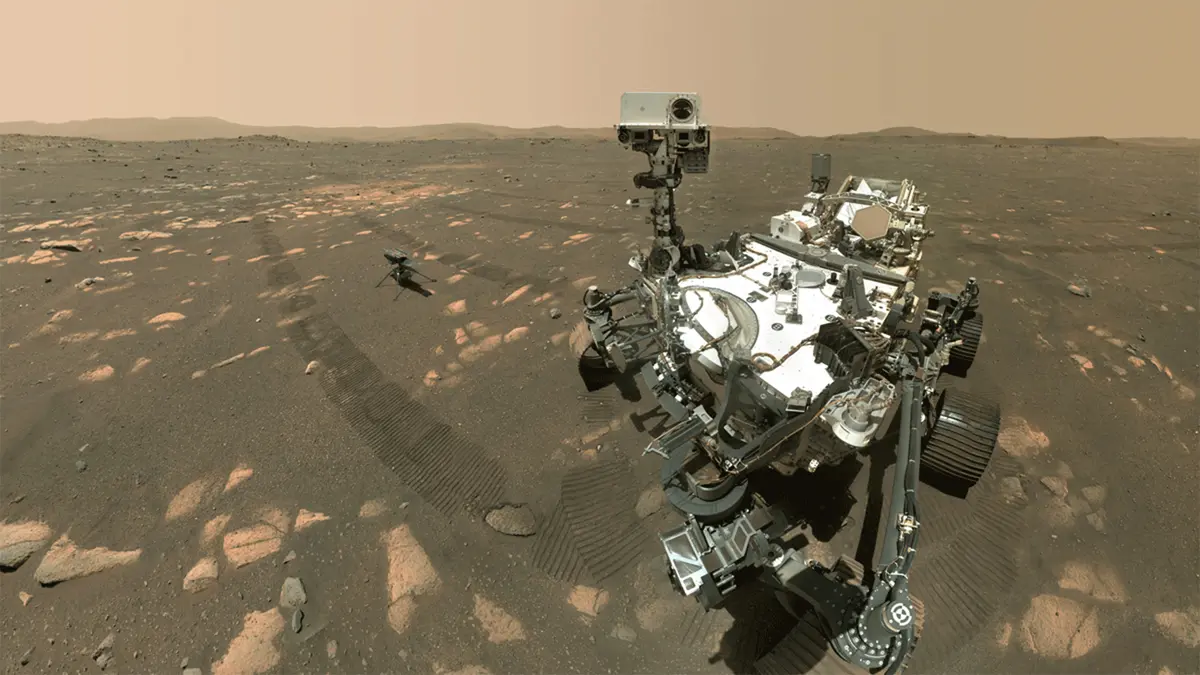
NASA’s Perseverance rover has recorded electrical discharges in Mars’s atmosphere, confirming that the planet experiences “mini lightning” events associated with dust devils. The findings were published in the journal Nature and mark the first direct evidence of atmospheric electricity on Mars.
Background
Perseverance landed in Jezero Crater on 18 February 2021 to search for signs of past microbial life, study Mars’s geology and climate, and collect samples for a future return mission. The rover is equipped with seven scientific instruments, including SuperCam – a remote‑sensing suite with a microphone and spectrometers.
Dust devils are swirling columns of air and dust that occur frequently on Mars due to solar heating. Scientists suspected that friction between dust grains could build up electric charges, but direct proof had been lacking until now.
Key findings
- 55 discharges detected: SuperCam’s microphone and electromagnetic sensors recorded 55 tiny electrical discharges during 28 hours of observations over two Martian years.
- Association with dust devils: Sixteen discharges occurred during close encounters with dust devils, suggesting that these whirlwinds generate triboelectric sparks as dust grains rub against each other.
- Miniature sparks: The discharges were only a few millimetres long and similar in strength to static electricity sparks on Earth. Scientists describe them as “mini lightning” rather than full lightning bolts.
- Implications: The presence of atmospheric electricity could influence dust transport, climate processes and the design of electronic equipment for future missions. It also raises questions about potential hazards for human explorers.
About the Perseverance mission
- Launch and landing: The Mars 2020 mission launched on 30 July 2020 and delivered Perseverance to Jezero Crater, an ancient lakebed rich in clay minerals.
- Scientific objectives: The rover seeks signs of ancient microbial life, studies the planet’s geology and climate, and tests technology for human exploration. It carries devices such as the MOXIE experiment to produce oxygen from Martian air, and the Ingenuity helicopter, which performed the first powered flight on another planet.
- Instruments: Key instruments include Mastcam‑Z (panoramic cameras), SuperCam (laser spectroscopy and microphone), PIXL (X‑ray fluorescence), SHERLOC (UV spectroscopy), MEDA (weather station), RIMFAX (ground‑penetrating radar) and MOXIE.
Conclusion
The detection of triboelectric sparks by Perseverance opens a new window on Martian weather. Understanding how dust interacts with the thin atmosphere will help scientists refine climate models and design equipment for future robotic and human explorers.
Source: NIE