

Why in news?
Conservationists have highlighted the plight of Phayre’s leaf monkey as habitat loss pushes this distinctive primate towards extinction. Recent field surveys in north‑east India and Bangladesh underscore the need for urgent habitat protection and community engagement to ensure its survival.
Background
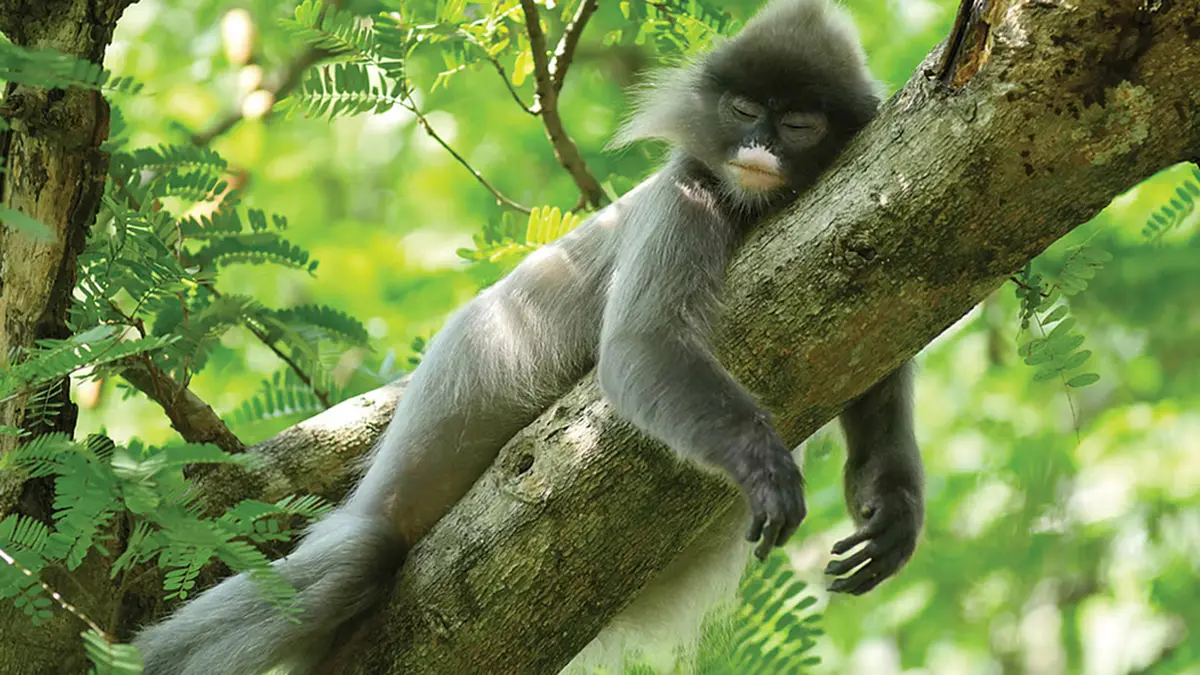
Phayre’s leaf monkey (Trachypithecus phayrei), also called the spectacled langur, inhabits tropical forests of north‑east India, Bangladesh and Myanmar. It has a bluish‑grey coat with a lighter belly and striking white eye rings that resemble spectacles. Adults weigh 6–8 kilograms and possess long tails used for balance when leaping through the canopy. Infants are born golden‑yellow, making them easy to spot in groups.
Habitat and behaviour
- Arboreal lifestyle: Phayre’s leaf monkeys rarely descend to the ground. They live in small groups of 3–12 individuals, moving noiselessly through the upper canopy of evergreen and semi‑evergreen forests.
- Diet: As folivores, they feed mainly on young leaves, shoots, flowers and fruits. Deforestation and agriculture have reduced their natural food sources, leading them to consume leaves of cultivated trees like rubber, which can be harmful.
- Shy and social: These primates are wary of humans and emit low barks or whistles to communicate. Dominant males defend their groups, and females give birth every 2–3 years after a gestation of about six months.
Threats and conservation
- Habitat loss: Logging, shifting cultivation and infrastructure projects have fragmented their forests. Shrinking habitat forces monkeys to venture into plantations, where they face threats from poisoning and hunting.
- Conservation status: Phayre’s leaf monkey is listed as Endangered on the IUCN Red List. Tripura has adopted it as the state animal to raise awareness. Cross‑border populations in Bangladesh remain small and isolated.
- Community initiatives: Conservation groups work with local communities to restore degraded forest patches, establish corridors and create alternative livelihoods. Public education campaigns aim to reduce hunting and promote coexistence.
Conclusion
The spectacled langur’s distinctive appearance makes it a flagship species for conservation in south‑east Asia. Protecting its remaining habitat, curbing hunting and involving communities are essential steps to prevent its disappearance from India’s forests.
Source: Down to Earth