

Why in news?
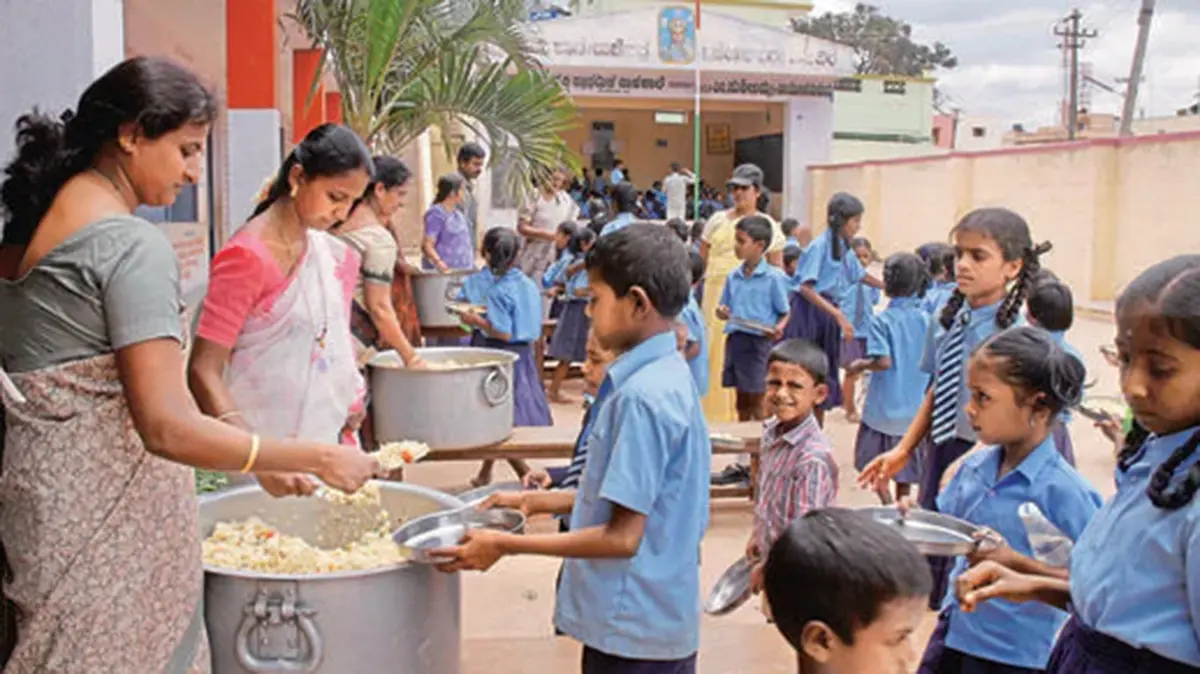
The government’s interim Budget 2026 continued funding for the Pradhan Mantri Poshan Shakti Nirman (PM‑POSHAN) Scheme, commonly called the mid‑day meal programme. The scheme provides hot cooked meals to children in government and government‑aided schools and pre‑primary centres across India. Budgetary outlays and recent discussions on incorporating millets and regional dishes have sparked renewed public interest in the scheme.
Background
India’s national school feeding programme began as the National Programme of Nutritional Support to Primary Education on 15 August 1995. Initially it involved providing uncooked food grains to primary schoolchildren. In 2001, following a Supreme Court directive, the scheme switched to cooked meals with specified calorie and protein norms. By 2008 it expanded to cover children from classes I–VIII. In September 2021 the government relaunched the programme as PM‑POSHAN for the period 2021–22 to 2025–26, extending coverage to pre‑primary (Bal Vatika) children and re‑emphasising nutritional diversity.
Objectives
- Enhance nutrition: Provide at least one nutritious meal every school day to children from Bal Vatika up to class VIII to improve their health and reduce malnutrition.
- Improve enrolment and attendance: Encourage children from disadvantaged families to attend school regularly by ensuring a free meal is available.
- Support during crises: Offer nutritional support during summer holidays in drought‑affected areas and during disasters.
Nutrition norms
Under the National Food Security Act (2013) and PM‑POSHAN guidelines, the meals served must meet specific calorie and protein requirements:
- Primary classes (Bal Vatika & I–V): 450 calories and 12 grams of protein per child per day. Food norms include 100 g of cereals, 20 g of pulses, 50 g of vegetables and 5 g of oil.
- Upper primary (VI–VIII): 700 calories and 20 grams of protein per child per day. Food norms include 150 g of cereals, 30 g of pulses, 75 g of vegetables and 7.5 g of oil.
Implementation and funding
- Coverage: The scheme covers about 11.8 crore children in 11.2 lakh schools and pre‑primary centres across India.
- Cost sharing: Food grains are supplied free by the central government. Cooking costs (vegetables, pulses, condiments, fuel) are shared between the Centre and states. The cooking cost per child is ₹5.45 for primary and ₹8.17 for upper primary classes, subject to periodic revision.
- Cook‑cum‑helpers: Schools can engage one cook‑cum‑helper for up to 25 students and additional helpers as enrolment increases. Each helper receives at least ₹1,000 per month.
- Monitoring and evaluation: Three percent of the scheme’s funds are earmarked for management, monitoring and evaluation (MME) activities, with half the MME funds directed to school‑level supervision.
Recent developments
- Millets in meals: In line with the International Year of Millets 2023, several states have begun incorporating millets such as ragi, jowar and bajra into school menus to improve dietary diversity and support local farmers.
- Local cuisine: States are encouraged to include region‑specific dishes (e.g., khichdi, dalia, idli–sambar) to ensure acceptability and cultural relevance.
- Fortified foods: Fortified rice and edible oils are being introduced in some districts to address micronutrient deficiencies.
Significance
- Human capital: Adequate nutrition in childhood improves cognitive development, learning outcomes and long‑term productivity.
- Social equity: The scheme bridges nutritional gaps among socio‑economic groups and promotes gender equity by encouraging parents to send both boys and girls to school.
- Supporting agriculture: Local procurement of food grains, pulses and vegetables benefits farmers and promotes regional dietary patterns.
Source: IE