

Why in news?
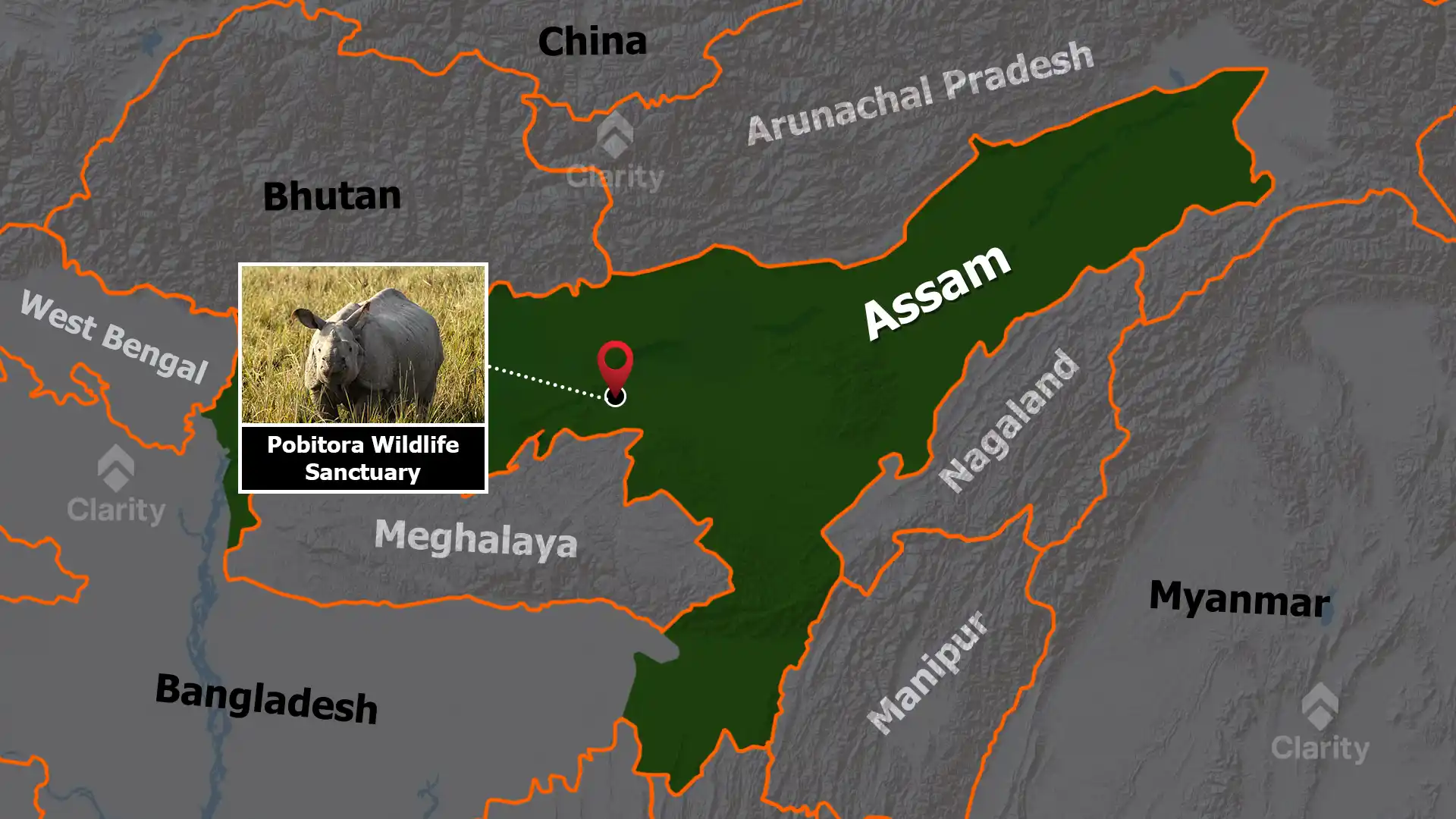
Wildlife officials in Assam reported an early arrival of migratory birds at the Pobitora Wildlife Sanctuary during the 2025–26 tourist season. Birds from Siberia and Tibet began appearing in late October, weeks earlier than usual, sparking excitement among birdwatchers and boosting local tourism.
Background
Pobitora Wildlife Sanctuary lies about 48 kilometres east of Guwahati in Assam’s Morigaon district. Spread over roughly 38.8 square kilometres of wet grassland and marshes along the Brahmaputra River, the sanctuary is best known for having India’s highest density of the greater one‑horned rhinoceros. According to the 2022 census, Pobitora hosts 107 rhinos within its tiny area, along with wild buffaloes, hog deer and a rich assemblage of waterfowl.
Bird migration and tourism
- Early migrants: Rangers observed flocks of bar‑headed geese, northern pintails, tufted ducks and common pochards arriving by the end of October. Milder temperatures and favourable wetlands conditions likely encouraged the early migration.
- Species diversity: Around 56–60 species of waterbirds were recorded during the 2024–25 season. Officials expect 60–70 species this year, making the sanctuary a paradise for ornithologists.
- Tourist season: The sanctuary officially opened to visitors on 23 October 2025. Early bird arrivals drew both domestic and international tourists, generating income for local communities.
- Conservation measures: Forest guards conduct regular patrols to protect rhinos and birds from poaching. Visitors are asked to maintain a respectful distance and avoid disturbing wildlife.
Significance
- Biodiversity hotspot: Pobitora’s wetlands provide feeding and resting grounds for migratory birds and a sanctuary for endangered mammals. Protecting these habitats supports global migratory networks.
- Eco‑tourism: Responsible tourism offers livelihoods for local people and creates incentives to conserve wildlife. Early arrivals extend the tourist season, increasing benefits.
- Climate indicator: Changes in migration timing can signal shifts in climate patterns. Monitoring these trends helps scientists understand the impacts of global warming on migratory species.
Conclusion
Pobitora Wildlife Sanctuary showcases the delicate balance between conservation and sustainable tourism. Early arrivals of migratory birds highlight the sanctuary’s healthy habitats and emphasise the need for ongoing protection of wetlands and wildlife.
Sources: NET,