
Why in news?
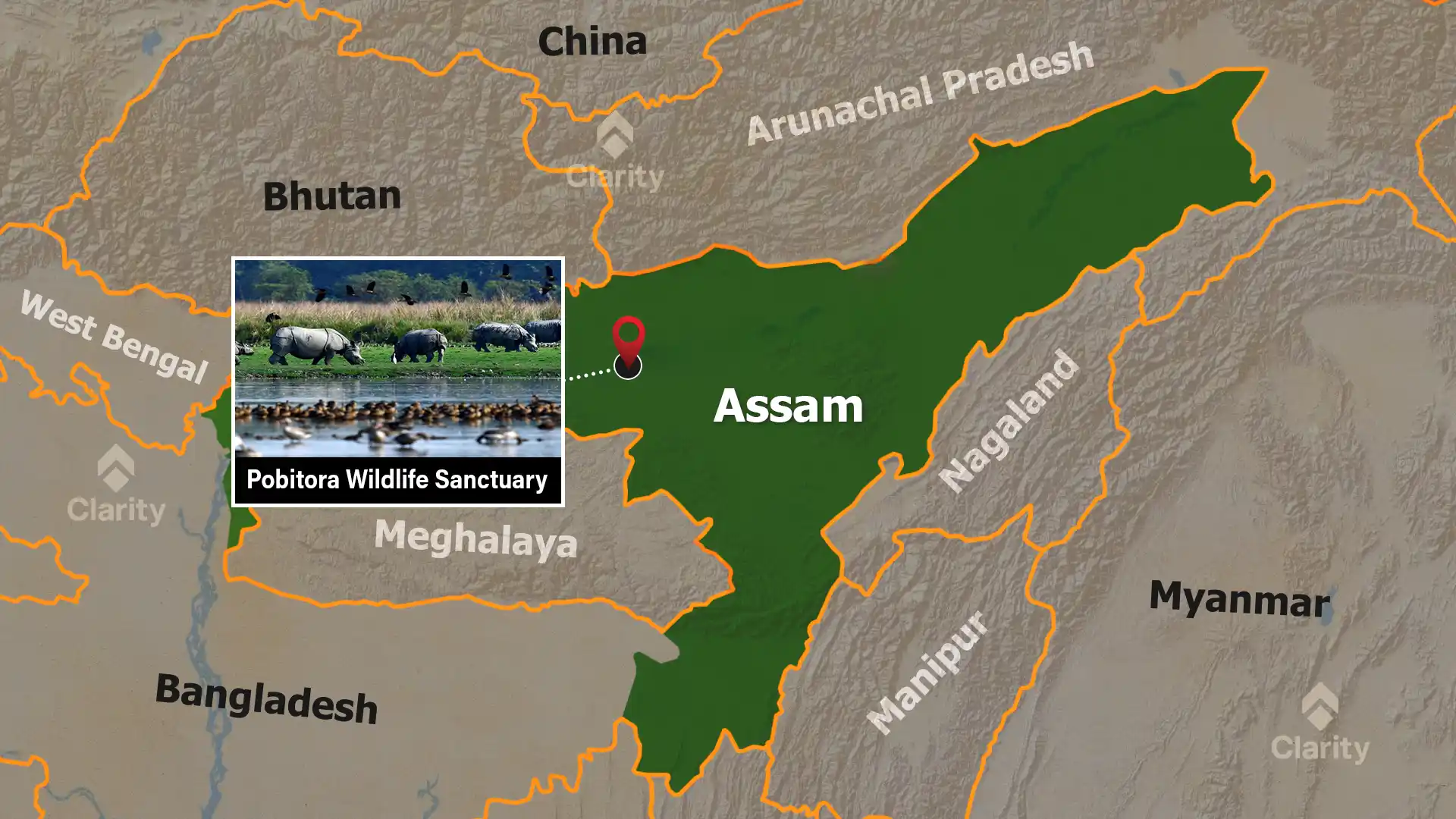
The Pobitora Wildlife Sanctuary in Assam reopened to tourists for the 2025–26 season, drawing attention to its remarkable population of Indian one‑horned rhinoceroses. The sanctuary, though small, supports the highest density of these endangered animals.
Background
Pobitora lies in the floodplains of the Brahmaputra River in Morigaon district, about 50 km east of Guwahati. Notified as a wildlife sanctuary in 1987, it covers only 38.8 square kilometres, of which roughly 16 square kilometres is grassland suitable for rhinos. Seasonal flooding, nutrient‑rich soils and tall grasses create ideal habitat.
Key features
- Rhino stronghold: Despite its small size, Pobitora harbours over 100 Indian one‑horned rhinos, giving it the highest density of the species in the world. Regular translocations from Pobitora help bolster populations in other reserves.
- Biodiversity: The sanctuary also hosts wild water buffalo, barking deer, leopards, fishing cats and over 200 species of birds. During winter it becomes a refuge for migratory ducks, storks and waders.
- Community involvement: Local villagers participate in protecting the sanctuary and benefit from eco‑tourism. Conservation projects aim to reduce human–wildlife conflict, expand rhino habitat and improve livelihoods.
- Challenges: Annual floods from the Brahmaputra erode habitat and force animals to higher ground where they encounter people. Encroachment, poaching and invasive weeds also threaten the sanctuary’s delicate balance.
Outlook
Pobitora exemplifies how small protected areas can play an outsized role in conserving flagship species when supported by local communities. Continued investment in habitat restoration, anti‑poaching measures and sustainable tourism will ensure that both rhinos and villagers thrive.
Sources: NIE

