

Why in news?
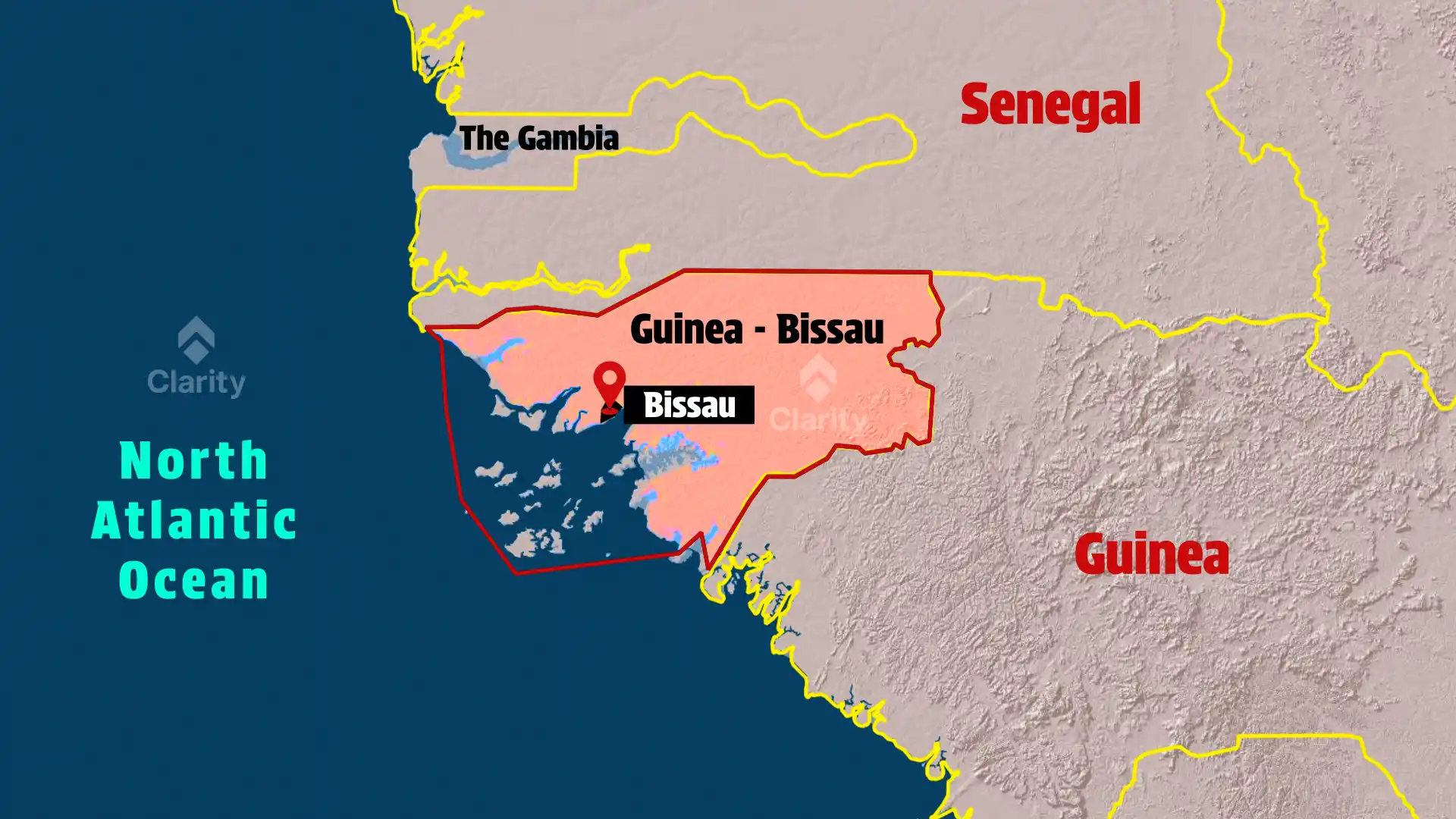
On 26 November 2025, heavy gunfire erupted in the West African nation of Guinea‑Bissau. Soldiers from the presidential guard seized control of government buildings, deposed President Umaro Sissoco Embalo and announced a “High Military Command” to restore order. This latest coup – the country’s fourth successful one since independence – has highlighted Guinea‑ Bissau’s chronic political instability and deep socio‑economic problems.
Background
Guinea‑Bissau is a small coastal country in West Africa that gained independence from Portugal in 1974 after a long liberation struggle. With a population of about two million, the country is rich in cultural diversity but has been plagued by weak institutions, corruption and repeated military interventions. Since 1974 there have been at least nine coup attempts, four of which were successful. The economy relies heavily on the export of cashew nuts and fishery products, and the majority of citizens practice subsistence farming. Guinea‑ Bissau ranks among the lowest countries on the Human Development Index and is a known transit point for drug trafficking due to porous borders and limited law enforcement.
What happened on 26 November 2025?
- Seizure of power: Early in the morning, gunfire and explosions rocked the capital Bissau as armoured vehicles surrounded the presidential palace. Brigadier‑General Denis N’Canha, head of the presidential guard, overthrew President Embalo and formed a military junta. The guard accused Embalo of electoral fraud and alleged that drug traffickers were plotting to capture power.
- Installation of a transitional leader: On 27 November, Major‑General Horta Nta Na Man, another senior officer, was sworn in as the interim head of state. He promised to organise elections within a year and restore constitutional order.
- International reaction: The African Union, Economic Community of West African States (ECOWAS) and the United Nations condemned the coup, demanded the release of detained leaders and urged a swift return to civilian rule. ECOWAS worked with Senegal to facilitate Embalo’s safe departure to Dakar.
Consequences and challenges
- Political instability: Repeated coups undermine governance, deter investment and hinder the delivery of basic services. Without strong institutions and a culture of constitutionalism, Guinea‑Bissau may remain stuck in a cycle of instability.
- Economic hardship: The country’s economy depends on cashew exports. Any disruption in governance affects trade, limits employment and worsens poverty. Drug trafficking and organised crime further erode state revenues and public trust.
- Regional security: Instability in Guinea‑Bissau could spill over into neighbouring states. ECOWAS’s intervention underscores regional sensitivity to coups.
Conclusion
The November 2025 coup in Guinea‑Bissau is part of a long pattern of military interference in politics. Restoring democratic governance will require genuine power sharing, rebuilding civilian institutions and addressing the social and economic drivers of unrest. International partners can assist by supporting reforms, improving law enforcement and promoting sustainable economic development to lift citizens out of poverty.
Source: DD News analysis