

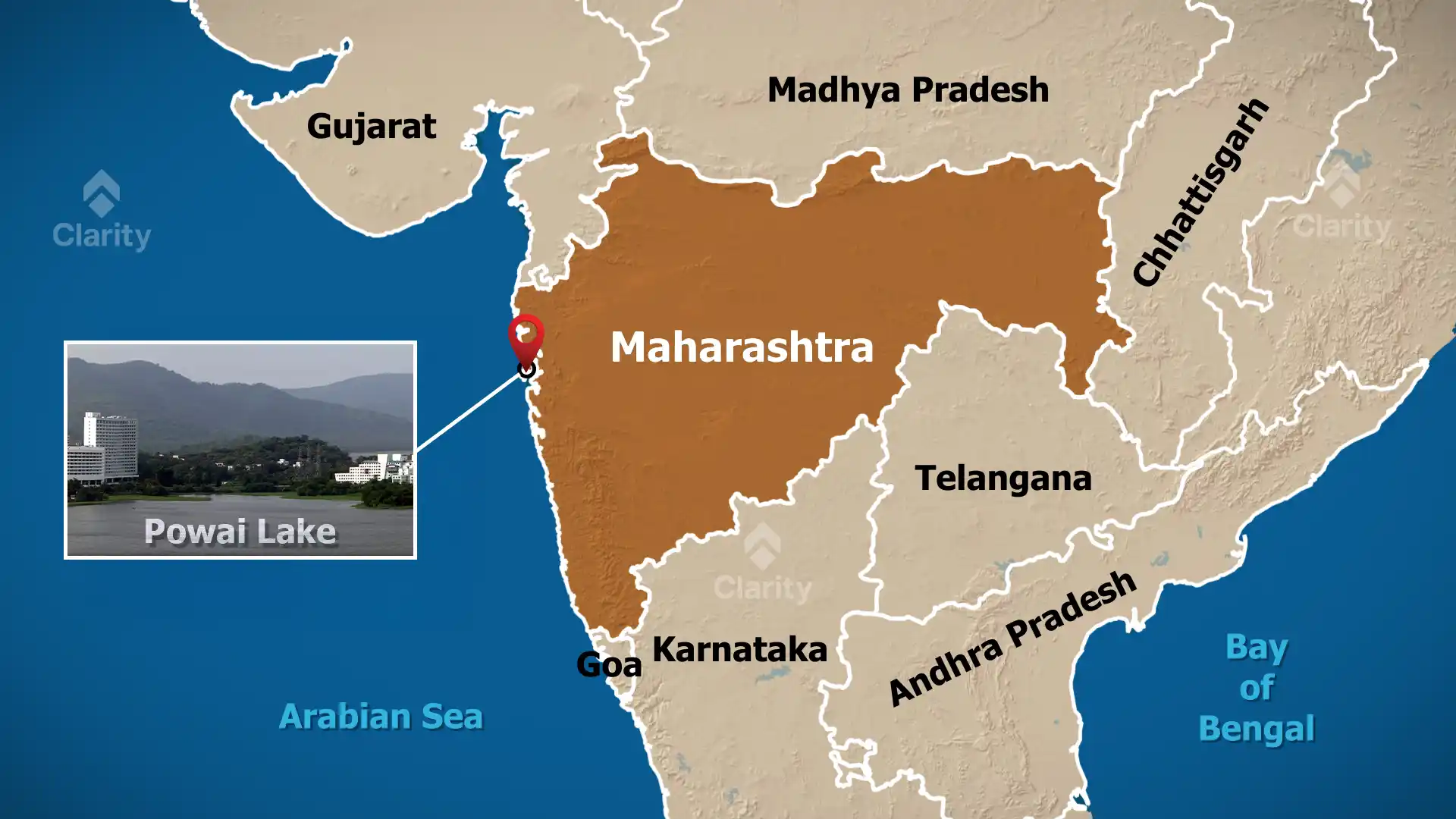
Why in news?
A joint committee appointed by the National Green Tribunal (NGT) has recommended that the Brihanmumbai Municipal Corporation (BMC) be penalised ₹5 lakh per month for each inlet through which untreated sewage continues to flow into Powai Lake. The recommendation, part of a report submitted on 5 December 2025, follows repeated failures to stop the discharge of raw sewage into this historic lake.
Background
Powai Lake is an artificial reservoir in the northern suburbs of Mumbai. Built in 1891 by damming a stream that fed the Mithi river, it was intended to supplement Bombay’s drinking‑water supply. Two masonry dams, about 10 metres high, were constructed across low hillocks to store rainwater from the lower slopes of the Western Ghats. The lake originally spanned about 2.1 square kilometres, with a depth ranging from 3 to 12 metres, and its catchment area covers roughly 6.6 square kilometres.
Historical and ecological importance
- Transition from water source to recreation: Due to pollution, water hyacinth and silt, the lake’s water was declared unfit for drinking in the early 20th century. It was leased to the Western India Fishing Association for angling and later managed by the Maharashtra State Angling Association, which now works to clean and maintain the lake.
- Educational and cultural hub: Prestigious institutions like the Indian Institute of Technology–Bombay and the National Institute of Industrial Engineering are located along its shores. A tenth‑century temple dedicated to Goddess Padmavati stands within the IIT campus.
- Wildlife haven: The lake supports a bird sanctuary that attracts resident and migratory species such as the watercock, pheasant‑tailed jacana, slaty‑legged crake, woolly‑necked stork and peregrine falcon. A census in 2022 recorded at least eighteen Indian marsh crocodiles in its waters.
- Degradation: Accelerated urbanisation has shrunk the lake by about 40%. Inflow of untreated sewage from surrounding slums and industries has led to eutrophication, resulting in low oxygen levels and excessive weed growth.
The NGT committee’s findings
- The committee noted that about 18 million litres per day of untreated sewage still entered the lake through nineteen culverts and two drains, despite previous directions from the Maharashtra Pollution Control Board to divert sewage to treatment plants.
- Powai resident Dr Rakesh Bakshi’s letter to the tribunal in March 2025 prompted the NGT to take suo moto cognisance and form a joint committee comprising the Central Pollution Control Board, the Maharashtra Pollution Control Board and the State Wetland Authority.
- The committee recommended a penalty of ₹5 lakh per month per inlet, starting from February 2020, for any continuing discharge of untreated sewage. It urged the BMC to lay new sewer lines, install interceptors to collect sewage before it reached the lake and build an 8 million‑litre‑per‑day sewage treatment plant at the old Powai pumping station.
- Short‑term measures included removing water hyacinth, installing aerators and deploying real‑time dissolved‑oxygen monitors. Long‑term restoration would involve desilting and scientific rejuvenation after pollution sources are controlled.
Conclusion
Powai Lake is both a cultural landmark and an ecological asset. The NGT’s recommended penalty reflects frustration over prolonged non‑compliance with pollution‑control directives. Prompt implementation of infrastructure upgrades and restoration projects is essential to revive the lake, safeguard biodiversity and honour its historical legacy.
Source: DH