
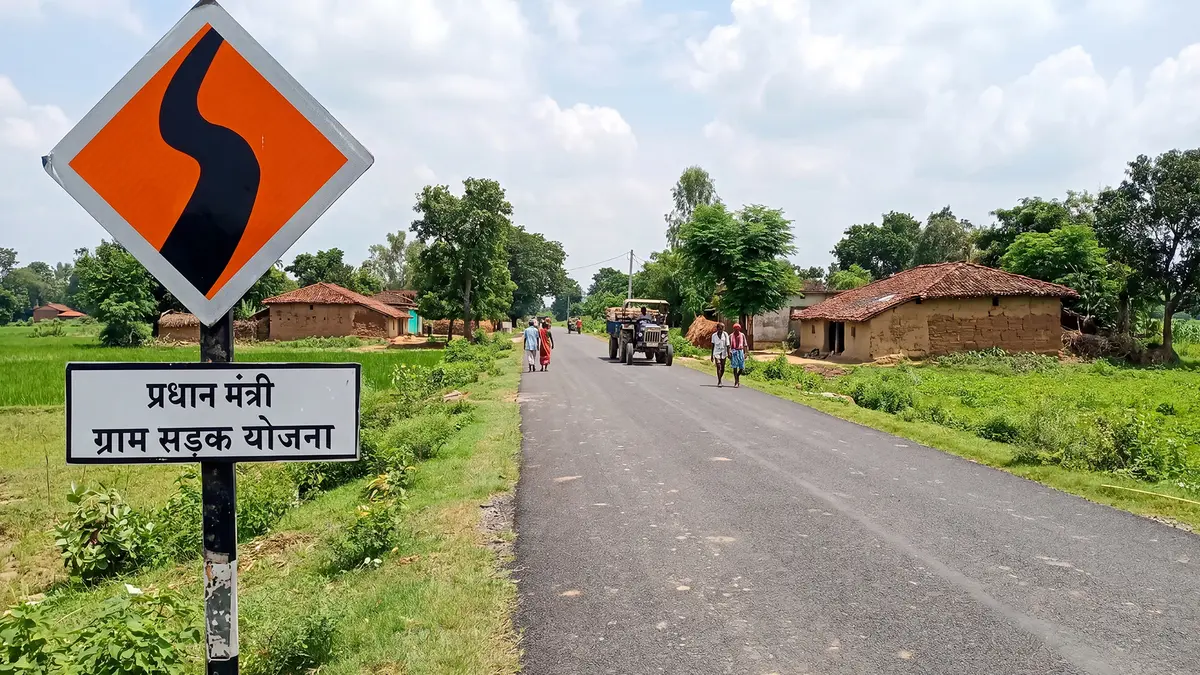
Why in news?
The Union Government recently approved the continuation of PMGSY‑III beyond March 2025 up to March 2028. The scheme’s third phase, which aims to upgrade rural roads, will have an outlay of about ₹83,977 crore. Extending the programme ensures that unfinished road projects in remote villages are completed, maintaining momentum in rural connectivity.
Background
Pradhan Mantri Gram Sadak Yojana (PMGSY) is a flagship rural road programme launched in December 2000. Its goal is to provide all‑weather road connectivity to habitations with populations over 500 (over 250 in hilly and tribal areas). The scheme has undergone three phases:
- Phase I: Focused on new rural road construction to link unconnected villages, financed mainly by the central government.
- Phase II: Upgraded existing rural roads, widened pavements and improved surface quality to support higher traffic.
- Phase III: Introduced in 2019 to upgrade 125,000 km of existing rural roads to meet agricultural and market needs. It emphasises wider carriageways and climate‑resilient design.
Why the extension matters
- Improving rural connectivity: Many villages still have gravel roads that become unusable during the rainy season. Extending PMGSY‑III ensures these routes are upgraded to all‑weather standards.
- Boosting markets and services: Better roads reduce travel time and vehicle operating costs, helping farmers access markets, health care and schools.
- Employment generation: Road construction creates short‑term local jobs and stimulates the rural economy by improving access to input supplies and markets.
- Inclusivity: Improved connectivity contributes to socio‑economic inclusion by linking remote habitations to mainstream economic activities.
Recent developments
The Cabinet’s approval allows states extra time to complete ongoing works and sanction long‑span bridges where necessary. By extending the scheme to 2028, the government hopes to fully realise the benefits of investments made since 2019. Focus will be on completing projects in hilly and tribal regions, where geographical challenges slowed progress.
Sources: Press Information Bureau

