
Why in news?
India and Indonesia have agreed to work together to restore the Prambanan Temple complex in Yogyakarta, Indonesia. The partnership underscores growing cultural ties under India’s “Act East” policy and aims to use India’s expertise in conserving Southeast Asian heritage.
Background
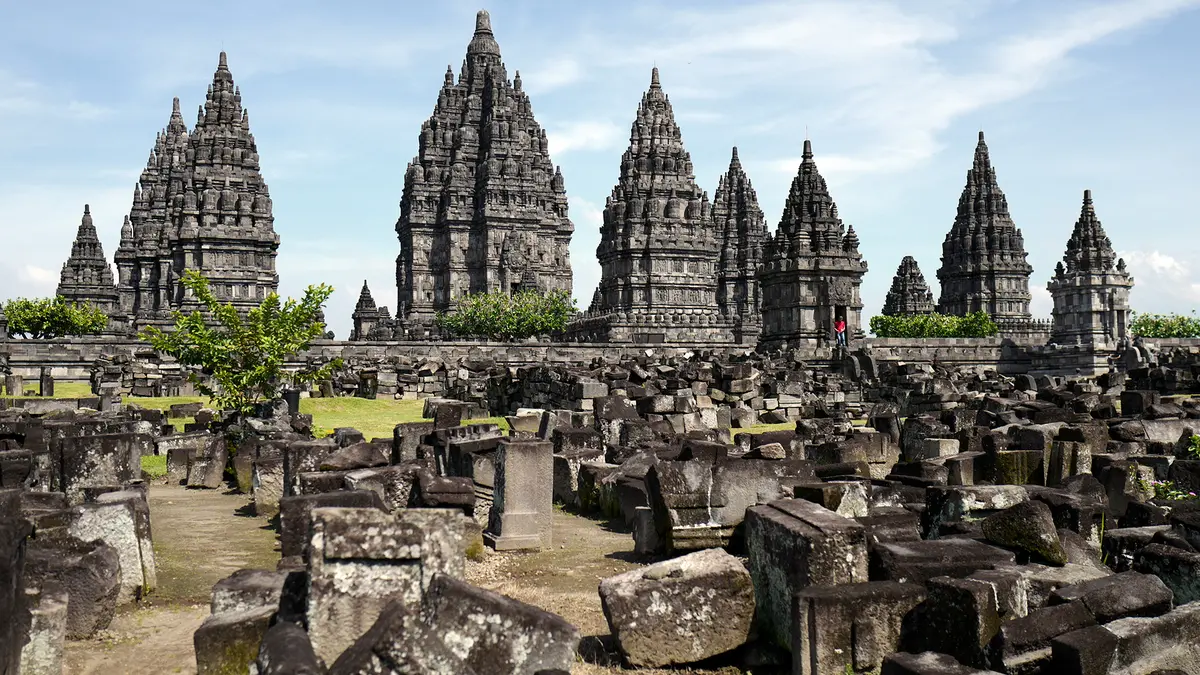
Prambanan is the largest Hindu temple complex in Indonesia and a UNESCO World Heritage site. Built around the 9th century by the Hindu Sanjaya dynasty, the complex was dedicated to the Trimurti – the trio of Hindu deities Shiva, Vishnu and Brahma. The temple lay abandoned for centuries after a series of earthquakes and volcanic eruptions and was rediscovered and partially restored by Dutch archaeologists in the 19th century. It features more than 200 structures arranged around a 47‑metre central tower dedicated to Shiva, with exquisite bas‑reliefs depicting scenes from the Ramayana. The architecture combines local Javanese styles with influences from South India’s Pallava tradition.
Key points of the restoration effort
- Partnership between nations: Indonesia invited India’s Archaeological Survey to use the anastylosis technique, which involves re‑assembling fallen stones on original foundations, similar to India’s work at Angkor Wat and My Son in Cambodia and Vietnam.
- Preserving a cultural landscape: Restoration will extend beyond Prambanan to related Buddhist complexes such as Sewu and Plaosan, recognising the site as part of a wider heritage landscape.
- Soft diplomacy: India’s involvement highlights cultural diplomacy; past projects in Southeast Asia have strengthened regional ties and showcased India’s conservation expertise.
Significance
- Heritage conservation: Restoring the temple protects an outstanding example of ancient Hindu architecture outside India, helping ensure its preservation for future generations.
- Cultural connection: The project deepens cultural links between India and Indonesia and supports the broader “Act East” policy aimed at strengthening ties with Southeast Asia.
- Tourism boost: A well‑restored complex is likely to attract more visitors, contributing to local economies and raising awareness of shared cultural heritage.
Conclusion
The Prambanan restoration project shows how heritage conservation can foster international friendship while preserving cultural treasures. By sharing expertise and resources, India and Indonesia are safeguarding a monument that stands as a testament to centuries‑old cultural exchange across the Indian Ocean.
Source: The Print

