
Why in news?
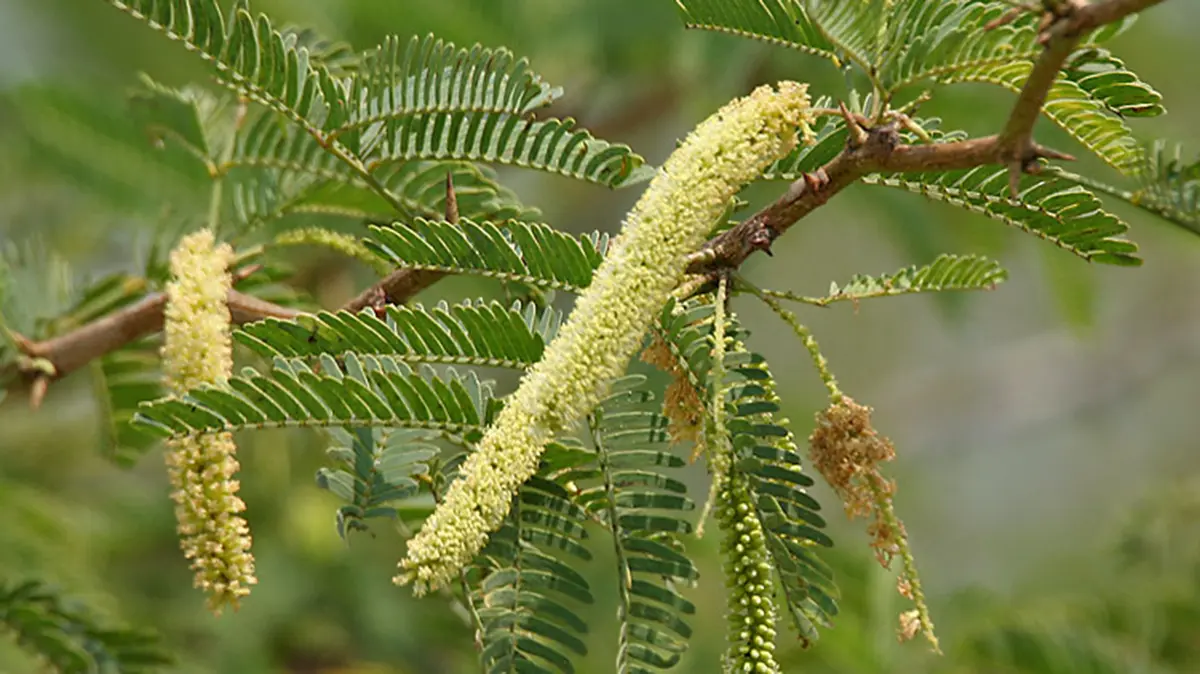
Environmental experts have warned that climate change is likely to accelerate the spread of Prosopis juliflora, a hardy shrub introduced to India in the 19th century to combat desertification. The plant has become one of the country’s most pervasive invasive species.
Background
Prosopis juliflora, also known as mesquite or vilayati babul, is native to Mexico and South America. British administrators introduced it to India around 1857–1877 to reforest wastelands and provide firewood in arid regions such as Tamil Nadu and Gujarat. Over time it naturalised widely, thanks to deep roots that tap underground water and seeds dispersed by cattle and wind.
Impacts
- Ecological threat: The shrub forms dense thickets that displace native grasses and trees. Its leaves release chemicals that inhibit the growth of other plants (allelopathy), reducing biodiversity and fodder availability for livestock.
- Livelihood dilemmas: In some areas people depend on Prosopis for firewood, charcoal and small timber. Its pods serve as emergency fodder during droughts. This dual perception—resource versus nuisance—complicates control measures.
- Health and environment: The plant harbours thorns that injure animals and humans. Its deep roots lower groundwater levels, and dried thickets increase the risk of forest fires.
Management strategies
Controlling Prosopis requires coordinated efforts:
- Mechanical removal: Cutting and uprooting entire plants, followed by manual weeding of seedlings, is effective but labour‑intensive.
- Utilisation: Encouraging commercial use of wood for charcoal and furniture can reduce densities while generating income.
- Restoration: Replanting cleared areas with native grasses and trees helps prevent reinvasion. Community awareness campaigns are essential to balance livelihoods and ecological restoration.
Conclusion
Prosopis juliflora’s success illustrates how introduced species can become invasive when ecological checks are absent. With climate change favouring its expansion, India must prioritise integrated management to protect rangelands and water resources.
Sources: The Hindu

