

Why in news?
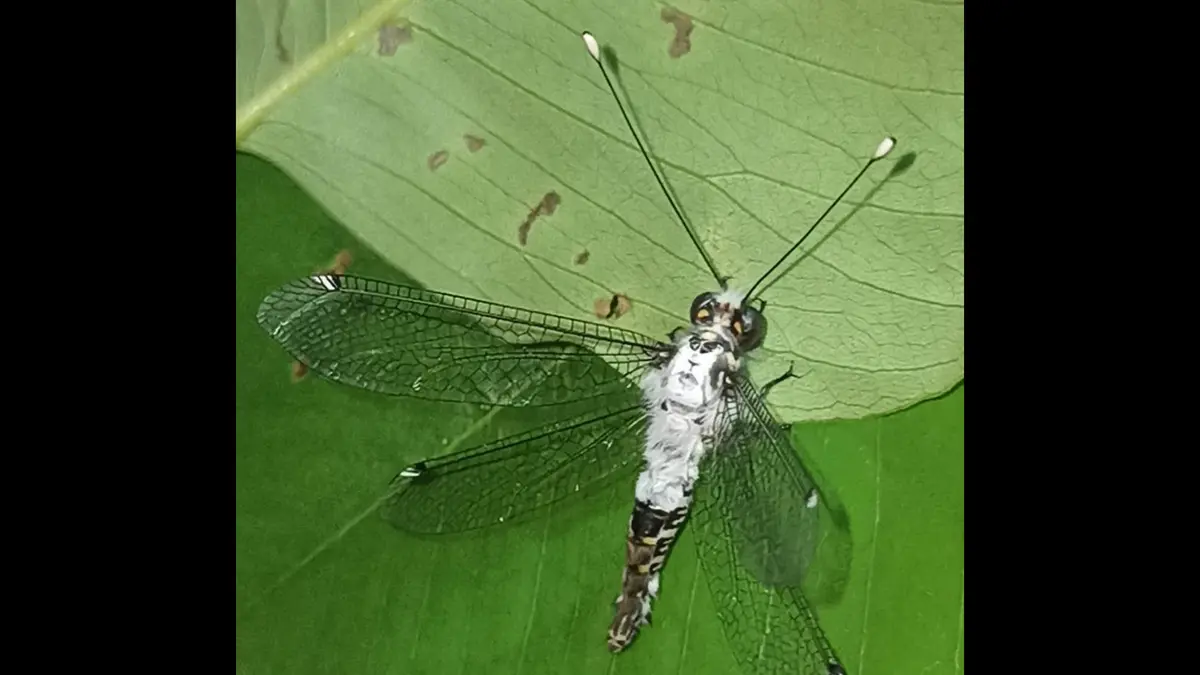
Researchers have discovered a new species of owlfly in the Nedumkayam forest in Kerala. The find is significant because no new species from this genus had been recorded in India since the late 19th century. The insect has been named Protidricerus albocapitatus.
Background
Owlflies are insects that belong to the order Neuroptera and the family Myrmeleontidae. They are known for their bulging eyes and clubbed antennae that resemble those of dragonflies. Owlflies are aerial predators; the adults hunt other insects at dusk, while the larvae live on the ground. The new species was discovered in the Nedumkayam forest of the Nilambur region in Kerala during a survey of nocturnal insects.
Discovery details
- Location: The species was found in the moist deciduous forests of Nedumkayam in Malappuram district. The area’s rich vegetation and small streams provide ideal habitat for larvae and adult owlflies.
- Distinctive features: Protidricerus albocapitatus has a white tuft on its head and long, clubbed antennae. These features distinguish it from other members of the genus and led to its name (‘albo‑capitatus’ means ‘white‑headed’).
- Taxonomic significance: With this discovery, Kerala now hosts five known species of owlflies and India’s total count increases to 37. The last time this genus was recorded in India was in 1891.
About owlflies
- Appearance: Owlflies are characterised by large, prominent eyes and long antennae with a clubbed tip. Some species develop colours in their wings after emerging from the pupal case.
- Behaviour: Adults are most active at dusk. They perch on tall grass or shrubs and fly out to catch prey in mid‑air. When threatened they can release a strong, musk‑like odour to deter predators.
- Reproduction: Females lay eggs in clusters on the tips of twigs. After laying, they create a protective coating beneath the eggs to prevent ants and other predators from reaching them.
- Habitat: Many species prefer lateritic soils and grasslands, but they may also be found in human settlements where dense vegetation exists. Larvae live on the ground and are ambush predators of small insects.
Significance of the discovery
- Finding a new species after more than a century highlights the rich insect diversity of India’s Western Ghats. It underscores the importance of protecting forest habitats.
- The discovery encourages further entomological surveys in unexplored areas. Scientists believe more unknown owlflies may inhabit Indian forests.
- Owlflies play a role in controlling insect populations. Better understanding of their ecology can contribute to balanced ecosystems.
Source: TH