

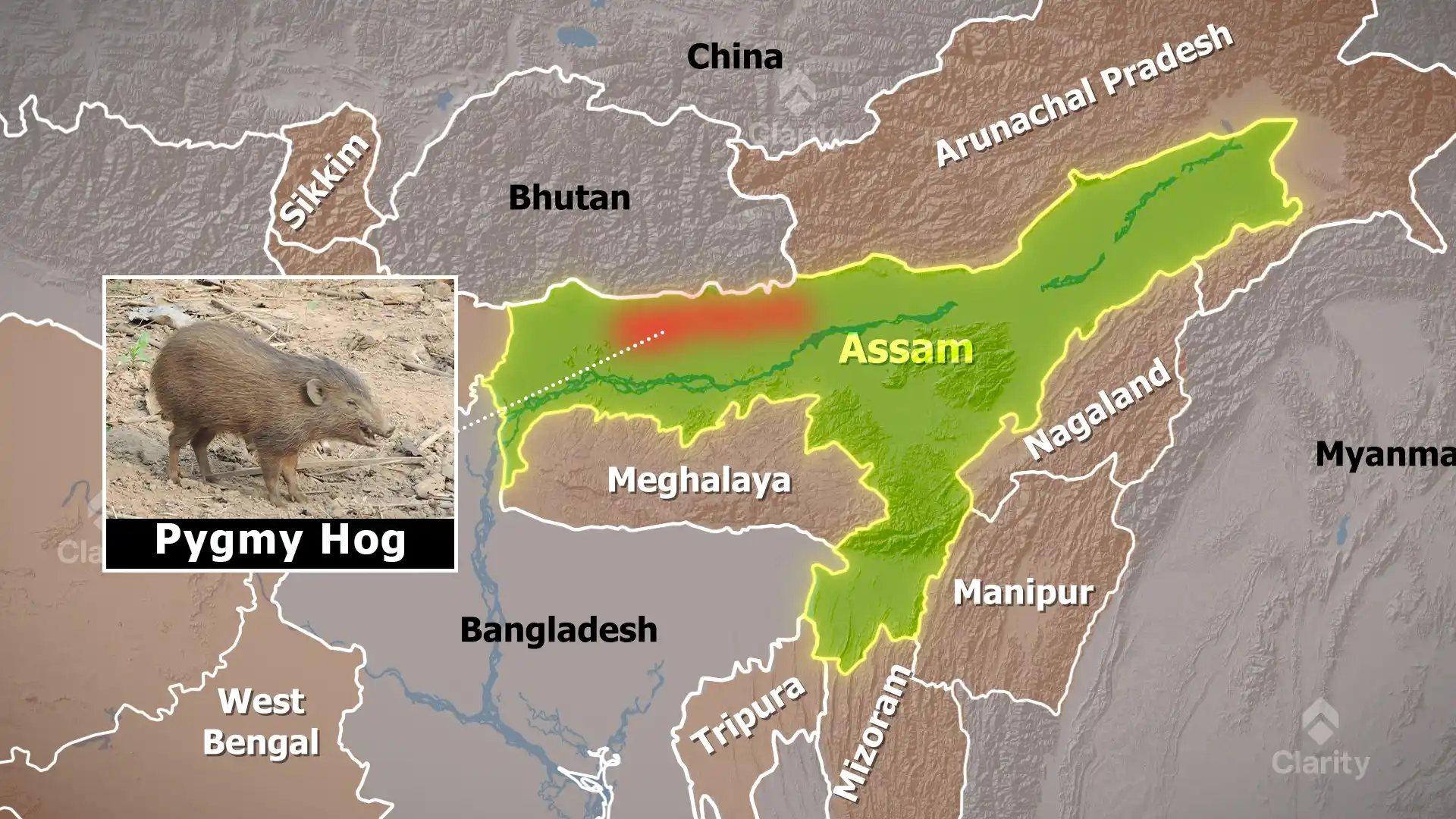
Why in news?
Conservationists have renewed focus on the critically endangered pygmy hog after reports that fewer than 350 individuals remain in the wild. The Pygmy Hog Conservation Programme (PHCP) continues to reintroduce captive‑bred animals into protected areas of Assam, while experts warn that habitat loss and disease could undo decades of progress.
Background
The pygmy hog (Porcula salvania) is the smallest and rarest wild pig species in the world. Adults measure about 55–71 centimetres in length, stand 25 centimetres high at the shoulder and weigh between 6.6 and 9.7 kilograms. Historically found in tall, dense grasslands along the Ganga–Brahmaputra floodplains from Uttar Pradesh to Bhutan and Assam, the species was thought extinct until it was rediscovered in 1971. Today it survives only in Assam’s Manas and Orang national parks.
Ecology and behaviour
- Tall grassland specialist: Pygmy hogs inhabit wet alluvial grasslands dominated by tall elephant grass. They build elaborate nests of dry grass with insulated walls and a roof where they sleep, give birth and shelter during bad weather.
- Diet and activity: These diurnal animals forage for roots, tubers, insects and small vertebrates. While searching for food, they aerate the soil and disperse seeds, contributing to grassland health.
- Reproduction: Breeding is seasonal, with births usually occurring in April or May after a four‑month gestation. Litters typically contain three to six piglets.
Threats
- Habitat loss: Conversion of grasslands to agriculture, uncontrolled burning, heavy grazing and infrastructure development have destroyed most of the pygmy hog’s habitat.
- Fragmentation: Remaining populations are isolated in small patches, making them vulnerable to local extinctions.
- Disease: Transmission of diseases such as African swine fever from domestic pigs poses a serious risk to the species.
Conservation efforts
- Pygmy Hog Conservation Programme: Established in 1995, the PHCP runs a captive breeding centre in Assam. Over 179 hogs have been reintroduced into Manas and Orang national parks.
- Grassland restoration: Conservationists work with local communities to protect and restore tall grasslands by controlling burning, reducing grazing and removing invasive species.
- Monitoring and research: Camera traps and radio collars help researchers track reintroduced hogs. Observations of pregnant females and healthy litters indicate that the animals are adapting well.
- Public awareness: Education campaigns emphasise the pygmy hog’s role as an indicator of healthy ecosystems and encourage support for habitat conservation.
Significance
- Indicator species: The presence of pygmy hogs signals the health of tall wet grasslands, which also support other rare species such as hispid hares and Bengal floricans.
- Ecological role: By digging and foraging, the hogs aerate soil, aid nutrient cycling and spread plant seeds.
- Biodiversity conservation: Protecting pygmy hogs helps preserve unique ecosystems in the Indian subcontinent.
Conclusion
The pygmy hog’s survival depends on the continued success of captive breeding and habitat restoration programmes. With coordinated efforts by conservationists, governments and local communities, there is hope that this diminutive pig will persist in the wild for generations to come.
Sources: Down To Earth