Why in news?
Authorities recently arrested a group of youths after they fired an old cannon and shouted slogans at the Archaeological Survey of India (ASI)‑protected Raisen Fort near Bhopal. Police cordoned off the cannon area, and discussions are under way on how best to protect the monument while allowing public access.
Background
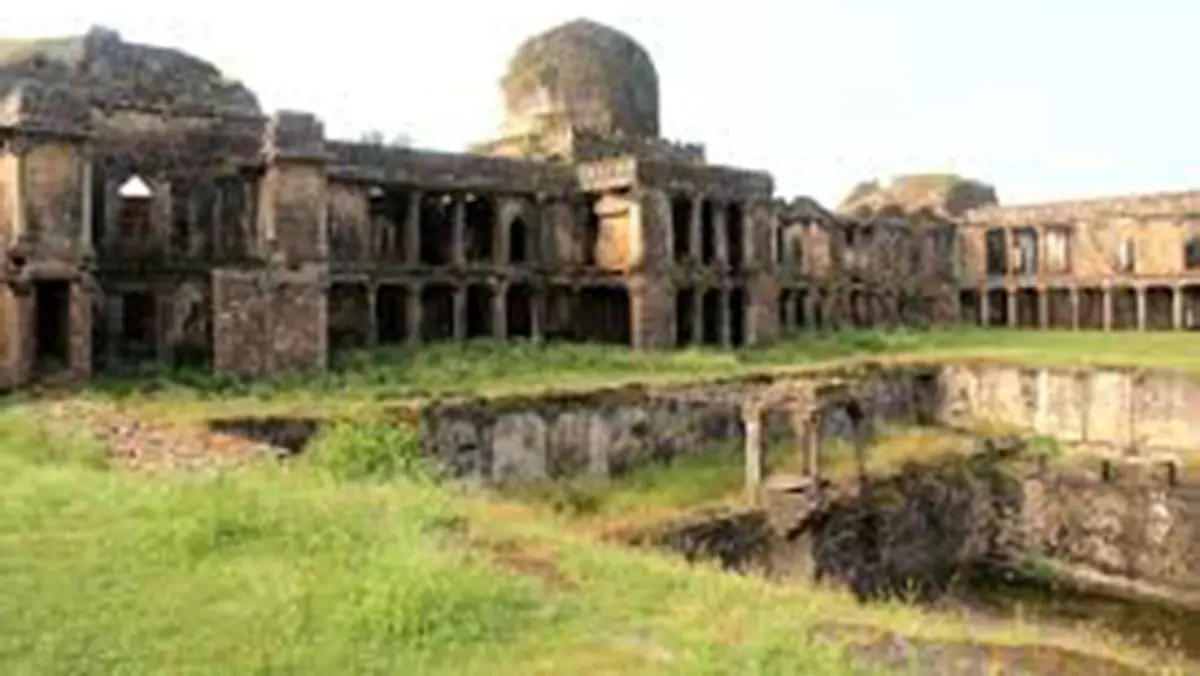
Raisen Fort is a large stone citadel perched on a hill in the Raisen district of Madhya Pradesh, about 23 kilometres from Bhopal. Built by Rajput rulers around the 11th or 12th century, it guarded trade routes across the Malwa plateau. Over centuries the fort changed hands between Rajput clans, Sultanate forces, the Sur dynasty and Mughal emperors. In 1543 it was besieged by Sher Shah Suri; after a lengthy siege, the defending ruler Puran Mal surrendered and a tragic mass self‑immolation (jauhar) took place. Later, the fort came under the Nawabs of Bhopal and then the British, eventually falling into disrepair before being taken over by the ASI.
Architectural and cultural significance
- Fortifications: Massive sandstone walls enclose an area of nearly ten square kilometres. Nine gateways (pol) and numerous bastions provided layered defences. The high elevation offered commanding views of the surrounding valleys.
- Palaces and water systems: Within the walls are ruins of palaces such as Badal Mahal, Rohini Mahal and Hawa Mahal. Ingenious water management systems, including stepwells and rain‑fed reservoirs, allowed the fort to withstand long sieges.
- Religious sites: The Someshwar Mahadev temple, which opens to devotees on Mahashivratri, and the dargah of Hazrat Peer Fatehullah Shah Baba stand side by side, symbolising syncretic traditions. The fort is also associated with legends of a mythical philosopher’s stone (paras patthar).
- Conservation challenges: Vegetation growth, encroachment and lack of signage threaten the site. Recent conservation efforts include stabilising walls and improving visitor facilities.
Significance of the incident
The March 2026 incident highlights the tension between preserving a sensitive heritage monument and accommodating large visitor numbers. While the youths’ act was widely condemned, it has prompted renewed calls for better security and interpretation at the fort. Preserving such monuments is crucial for understanding India’s medieval history and promoting cultural tourism.
Source: The Times of India