

Why in news?
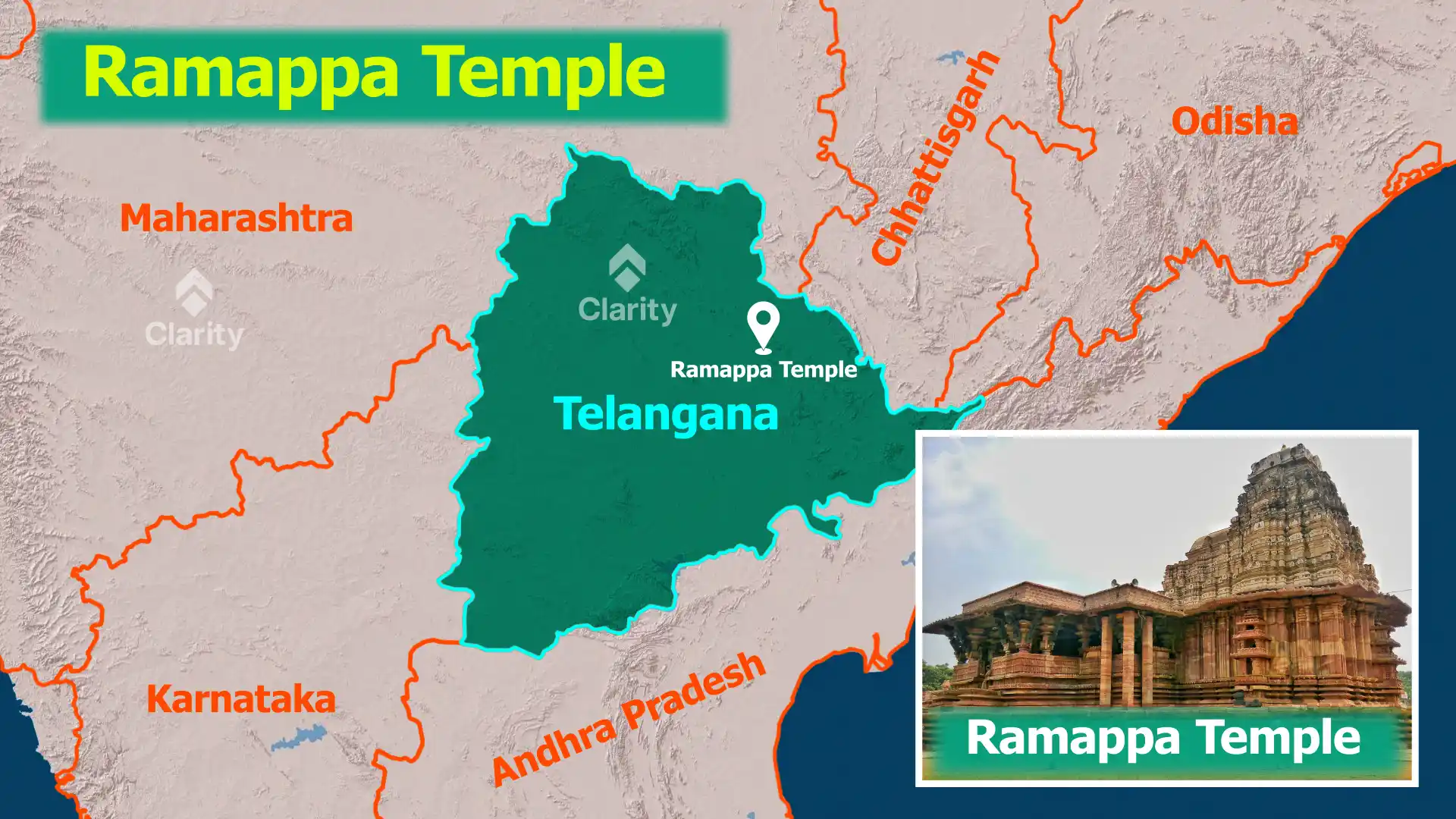
The UNESCO World Heritage‑listed Ramappa Temple in Telangana has drawn renewed attention as conservation works continue and tourism to the site increases. The temple’s unique architecture and ancient construction techniques have impressed historians and engineers alike.
Background
Ramappa Temple, officially known as the Kakatiya Rudreshwara Temple, stands in Palampet village about 200 km north‑east of Hyderabad. It was commissioned by the Kakatiya rulers Rudradeva and Recharla Rudra around 1213 CE and took roughly four decades to complete. The temple is dedicated to Shiva and forms the main shrine of a larger walled complex. In 2021 UNESCO inscribed it on the World Heritage List for its outstanding universal value.
Architectural highlights
- Floating bricks: The temple’s pyramidal vimana (tower) is built from lightweight porous bricks that can float in water. These “floating bricks” reduce the weight on the roof and demonstrate sophisticated material science.
- Sandbox foundation: The builders used a layer of sand beneath the temple foundation to cushion seismic shocks. This “sandbox technique” helped the structure withstand a major earthquake in the 17th century.
- Sculptural excellence: Carved granite and dolerite beams and pillars feature exquisite sculptures depicting dancers, musicians and mythological scenes. The bracket figures display dynamic poses and fine detailing.
- Nandi and subsidiary shrines: A massive Nandi bull statue faces the main shrine, and two smaller Shiva shrines flank the central temple.
Setting and significance
The temple is located at the foot of forested hills near Ramappa Cheruvu, a Kakatiya‑built reservoir. Dharmic texts recommend situating temples amid natural landscapes, and Ramappa’s integration with its surroundings reflects this philosophy. The shrine is considered the apex of Kakatiya temple architecture and influenced later constructions in Telangana and neighbouring regions. Its recognition by UNESCO underscores the ingenuity of medieval Indian engineers.
Conservation efforts
Ramappa Temple survived wars and natural disasters but has suffered damage to its outer structures. Early restoration was undertaken under the Nizam of Hyderabad in the early 20th century. Today the Archaeological Survey of India manages the site and is working to restore fallen sculptures and stabilise structures using traditional techniques. Visitors are encouraged to respect the monument by avoiding graffiti and littering.
Sources: TH