

Why in news?
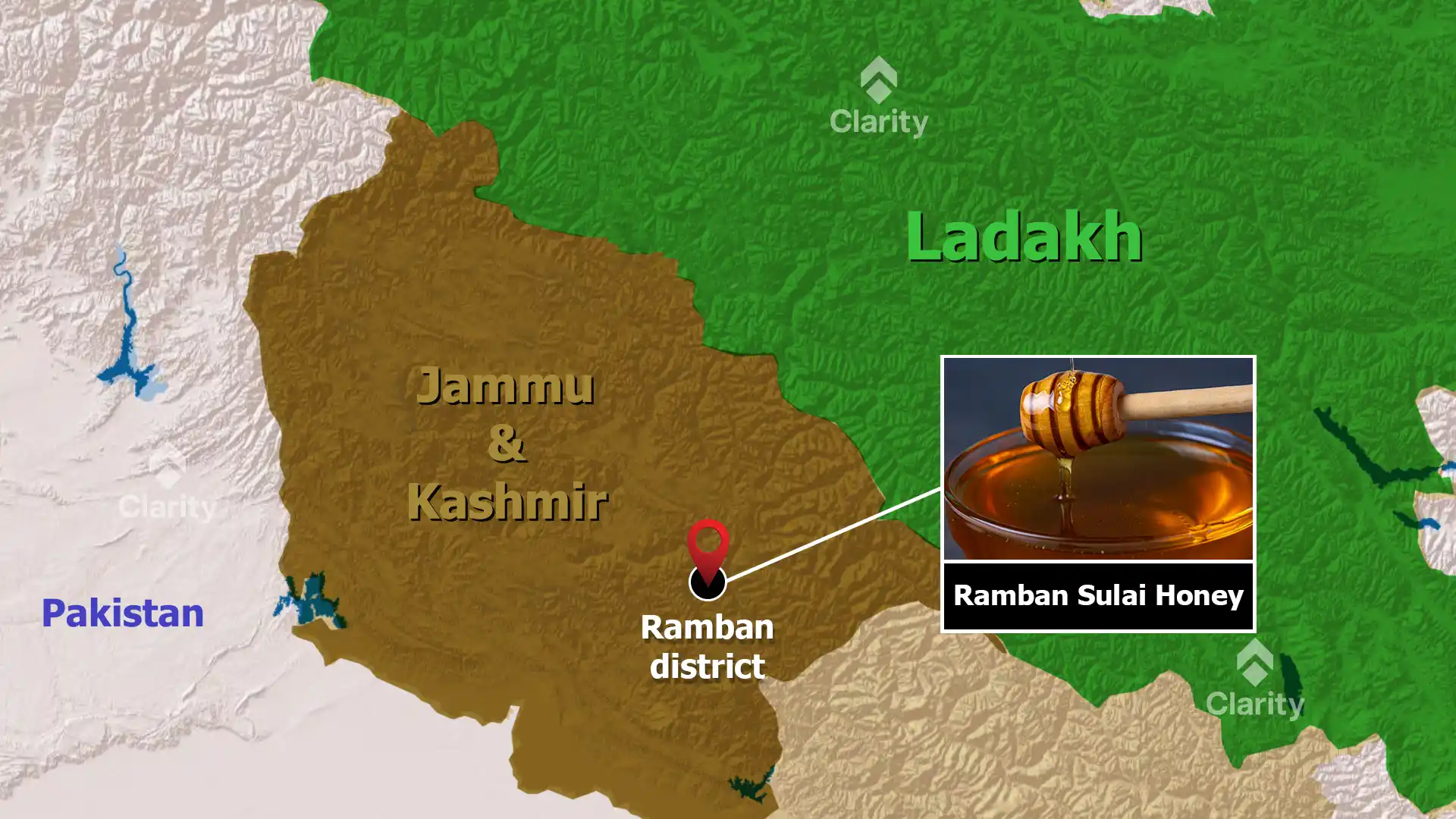
During the 128th episode of his radio programme Mann Ki Baat on 30 November 2025, the Prime Minister highlighted Ramban Sulai Honey and other beekeeping initiatives. He noted that this honey, produced from the wild basil plant in Jammu and Kashmir’s Ramban district, gained national recognition after receiving a Geographical Indication (GI) tag in 2021. His remarks came at a time when India’s honey production has more than doubled over the last decade.
Background
Ramban Sulai Honey is collected by bees that forage on the nectar of snow‑white flowers of the sulai plant (a wild form of basil) that blooms in high‑altitude meadows from August to October. The honey is harvested by local beekeepers in Ramban district, part of the Himalayan region of Jammu and Kashmir. Because of the region’s unique climate and superior bee strains, the yield of this honey is higher than in many other parts of India. In recognition of its distinctive flavour and medicinal qualities, the honey was granted a GI tag in 2021 and designated as Ramban district’s “One District, One Product.”
Distinctive features of Ramban Sulai Honey
- Colour and flavour: The honey is crystal clear and ranges from white to amber. It has aromatic floral undertones and a naturally sweet flavour, attributed to the wild basil nectar.
- Nutritional and medicinal properties: It contains essential minerals, enzymes and vitamins. Local communities use it as a remedy for coughs, colds and digestive ailments.
- Harvesting season: Bees collect nectar from sulai blossoms between August and October; honey harvesting takes place soon after flowering ends.
- Economic importance: Because of its GI tag and high demand, Ramban Sulai Honey provides an important livelihood for local beekeepers. The Government of India’s “Honey Mission” has distributed bee boxes and processing facilities to boost production and income.
Source: DD News