

Why in news?
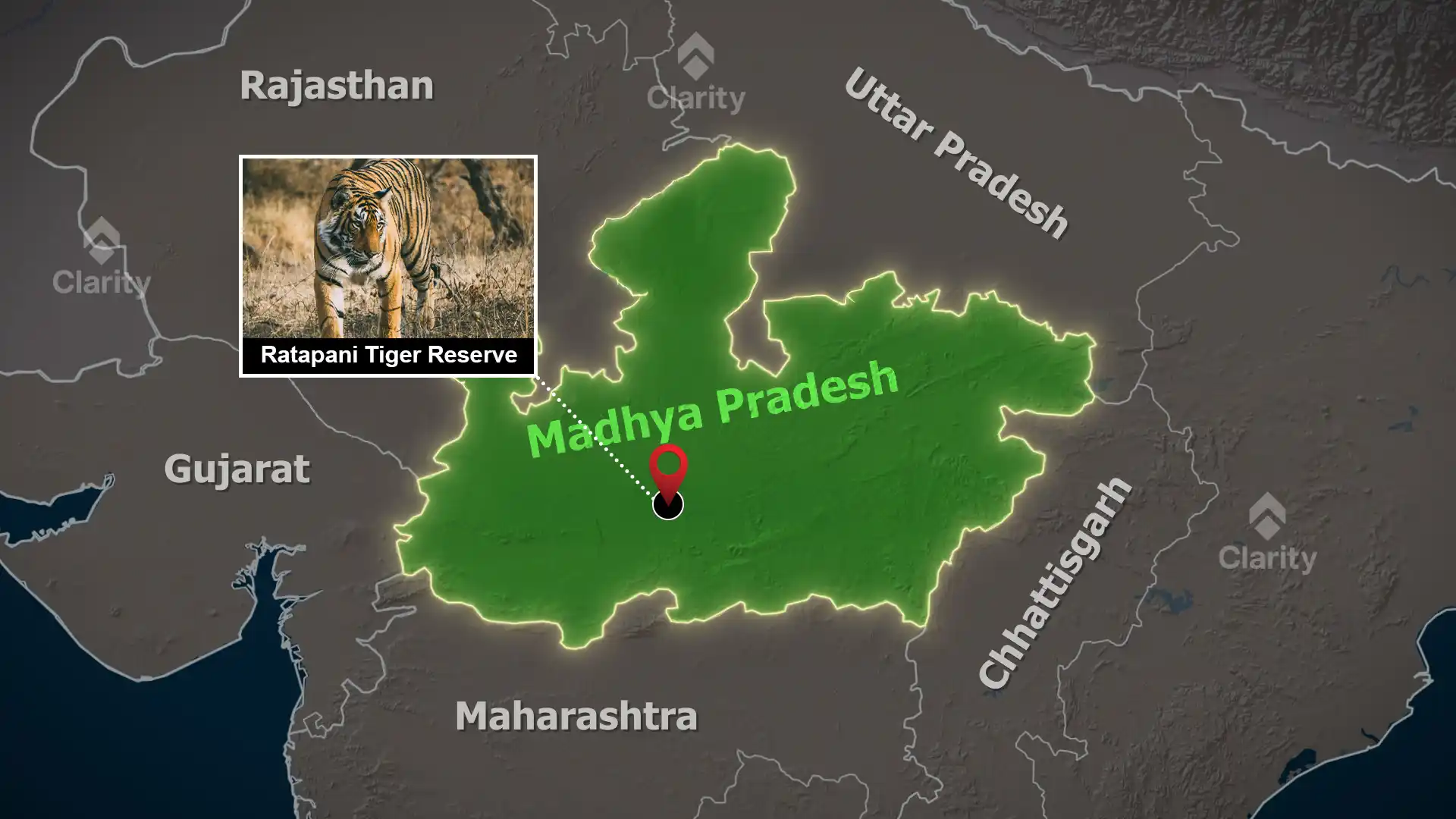
Madhya Pradesh Chief Minister Mohan Yadav announced that the recently notified Ratapani Tiger Reserve will be renamed in honour of archaeologist Dr. Vishnu Shridhar Wakankar. The decision was taken in January 2026 to recognise his discovery of the Bhimbetka rock shelters and his contributions to Indian archaeology.
Background
Ratapani, spread across Raisen and Sehore districts near Bhopal, was declared Madhya Pradesh’s eighth tiger reserve in December 2024. Covering over 1,270 km² of dry and moist deciduous forest, it forms part of the Satpura tiger landscape. The area hosts an estimated 40–90 tigers along with leopards, sloth bears, sambar deer and more than 250 bird species. The reserve also contains cultural treasures, including the UNESCO‑listed Bhimbetka rock art caves, Ginnourgarh Fort and Saru Maru caves.
Who was Dr. Vishnu Shridhar Wakankar?
Dr. Wakankar (1919–1988) was a pioneering Indian archaeologist best known for discovering the Bhimbetka rock shelters in 1957. His work revealed prehistoric cave paintings dating back tens of thousands of years. He also pinpointed the location where the Tropic of Cancer crosses India’s prime meridian and conducted extensive surveys along the Narmada Valley. By naming the tiger reserve after him, the state seeks to honour the link between cultural heritage and nature conservation.
About the reserve
- Location: The reserve lies about 45 km southeast of Bhopal. Main entry points include Jhiri, Delawadi and Bhimbetka.
- Landscapes: Its forests are dominated by teak, bamboo and Saja trees. Numerous hills, seasonal streams and grasslands provide habitat for large mammals and birds.
- Wildlife: Apart from tigers, the area supports leopards, wild dogs, sloth bears, spotted deer, four‑horned antelope, hyenas and crocodiles in reservoirs.
- Cultural sites: Bhimbetka’s rock shelters feature prehistoric paintings and inscriptions, some dating back more than 30,000 years. Other sites include Ginnourgarh Fort and Kathotiya rock art.
Significance of the naming
- Celebrating heritage: The name honours Dr. Wakankar’s monumental discovery and emphasises that conservation is not just about wildlife but also about preserving cultural landscapes.
- Tourism and awareness: Linking the reserve with Bhimbetka may attract more visitors and raise awareness about both wildlife conservation and India’s prehistoric art.
- Government commitment: The decision reflects the state’s intent to integrate heritage conservation with ecological protection and sustainable tourism.
Conclusion
Renaming Ratapani Tiger Reserve after Dr. Wakankar underlines the deep connections between India’s natural and cultural patrimony. As the reserve develops eco‑tourism and conservation initiatives, balancing wildlife protection with community involvement and heritage preservation will be key.
Source: Deccan Chronicle