

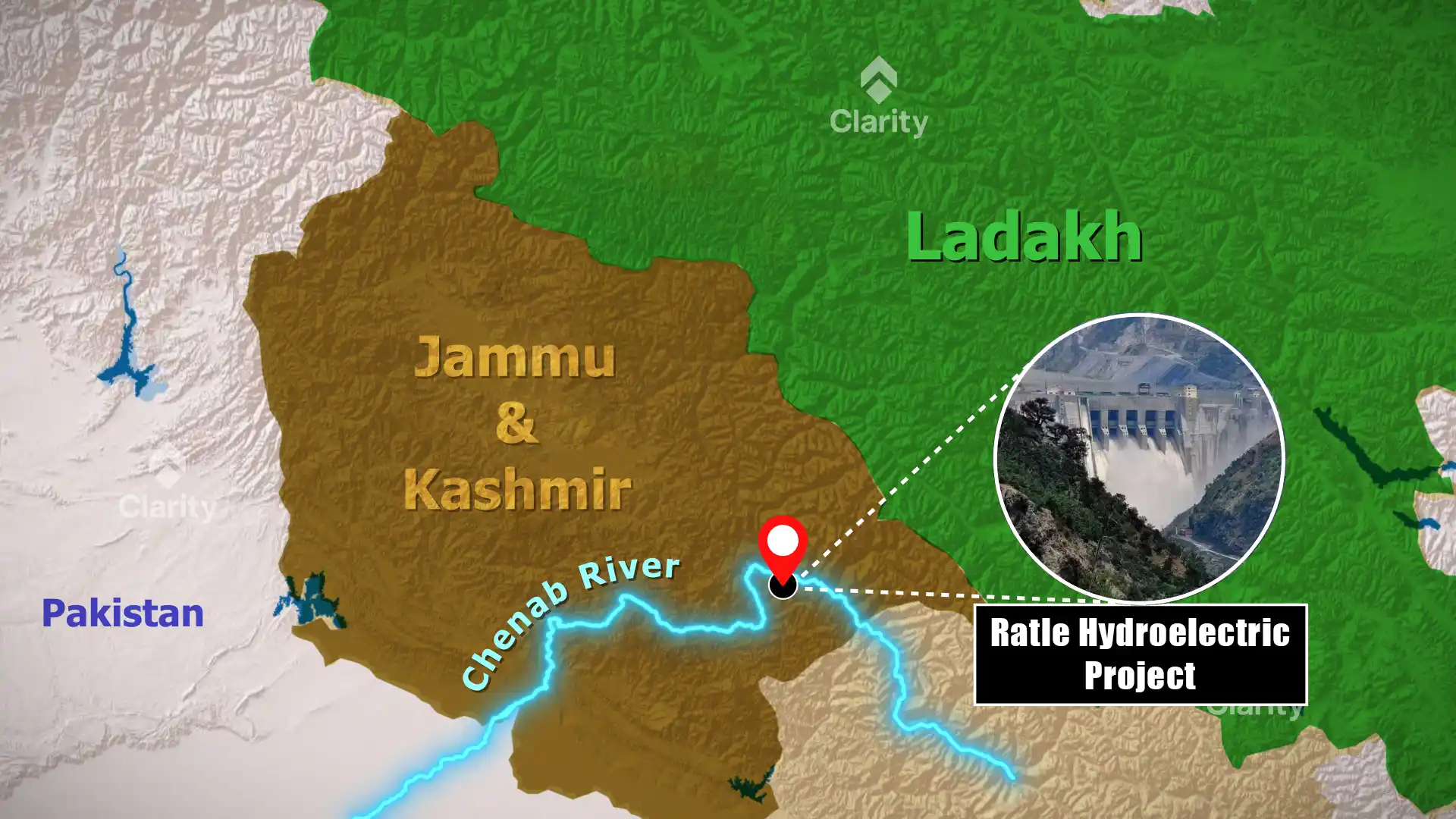
Why in news?
The Ratle Hydroelectric Project in Jammu and Kashmir has been back in the headlines after the engineering firm building it warned of pulling out due to alleged political interference. This warning highlights delays to the 850‑megawatt hydro plant, which is a key project for meeting the region’s power needs. Authorities are now reviewing the timeline and addressing local concerns.
Background
The Ratle project is a run‑of‑river hydroelectric scheme on the Chenab River near the village of Drabshalla in Kishtwar district. In such projects, a dam channels part of the river’s flow through turbines without forming a large reservoir. The idea for Ratle was first proposed in 2010, and in 2013 a contract was awarded to a private developer. However, protests over land acquisition and environmental impact led to the contract being terminated.
In 2019 the Government of India decided to revive the project by forming a joint venture between National Hydroelectric Power Corporation (NHPC), which holds a majority stake, and the Jammu and Kashmir State Power Development Corporation (JKSPDC). Construction responsibilities were awarded to a consortium led by Megha Engineering and Infrastructure Limited (MEIL). The dam is being built downstream of the existing Ratle village, and when complete it will divert river water through tunnels to underground power stations.
Key features
- Large gravity dam: The project includes a concrete gravity dam approximately 133 metres high. The dam relies on its own weight to hold back water and channel it through intake tunnels.
- Total installed capacity: The plant will generate about 850 megawatts of electricity using four Francis turbines rated at 205 megawatts each and an additional unit of 30 megawatts. These turbines rotate when water flows through them, converting the energy of the river into electricity.
- Underground powerhouses: To minimise the project’s surface footprint and avoid displacing villages, the main power station and an auxiliary station are being built inside the mountains. Water enters through two headrace tunnels, spins the turbines and then re‑enters the Chenab downstream.
- Run‑of‑river design: Unlike large storage dams, Ratle’s reservoir will be relatively small. The project will generate power using the natural flow of the river, which means less submergence of land but also dependence on seasonal flows.
Current status and challenges
- Delay in timelines: When construction started, authorities aimed to complete the dam by 2026. Political unrest and alleged interference have pushed the expected completion date back to 2028.
- Local concerns: Some residents worry about environmental impacts such as reduced river flow, landslides and threats to fisheries. The project authorities have promised rehabilitation measures, but opposition continues.
- International context: Pakistan has previously objected to hydropower projects on the Chenab under the Indus Waters Treaty. India suspended participation in the treaty in 2025 after repeated objections. The Ratle project, however, uses run‑of‑river technology which allows water to flow back into the river, making it compliant with environmental norms.
Significance
- Energy security: The 850‑megawatt plant will contribute significantly to the power needs of Jammu and Kashmir and nearby states. It will help reduce dependence on imported coal and fossil fuels.
- Employment and development: Construction has created thousands of jobs in the region. Improved roads and infrastructure associated with the project are expected to spur economic growth.
- Strategic importance: By utilising the Chenab’s hydropower potential, India asserts its rights over shared rivers while adhering to run‑of‑river principles. Successful completion will encourage future hydro projects in the Himalayan region.
Conclusion
The Ratle Hydroelectric Project symbolises both the promise and challenges of harnessing Himalayan rivers. Clear communication with local communities, environmental safeguards and timely project management are essential to ensure that this major investment benefits both people and the environment.
Source: TH