
Why in news?
India’s Union Ministry of Textiles instructed traders and balers to reduce their stocks of raw jute to zero by 5 May 2026. The order, issued under the Jute and Jute Textiles Control Order, aims to improve the availability of raw jute and rein in speculative hoarding. It follows recent reports of rising jute prices despite a good harvest, prompting the government to act in the interest of jute farmers and mill workers.
Background
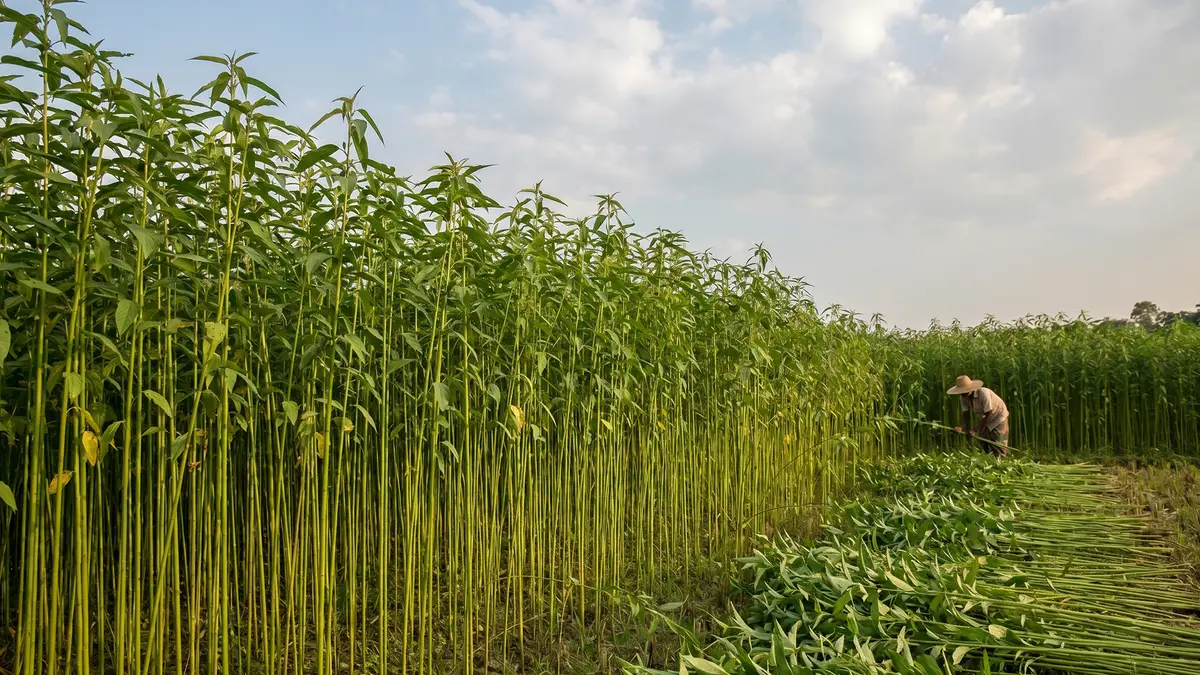
Jute is the second‑most important natural fibre crop after cotton. It is grown mainly for its long, golden‑brown fibres that are spun into sacks, ropes and coarse textiles. The plant needs a hot, humid climate with temperatures above 25 °C, relative humidity of 70 – 90 % and annual rainfall of 160–200 cm. Alluvial or loamy soils with a slightly acidic pH (around 5.0) suit jute cultivation best. Farmers typically sow the crop in February–April and harvest it in July–October. India produces nearly half of the world’s raw jute, and West Bengal accounts for about 80 % of the country’s output.
Recent government action
- Zero stock limit: The new order requires traders and balers to sell all their raw jute stock by 5 May 2026. This prevents large hoardings and ensures that raw jute reaches mills and weavers at reasonable prices.
- Mandatory reporting: Sellers must update their stock positions on the Jute SMART portal. Failure to comply could invite penalties under the Essential Commodities Act.
- Rationale: Officials explained that despite good production in 2025–26, certain players were allegedly stockpiling raw jute to create artificial scarcity. The measure seeks to stabilise prices, safeguard the livelihoods of mill workers, and protect consumers who rely on jute packaging for food grains.
- Broader industry context: India’s jute industry provides direct employment to about 370,000 workers and supports millions of farm families. Reducing stock limits helps mills operate at capacity and honours the government’s requirement that 100 % of food grain and 20 % of sugar produce be packaged in jute sacks.
Understanding the jute crop
- Climate and cultivation: Jute thrives in warm, wet monsoon conditions. Temperatures above 25 °C and high humidity support vegetative growth, while heavy rains ensure soft fibres. Sowing usually begins in February and harvesting occurs about 4 – 5 months later when the plants reach 2–3 metres in height.
- Geographical spread: Five eastern states – West Bengal, Bihar, Assam, Odisha and Andhra Pradesh – dominate production. West Bengal alone grows around four‑fifths of the crop and houses most of India’s jute mills. Bangladesh, on India’s eastern border, is the other major global producer.
- Economic significance: Jute fibre is biodegradable and recyclable, making it a preferred choice for eco‑friendly packaging. The crop also supports rural livelihoods and export earnings. However, it faces challenges from synthetic substitutes and price volatility.
Significance of the order
- Stabilising prices: By compelling traders to offload stock, the government intends to prevent artificial price hikes and ensure that mills can procure raw jute at fair rates.
- Protecting livelihoods: Farmers and mill workers depend on a steady flow of raw jute. Supply bottlenecks threaten wages and cause mills to cut production.
- Regulating the market: The Essential Commodities Act gives authorities power to impose stock limits on agricultural goods. Similar interventions are used for onions and pulses when prices spike.
- Encouraging transparency: Requiring traders to report holdings on the Jute SMART portal helps monitor supplies and deters hoarding.
Sources: News On Air

