

Why in news?
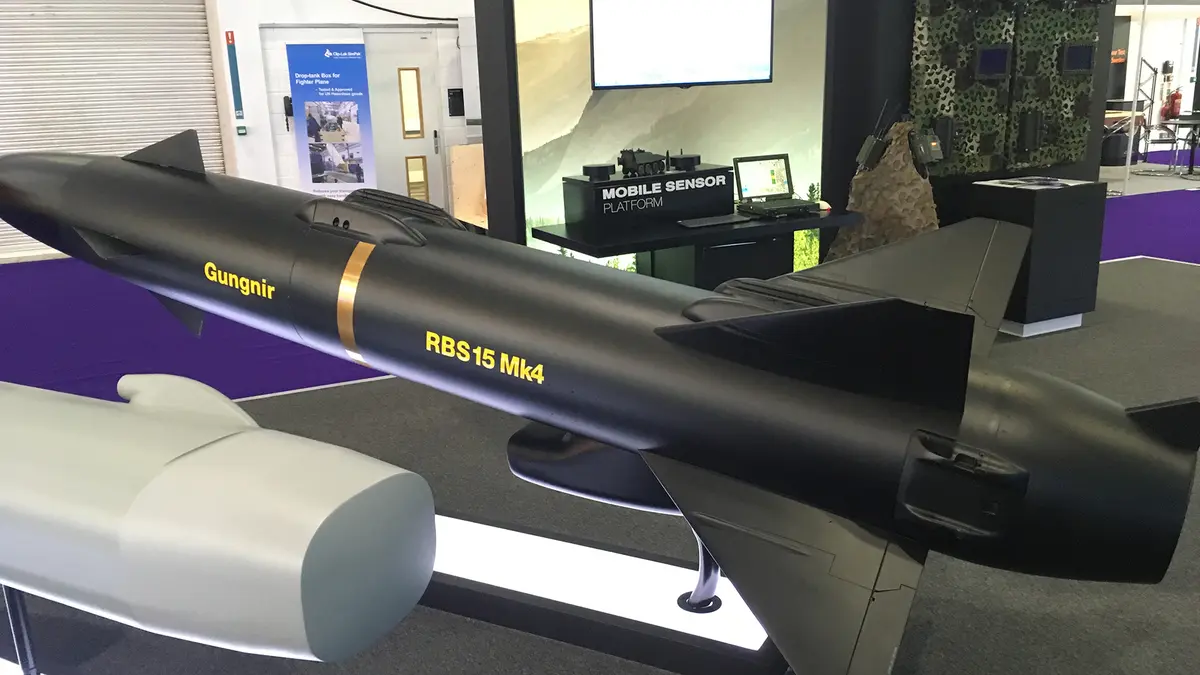
Swedish defence company Saab released a video showing its RBS‑15 Gungnir missile destroying the radar and launcher units of Russia’s S‑400 air‑defence system as part of a promotional campaign. The footage highlighted the missile’s ability to strike both sea and land targets, bringing this long‑range weapon back into public discussion.
Background
The RBS‑15 family of anti‑ship missiles has been developed in Sweden since the early 1980s. The latest fourth‑generation version, known as the RBS‑15 Gungnir, has been produced by Saab in partnership with Germany’s Diehl Defence. Designed primarily to attack surface ships, it also has a secondary land‑attack capability, allowing operators to strike coastal defences, air bases and other critical infrastructure. Several European navies, including Sweden, Finland and Germany, field earlier versions of the missile.
Key features
- Long range: The Gungnir variant can engage targets at distances greater than 300 kilometres. This extended reach lets launch platforms remain far from hostile coastlines.
- Heavy warhead: A high‑explosive warhead of roughly 200 kilograms is designed to destroy large vessels or hardened shore installations.
- Sea‑skimming flight: The missile flies at low altitude, using an inertial navigation system and an active radar seeker for terminal guidance. Its cruising speed is close to the speed of sound, making it difficult to intercept.
- Multiple launch platforms: It can be launched from corvettes, trucks or coastal batteries, and fighter aircraft such as the JAS 39 Gripen. This flexibility allows small navies to integrate it easily into their force structure.
- Electronic counter‑countermeasures: The on‑board seeker resists jamming and can operate in cluttered environments like littoral waters or against shore‑based radars.
Significance
- Enhanced deterrence: With its combination of range and precision, the RBS‑15 Gungnir gives smaller countries the capability to keep hostile fleets at bay and threaten critical shore facilities.
- Interoperability: The missile is compatible with the NATO Sea Sparrow launch system and can be integrated on a variety of vessels and aircraft, increasing its appeal on the export market.
- Lessons for India: The demonstration underlines the growing importance of modern anti‑ship missiles for coastal defence. As India develops indigenous anti‑ship systems, studying designs like the RBS‑15 helps planners understand global standards in range, guidance and modularity.