
Why in news?
As tensions rise in West Asia, experts warn that submarine communication cables running through the Red Sea could become targets or collateral damage in regional conflict. Recent social media messages from Iranian‑backed militants have threatened to sever cables, and memories of an accidental cut in September 2025 have heightened concerns about internet outages affecting India and other countries.
Background
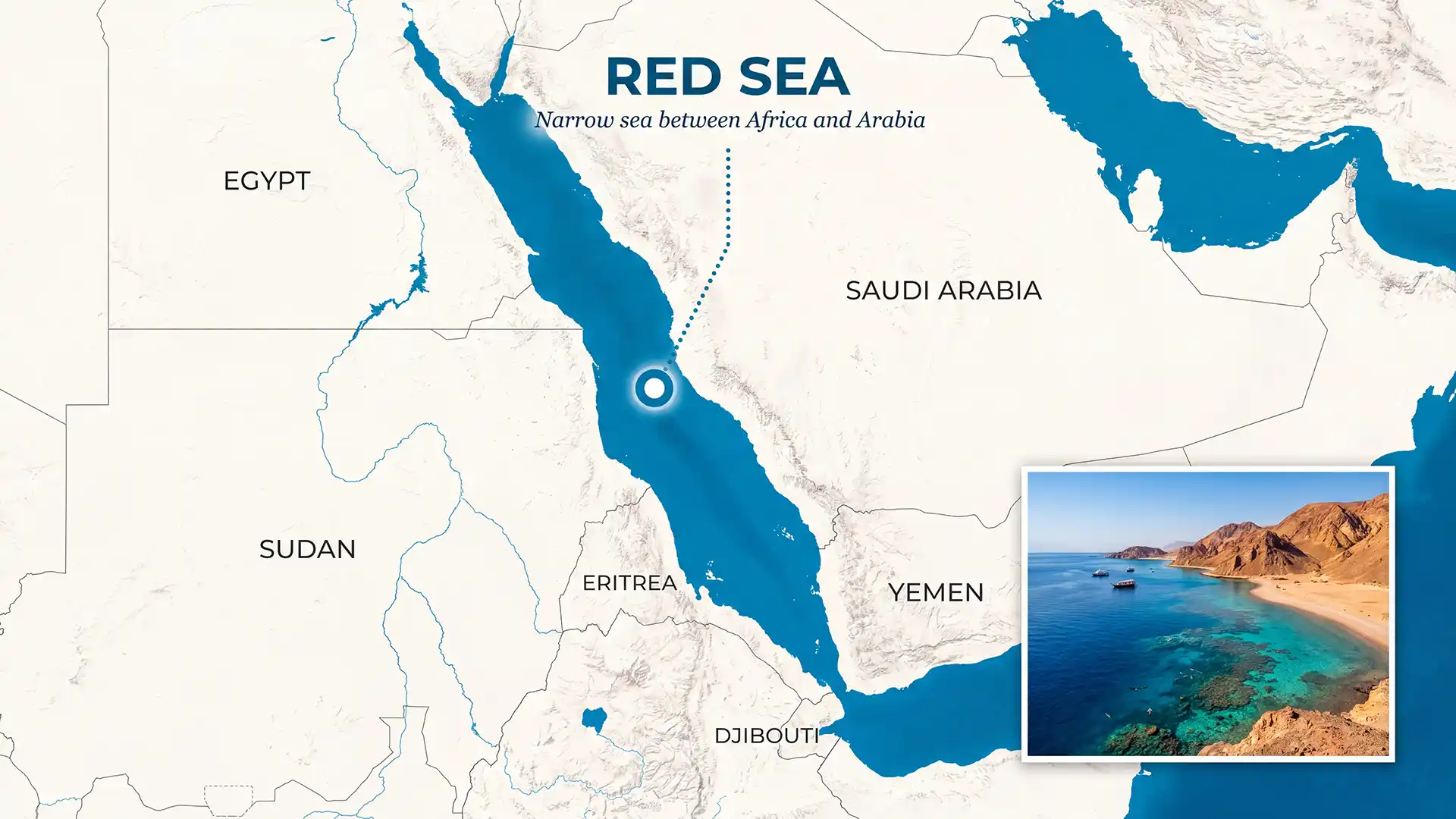
The Red Sea is a narrow, elongated body of water lying between Africa and the Arabian Peninsula. It connects to the Mediterranean Sea through the Suez Canal and to the Gulf of Aden via the Bab el‑Mandeb Strait, making it one of the world’s busiest shipping routes. The sea is also notable for its high salinity and thriving coral reefs that are unusually tolerant of warm temperatures. Beneath its waters lies a dense network of fibre‑optic cables carrying data between Europe, Asia and Africa.
Key concerns
- Cable vulnerability: About 95 percent of global internet traffic travels through undersea cables. Four major cables in the Red Sea – SEA‑ME‑WE 4, India–Middle East–Western Europe, FALCON and Europe‑India Gateway – were damaged in September 2025 when a commercial ship dragged its anchor.
- Threats of sabotage: Iranian‑backed Houthi militants in Yemen have hinted at deliberately cutting cables in retaliation for Western naval blockades. Such acts could disrupt communication links between Asia, the Middle East and Europe.
- Impact on India: India hosts 17 international submarine cables across landing stations in Mumbai, Chennai, Cochin, Tuticorin and Thiruvananthapuram. Damage to Red Sea cables can cause internet slowdowns, affect digital payments and cloud services, and have economic repercussions.
- Geostrategic chokepoint: The Bab el‑Mandeb Strait, at the southern end of the Red Sea, is a critical chokepoint for global trade and energy shipments. Instability in the region not only threatens data flows but also raises shipping costs and insurance premiums.
Significance
- Infrastructure security: The episode highlights the need for robust protection of submarine cables through improved surveillance, redundancy and international cooperation.
- Strategic diversification: Countries like India may have to invest in alternative routes and satellite links to mitigate the impact of disruptions.
- Environmental awareness: Alongside geopolitical risks, the Red Sea’s unique coral ecosystems underscore the importance of balancing infrastructure development with marine conservation.
Source: NDTV

