
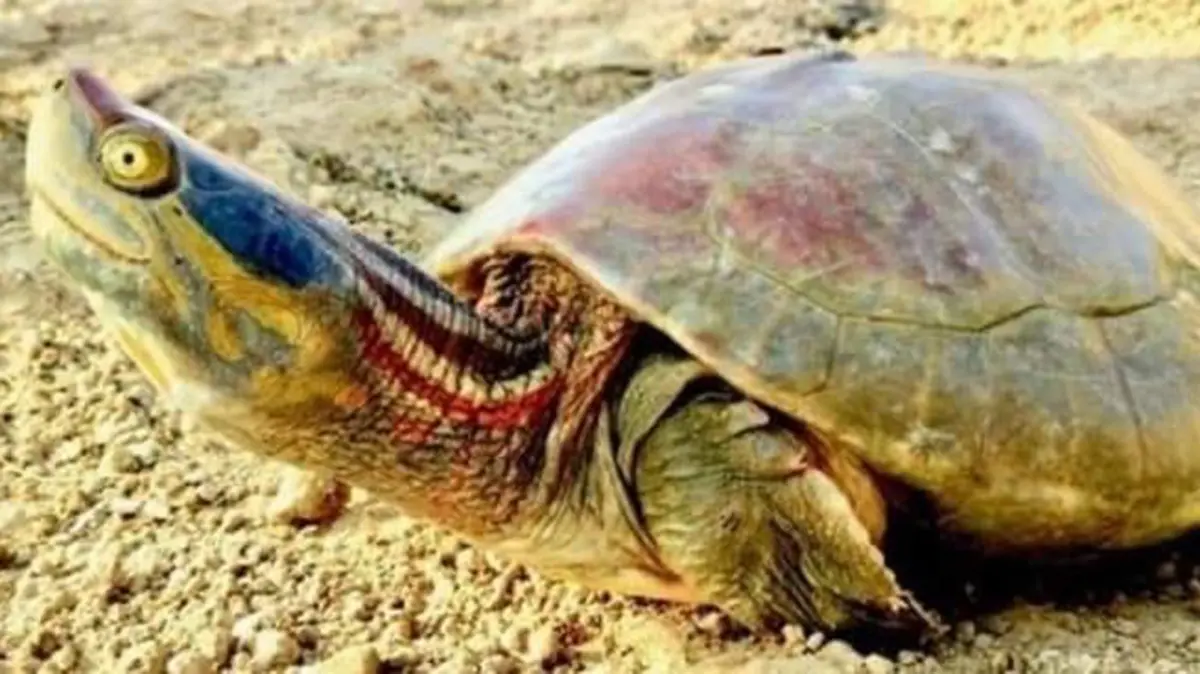
Why in news?
The critically endangered red‑crowned roofed turtle (Batagur kachuga) has been in the news as conservationists warn of its dwindling population. Environmental groups used World Turtle Day in late March 2026 to highlight the species’ plight and call for stronger protection of riverine habitats in northern India.
Background
This river‑dwelling turtle is one of three species in the genus Batagur. Males are instantly recognisable during the breeding season by their vivid red heads and bright yellow necks; females are much larger but drabber. Historically, red‑crowned roofed turtles inhabited the entire Ganga basin from Assam to West Bengal and Uttar Pradesh. Over the past century their numbers have collapsed by around 80 percent due to hunting for meat and eggs, sand mining, dam construction, entanglement in fishing nets and polluted waterways.
Current status and threats
- Population: Fewer than 1,000 adults remain worldwide. The last viable wild population survives in a short stretch of the Chambal River, with perhaps 500 breeding females.
- Legal protection: The species is listed as Critically Endangered on the IUCN Red List, placed in Schedule I of India’s Wildlife Protection Act and covered under Appendix II of CITES.
- Ecological role: These turtles are omnivores that help regulate aquatic vegetation and invertebrate populations. As long‑lived reptiles, they are bio‑indicators of river health.
- Main threats: Illegal hunting for meat and traditional medicine, egg collection, sand and gravel mining, sudden water releases from dams, bank erosion, pollution and predators like feral dogs ravage nests and hatchlings.
Conservation efforts
Conservationists under the Indian Turtle Conservation Programme and the Namami Gange initiative protect nesting sites on the Chambal by erecting fences, relocating eggs to hatcheries and releasing hatchlings into the river. Community outreach encourages fishers to avoid nets that entangle turtles and to report sightings. Continued habitat protection along the Chambal and restored flows in the Ganga and Yamuna are vital for the species’ recovery.

