

Why in news?
Customs officials at Chennai airport intercepted a Malaysian traveller carrying nearly three thousand hatchlings of red‑eared slider turtles. The hatchlings were hidden in small boxes and were seized under the Wildlife (Protection) Act and the Customs Act. Authorities identified them as an invasive species banned from import and returned them to Malaysia.
Background
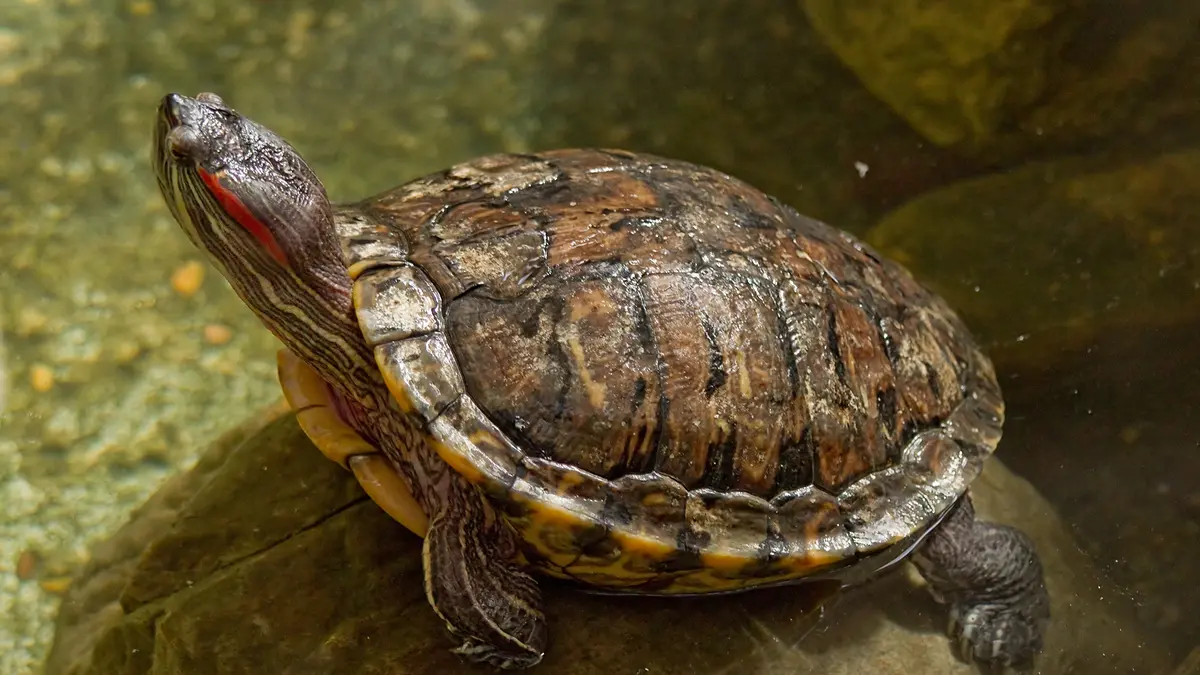
The red‑eared slider (Trachemys scripta elegans) is a freshwater turtle native to the Mississippi River basin in the United States. It is a popular pet because of its green shell marked with yellow stripes and a distinctive red patch behind each eye. Adults grow to about 13–28 centimetres, weigh up to a kilogram and can live for 20–30 years. They are omnivorous, bask on logs or rocks during the day and hibernate in muddy bottoms in winter.
Why are red‑eared sliders a problem?
- Invasive species: Released by pet owners into ponds and lakes, red‑eared sliders establish breeding populations in many parts of India. They compete aggressively with native turtles for food, basking sites and nesting areas.
- Threat to ecosystems: These turtles can trigger algal blooms by overgrazing aquatic plants. They carry pathogens such as salmonella and shigella that can infect humans and wildlife.
- Lack of predators: In India the sliders have few natural predators, allowing their numbers to grow unchecked. They are listed among the world’s 100 worst invasive species.
Regulation and public awareness
- Legal restrictions: Import and sale of red‑eared sliders are banned in India. Customs and wildlife authorities regularly seize illegally smuggled hatchlings at airports.
- Collection and study: Researchers at institutes such as the Kerala Forest Research Institute’s National Centre for Biological Invasions collect sliders found in water bodies and study their impacts.
- Responsible pet keeping: People should avoid buying exotic turtles as pets and never release captive animals into the wild. Raising awareness through campaigns and school programmes can help protect native species.
Conclusion
The seizure at Chennai airport highlights the ongoing wildlife trade and the ecological risks posed by the red‑eared slider. Stricter enforcement, public education and support for rehabilitation programmes are needed to prevent further spread of this invasive turtle.
Source: TH