
Why in news?
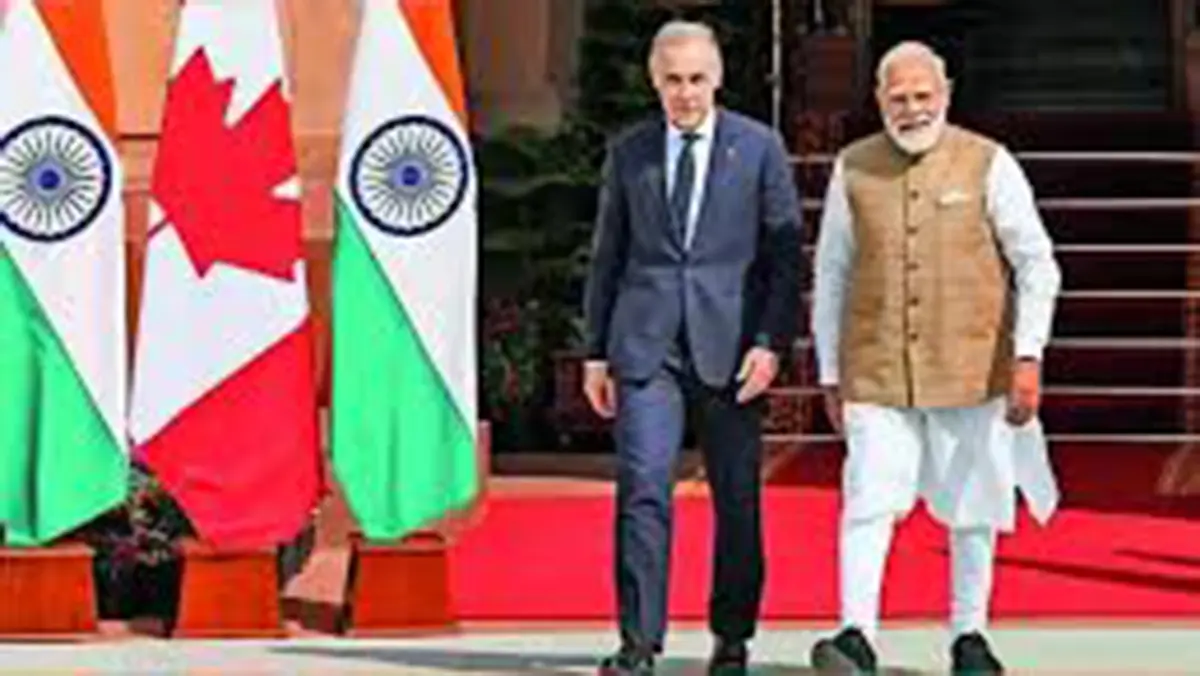
Canadian Prime Minister Mark Carney visited India in early March 2026 to rebuild trust after years of diplomatic tension. During talks with Prime Minister Narendra Modi, the two sides signed a long-term uranium supply agreement and agreed to resume negotiations on a Comprehensive Economic Partnership Agreement (CEPA). The visit signals a cautious reset in India-Canada relations, which had deteriorated over allegations of Indian involvement in the 2023 killing of Khalistani separatist Hardeep Singh Nijjar.
Background
India and Canada established diplomatic relations in 1947 and elevated them to a "Strategic Partnership" in 2018. Bilateral ties soured after Canadian leaders accused Indian officials of involvement in Nijjar's killing in 2023. Both countries expelled diplomats and suspended trade talks, and a subsequent uranium supply agreement (2015-20) failed to meet expectations. Carney's visit is the first full bilateral visit by a Canadian Prime Minister since Justin Trudeau's 2018 trip.
Major outcomes of the visit
- Uranium supply agreement: India and Canada signed a ten-year, US$1.9 billion contract for 10,000 tonnes of uranium to be delivered from 2027-35. Canadian company Cameco will supply fuel for India's nuclear power plants, supporting the country's transition to clean energy.
- Comprehensive Economic Partnership Agreement (CEPA): The two leaders finalised the terms of reference for CEPA negotiations. They aim to raise bilateral trade from around US$8.66 billion (2024-25) to US$50 billion by 2030. Key sectors identified include clean energy, critical minerals, agricultural value chains, advanced manufacturing and technology.
- Strategic energy partnership: The countries agreed to cooperate on renewable energy, LPG supply, nuclear technology and small modular reactors. This shift towards clean energy cooperation reflects broader climate goals.
- Multilateral cooperation: Canada announced its decision to join the International Solar Alliance and the Global Biofuel Alliance, both led by India. Participation will enhance India's leadership in global renewable governance.
- Security and counterterrorism: India and Canada pledged to strengthen cooperation against terrorism, violent extremism and organised crime. They agreed to convene the Joint Working Group on Counterterrorism and to address issues related to Khalistani extremism and transnational repression.
Strategic significance for India
- Energy security: Reliable access to uranium is essential for India's civil nuclear programme, which provides low-carbon baseload power. Cooperation on renewable energy and modular reactors supports the country's net-zero ambitions.
- Economic diversification: A successful CEPA would expand trade, reduce dependence on traditional partners such as the United States and encourage investment in critical minerals and technology.
- Indo-Pacific cooperation: Strengthening ties with a G7 partner reinforces India's broader engagement in the Indo-Pacific region and aligns with its strategic aim of diversifying partnerships.
Challenges in India-Canada relations
- Trust deficit: The Nijjar killing and accusations of Indian interference in Canada have eroded mutual trust. Canada's investigative agencies allege involvement of Indian consular officials, which India strongly denies. These issues remain a major stumbling block.
- Khalistani extremism: India has long criticised Canada for allowing separatist organisations to operate freely. Canada, in turn, raises concerns about transnational repression. Both sides must address these security issues to build confidence.
- Trade barriers: Long-standing regulatory differences have stalled CEPA negotiations. Ensuring that commitments under previous uranium deals are honoured will also test bilateral cooperation.
Way forward
- Sustained dialogue: Regular political and diplomatic engagement can help rebuild trust, address security concerns and maintain momentum in trade talks.
- Early conclusion of CEPA: Both countries should fast-track negotiations by addressing regulatory and tariff barriers, thereby unlocking new areas of cooperation.
- Confidence-building measures: Transparent investigations into the Nijjar case, closer intelligence sharing and measures to prevent violent extremism can help reduce mistrust.
- Expanding energy cooperation: Implementing the uranium agreement, developing small modular reactors and collaborating on renewable technologies will strengthen long-term partnerships.
- Engaging the diaspora: Managing diaspora concerns related to extremism while protecting civil liberties will be essential for stable relations.
Conclusion
The agreements signed during Prime Minister Mark Carney's visit mark a pragmatic attempt to reset India-Canada relations after years of diplomatic friction. While energy and trade deals promise mutual benefits, unresolved political issues and security concerns continue to pose risks. Sustained engagement and mutual trust will determine whether the relationship evolves into a durable strategic partnership.
Source: The Hindu · Indian Express

