

Why in news?
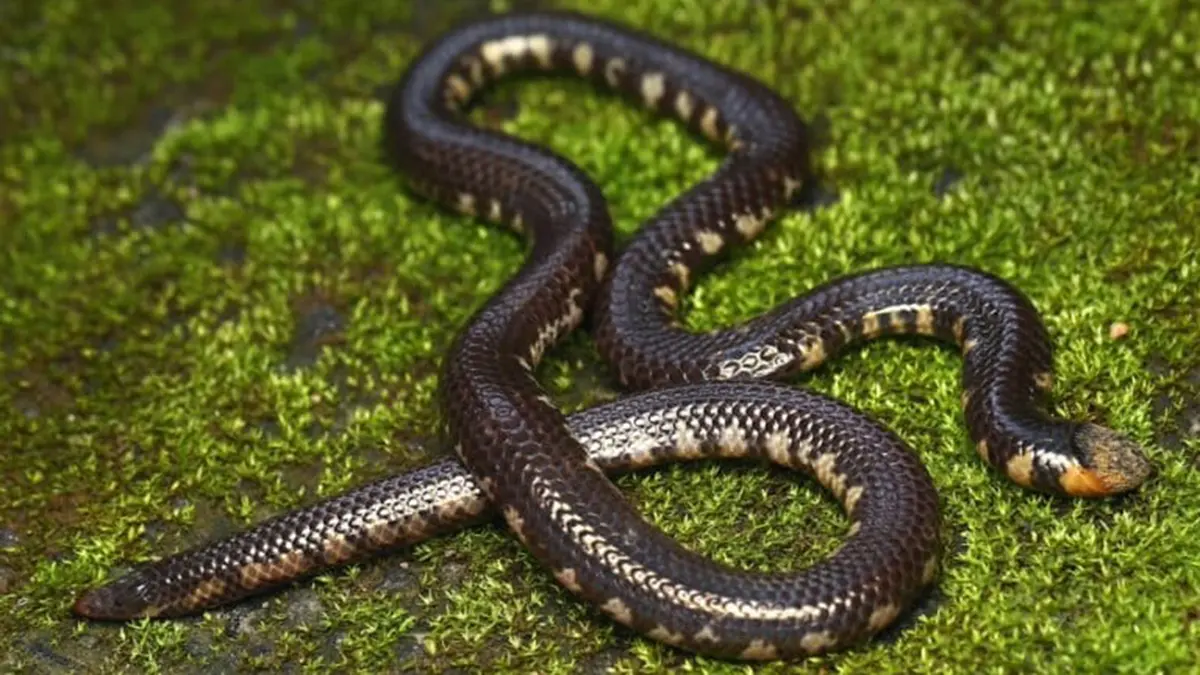
Researchers recently described a new species of burrowing shieldtail snake, Rhinophis siruvaniensis, from the Siruvani Hills of the Western Ghats. The discovery emphasises the rich yet fragile biodiversity of this mountain range and has drawn attention to the need for habitat protection.
Background
Shieldtails (family Uropeltidae) are small, fossorial snakes endemic to southern India and Sri Lanka. They spend most of their lives underground, feeding on earthworms and insects. Because they rarely emerge at the surface, new species are often found only after targeted searches in remote forests.
Key features of the new species
- The species was collected from moist evergreen forests near the Siruvani reservoir on the Kerala–Tamil Nadu border.
- It has 17 rows of dorsal scales at mid‑body, 202–205 ventral scales and 4–8 pairs of sub‑caudal scales – counts that differentiate it from other Rhinophis species.
- The tail shield is dome‑shaped with a small, blunt end, unlike the flattened shields of related species.
- The dorsal colouration is dark brownish‑black with cream blotches, while the belly is creamy white with dark patches. When threatened, the snake curls into a ball and points its tail upward, a defence mechanism common among shieldtails.
Why this discovery matters
- Highlighting hidden diversity: Even in well‑explored biodiversity hotspots like the Western Ghats, little‑known groups continue to yield new species. Documenting them is essential for understanding evolutionary history.
- Habitat protection: The Siruvani hills constitute one of the last remaining low‑elevation wet forests in the southern Ghats. The discovery underscores the need to conserve these forests from threats such as quarrying, encroachment and infrastructure projects.
- Taxonomic clarity: Accurate species descriptions allow ecologists to correctly identify populations and assess their conservation status. Misidentifying species can lead to inappropriate management decisions.
Conclusion
Rhinophis siruvaniensis joins a growing list of fauna discovered in India’s Western Ghats. The meticulous study of scale counts, colouration and anatomy helps distinguish it from related species. Protecting the Siruvani hills will not only safeguard this snake but also the many amphibians, plants and invertebrates that share its forest home.
Sources: MB