
Why in news?
Environmentalists have raised alarms as the U.S. administration plans to expand oil drilling in the Gulf of Mexico, a move that could imperil the Rice’s whale. Recognised as a distinct species only in 2021 and numbering fewer than 100 individuals, the whale’s survival hinges on protecting its habitat from vessel traffic, noise and pollution.
Background
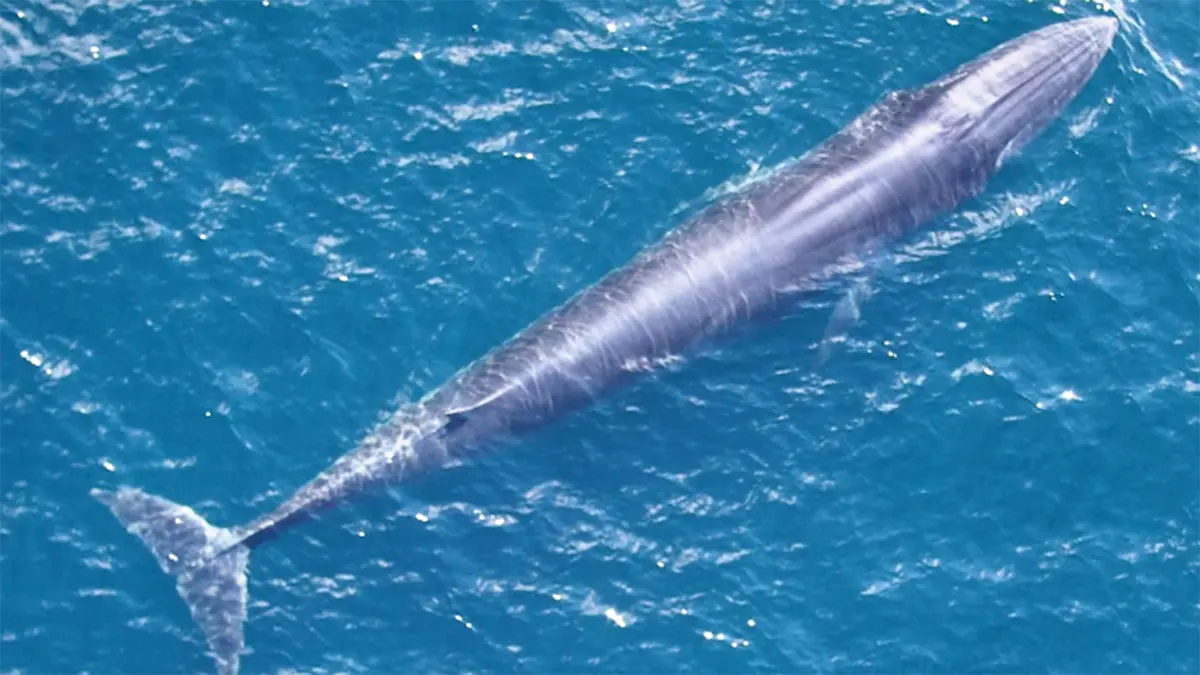
Rice’s whales belong to the baleen whale family and are closely related to Bryde’s whales. Researchers confirmed in 2021 that the Gulf of Mexico population represents a distinct species, separate from Bryde’s whales found elsewhere. Rice’s whales are medium‑sized, dark‑grey whales with three prominent ridges on their heads and slender pointed flippers. They inhabit the deep waters (100–400 m) of the northeastern Gulf of Mexico year‑round and feed primarily on silver‑rag driftfish.
Biology and life history
- Appearance: The whales have sleek bodies with uniformly dark backs and pale to pinkish bellies. Their blowholes are set forward on the head, and three ridges run between the blowhole and the tip of the snout.
- Diet and reproduction: They feed mainly on small fish and are thought to reproduce every two to three years, reaching sexual maturity at about nine years of age.
- Distribution: Rice’s whales are the only baleen whale species that live exclusively in the Gulf of Mexico. They remain in the region throughout the year and do not undertake long migrations.
Threats and conservation status
- Vessel strikes and noise: Busy shipping lanes and oil‑and‑gas activity in the Gulf create noise and collision risks that can injure or kill whales.
- Oil pollution: Spills and leaks from offshore drilling contaminate the water and food sources. The 2010 Deepwater Horizon disaster severely affected the population.
- Small population size: With fewer than 100 individuals, the loss of even one breeding female could collapse the population.
- Climate change: Changing ocean temperatures and currents may alter prey availability and habitat conditions.
- IUCN status: Rice’s whale is listed as Critically Endangered on the IUCN Red List.
Conservation efforts
Environmental groups have petitioned the U.S. government to designate critical habitat for Rice’s whales and impose speed restrictions on vessels. The National Oceanic and Atmospheric Administration (NOAA) has placed the species on its Species in the Spotlight programme, highlighting the need for urgent conservation action. Delays in finalising habitat protections have drawn criticism because any further expansion of drilling could push the species toward extinction.
Conclusion
Rice’s whales are among the world’s most endangered marine mammals. Protecting their habitat, reducing vessel noise and limiting oil‑and‑gas activity in the Gulf of Mexico are essential to prevent the first human‑caused extinction of a great whale. Concerted action by governments, industry and conservationists is urgently needed.
Source: The Hindu

