

Why in news?
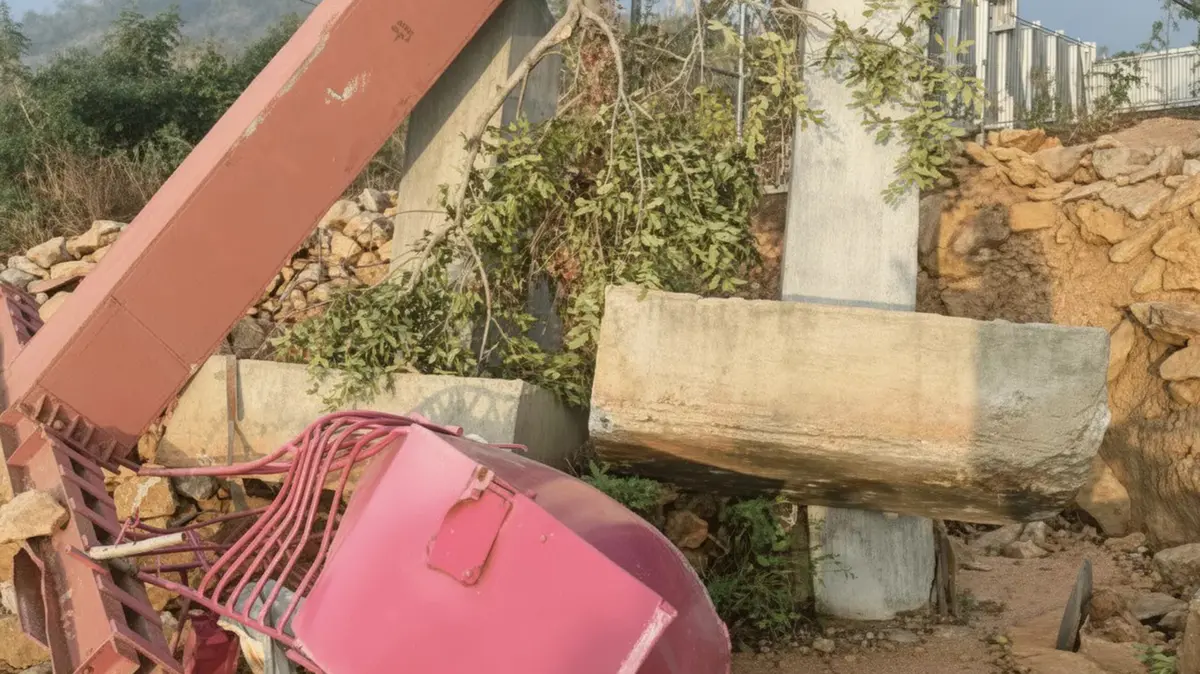
A newly built ropeway near Bihar’s historic Rohtasgarh Fort collapsed during a load test on 26 December 2025. A tower and four cabins were damaged when the wire rope slipped, though no injuries were reported. The ₹13‑crore project, meant to connect Rohtas block to the fort and Rohiteshwar Dham, was due to open in January 2026. Following the accident, the state government suspended engineers, moved to blacklist the contractor and ordered technical reviews.
Background
Rohtasgarh Fort sits atop a plateau in Bihar’s Son River valley. Rising around 1,500 feet above sea level, the fort is accessed via roughly 2,000 limestone steps cut into the hill at Medha Ghat. Dense forests and natural barriers made it virtually impregnable. The plateau’s fertile soil and streams allowed inhabitants to withstand sieges for months.
Legend associates the fort with Rohitashva, son of King Harishchandra, though the earliest confirmed record is a 7th‑century inscription referring to the Gauda ruler Sasanka. Over centuries the fort changed hands: in 1539 the Afghan leader Sher Shah Suri captured it by trickery and stationed 10,000 soldiers there; his general Haibat Khan built the Jami Masjid in 1543. Later, Mughal governor Raja Man Singh made Rohtas his headquarters, constructing the grand Mahal Sarai palace and Persian‑style gardens. Mughal princes later sought refuge here, and the British briefly used it as a detention site during colonial rule.
Architecture and significance
- Scale: Spread over a plateau covering about 42 square kilometres, Rohtasgarh is among the largest hill forts in India. Its fortifications include 83 gateways, underground passages and numerous buildings.
- Notable structures: The fort houses the Hathiya Pol (Elephant Gate), built in 1597 and decorated with carved elephants; the four‑storeyed Takht‑e‑Badshahi where Raja Man Singh resided; the Aina Mahal (Mirror Palace); and the Jami Masjid with three domes and minarets reflecting Indo‑Afghan style.
- Historical role: Because of its strategic position and natural defences, Rohtasgarh served as a military stronghold for Afghan, Mughal and later British rulers. It played a role in the 1857 revolt when rebels used the surrounding jungles to harass British troops.
Conclusion
The ropeway project aimed to boost tourism by easing access to this remote fort. The collapse underscores the importance of strict safety standards in infrastructure projects, particularly in ecologically sensitive and historically significant sites.
Source: The Indian Express