
Why in news?
Underwater archaeologists announced the recovery of more than a thousand Roman artefacts from Lake Neuchâtel in Switzerland. The objects include pottery, swords, tools and parts of a horse‑drawn carriage dating to the first century AD. The cargo probably belonged to a Roman supply ship that sank about 2,000 years ago and was kept secret for months to prevent looting.
Background
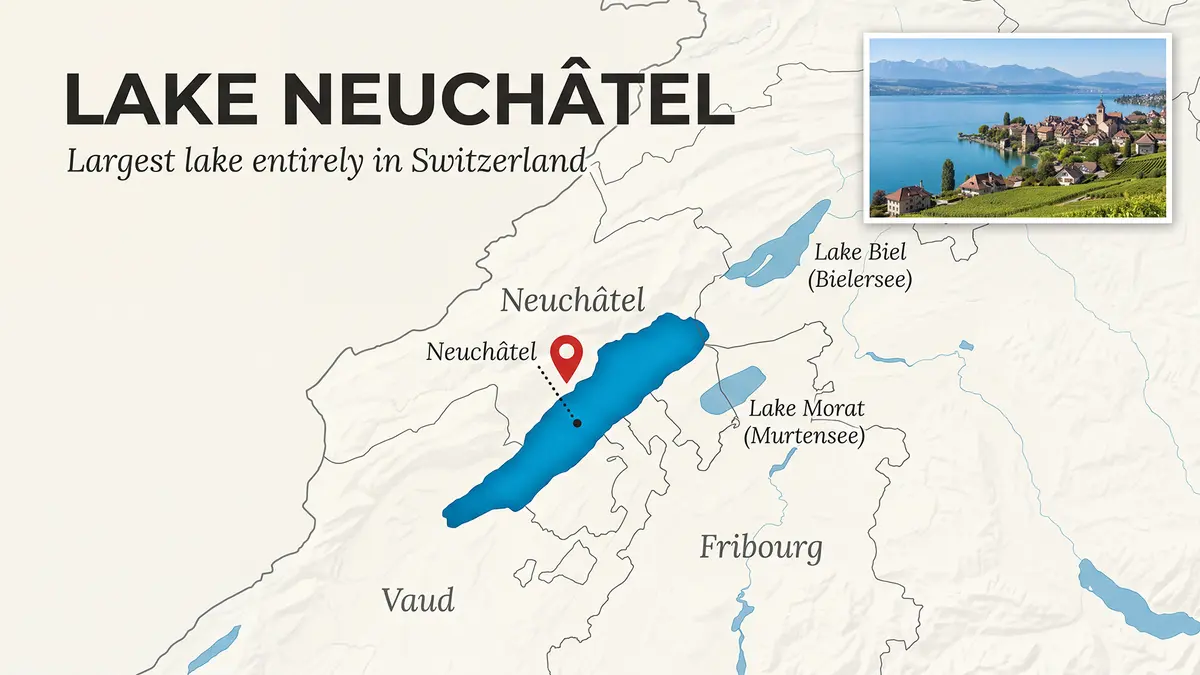
Lake Neuchâtel is the largest lake wholly within Switzerland. It lies at the foot of the Jura Mountains and covers about 218 km², stretching roughly 38 km in length and up to 8 km in width. The lake receives water from the Areuse and Broye rivers and drains via the Thielle. Its northern shoreline is lined with vineyards, while the La Tène archaeological site on the north shore lends its name to the late Iron Age La Tène culture.
Key findings
- Contents of the cargo: The recovered items comprise ceramic jars, amphorae, bronze and iron tools, swords, daggers, belt buckles, bronze fibulae (brooches) and fragments of a carriage. A wooden crate dated to 17 AD provides a clue to the timing of the shipment.
- Possible destination: Archaeologists believe the cargo was meant for Roman troops stationed at a military camp such as Vindonissa (modern Windisch). The presence of legionary weapons suggests it supplied soldiers rather than civilian traders.
- Discovery and protection: The site was located using drones and sonar equipment by researchers from the Octopus Foundation. To protect the finds from thieves, the recovery operation remained confidential until now. The artefacts will be cleaned and conserved before being exhibited.
- Historical significance: The find highlights the importance of inland waterways in ancient trade across the Alps. It also shows that Roman logistical networks reached deep into what is now Switzerland.
Source: Euronews · NDTV · Britannica

