Why in news?
Rongali Bihu (Bohag Bihu), the most vibrant of Assam’s Bihu festivals, commenced on 14 April 2026. This year’s celebrations overlapped with campaigning for the general elections, prompting early festivities and highlighting the festival’s role in Assamese identity.
Background
Bihu refers to three agrarian festivals celebrated in Assam: Rongali in April, Kongali in October and Bhogali in January. Rongali Bihu marks the Assamese New Year and the beginning of the sowing season. Its origins lie in pre‑colonial spring festivals of ethnic communities such as the Bodo, Kachari and Mising people, and it has evolved into a symbol of unity transcending caste and religion.
How it is celebrated
- Goru Bihu on the last day of the month of Chaitra involves washing cattle, decorating them with garlands and treating them to special fodder in gratitude for their labour.
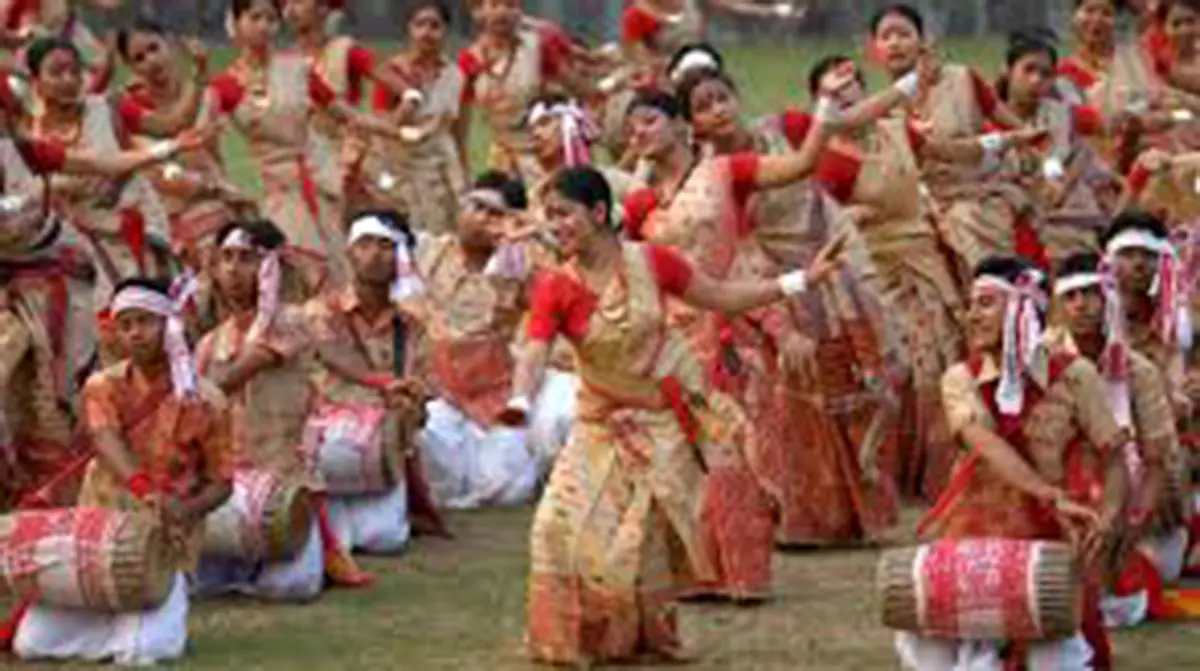
- Manuh Bihu on the first day of Bohag sees people take ritual baths, wear new clothes and seek blessings from elders. Feasting, Bihu dance and music performances featuring the dhol, pepa and taal begin on this day.
- The following days include Gosai Bihu (worship of household deities), Senehi Bihu (sweetheart day when youths exchange gifts) and Mukoli Bihu (open‑air community gathering with traditional dance and songs).
Significance
- Rongali Bihu celebrates fertility, abundance and renewal, ushering in a new agricultural cycle.
- The festival fosters communal harmony and reinforces Assamese cultural identity, with diaspora communities worldwide joining in the celebrations.
Source: Indian Express · All India Radio