

Why in news?
Coconut farmers in Kerala and Tamil Nadu have again raised concerns about declining yields due to root wilt disease. Agricultural advisories released in early 2026 emphasised rigorous management practices and renewed awareness of the disease’s phytoplasma origin. The attention highlights the long‑term challenge posed by this debilitating disorder.
Background
Root wilt disease is a major biotic stress on coconut palms in India. It was first recognised in 1882 in the Erattupetta area of Kerala and subsequently spread across most coconut‑growing districts in the state and into parts of Tamil Nadu, Karnataka and Goa. For decades the cause was unclear, with early theories suggesting fungal pathogens. Research in the 1990s identified the true culprit as a phytoplasma — a bacterium‑like microorganism that lives in the plant’s phloem tissues and cannot be cultured in vitro. The disease is transmitted by sap‑sucking insects such as plant hoppers.
Symptoms and impact
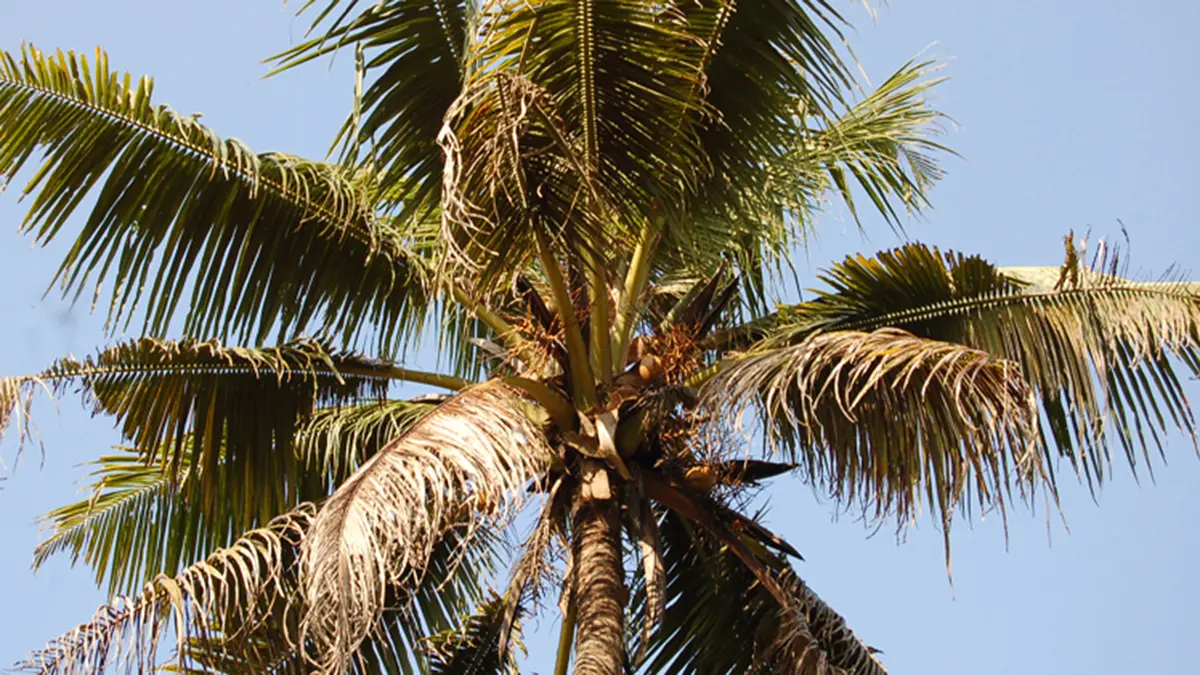
- Visible signs: In affected palms the leaflets lose turgidity and bend downwards, giving the canopy a wilted appearance. Leaves turn yellow, then bronze, and eventually die. Nut size and quality decline, and inflorescences may wither.
- Debilitating but non‑lethal: Unlike lethal yellowing diseases in other palms, root wilt does not kill the tree outright. Instead it severely weakens the palm, reducing nut production by as much as 80 percent.
- Economic losses: Studies estimate that root wilt causes the loss of hundreds of millions of coconut nuts annually, translating into significant income loss for farmers.
Management strategies
- Vector control: Managing sap‑feeding insects using botanical pesticides, sticky traps and natural predators helps slow disease spread.
- Nutrient management: Providing balanced fertilisers and organic manures strengthens palm health, enabling trees to tolerate infection better.
- Replanting and intercropping: Severely affected palms are gradually removed and replaced with tolerant varieties. Intercropping with bananas, tapioca or vegetables provides farmers with alternative income while new palms establish.
- Use of resistant varieties: Agricultural research stations promote cultivars such as Kera Sagara and Chowghat Green Dwarf, which show partial resistance to root wilt.
Conclusion
Root wilt disease remains a chronic challenge for coconut growers. Although it does not kill palms outright, its cumulative impact on yield necessitates integrated management combining vector control, soil health and the gradual replacement of susceptible trees. Awareness campaigns and research on resistant varieties are key to safeguarding the livelihoods of coastal farming communities.
Source: TH