

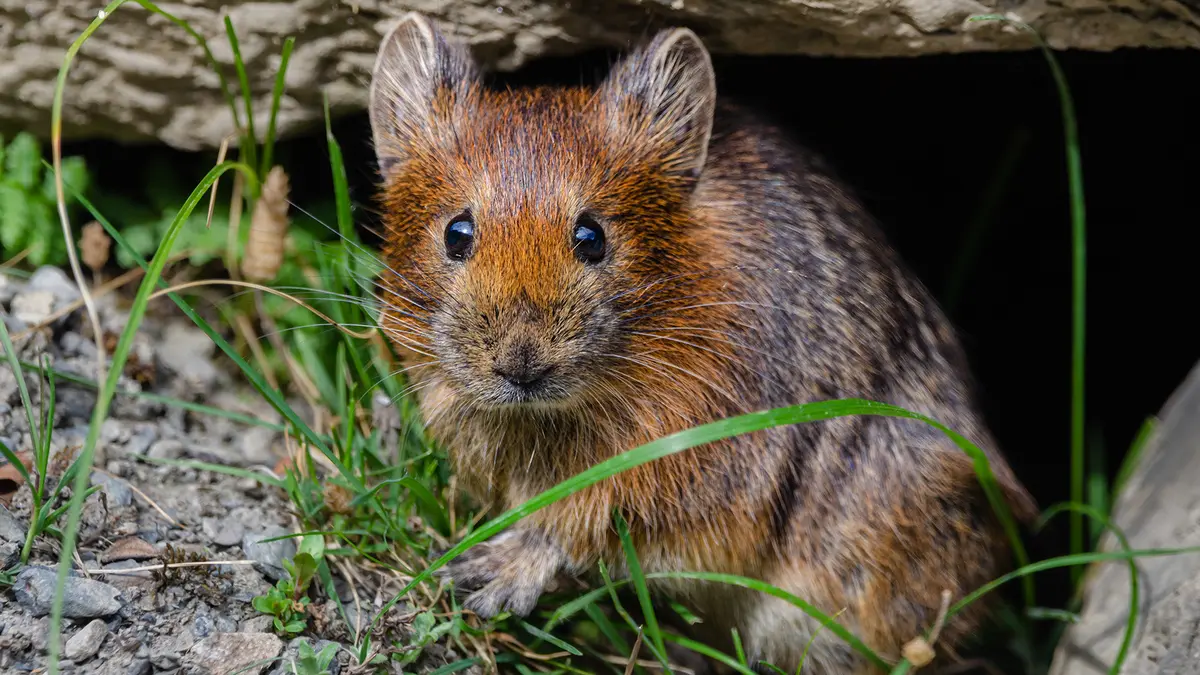
Why in news?
Ecologists have raised concerns that warming temperatures and altered snowfall patterns in the Himalayas threaten the survival of the Royle’s pika, a small mammal that plays a key role in alpine ecosystems. Recent studies predict steep declines in its habitat by mid‑century. This has highlighted the species as an indicator of climate change in India’s mountains.
Background
Royle’s pika (Ochotona roylei) is a rabbit‑like mammal native to the Himalayas. It lives at elevations between 2,400 and 5,000 metres from Pakistan through India to Bhutan. Unlike many cold‑climate animals, it does not hibernate; instead it stores piles of dried grasses and forbs to survive winter. Thick winter snow acts as an insulating blanket for its burrows.
Threats and ecological role
- Climate change: Rising temperatures reduce snow cover and cause earlier snowmelt. Less snow exposes the pikas to cold air, and warmer summers shrink the alpine meadows where their food plants grow.
- Habitat fragmentation: Deep valleys and human development isolate pika populations. Limited gene flow makes them vulnerable to local extinction.
- Ecological importance: Pikas are prey for predators such as foxes, weasels and birds of prey. Their hay piles influence nutrient cycling and plant diversity. Because they are sensitive to temperature, their presence (or absence) signals broader changes in the alpine ecosystem.
Conservation measures
- Monitoring populations: Long‑term surveys help track changes in distribution and abundance across the Himalayas.
- Protecting habitats: Designating alpine meadows as conservation areas limits grazing and human disturbance.
- Climate action: Reducing greenhouse‑gas emissions and promoting sustainable mountain livelihoods can mitigate warming impacts.
Conclusion
The Royle’s pika is a charismatic yet vulnerable inhabitant of the Himalayas. Its decline would ripple through mountain food webs. Protecting this small mammal requires both local habitat management and global efforts to slow climate change.
Sources: Down To Earth