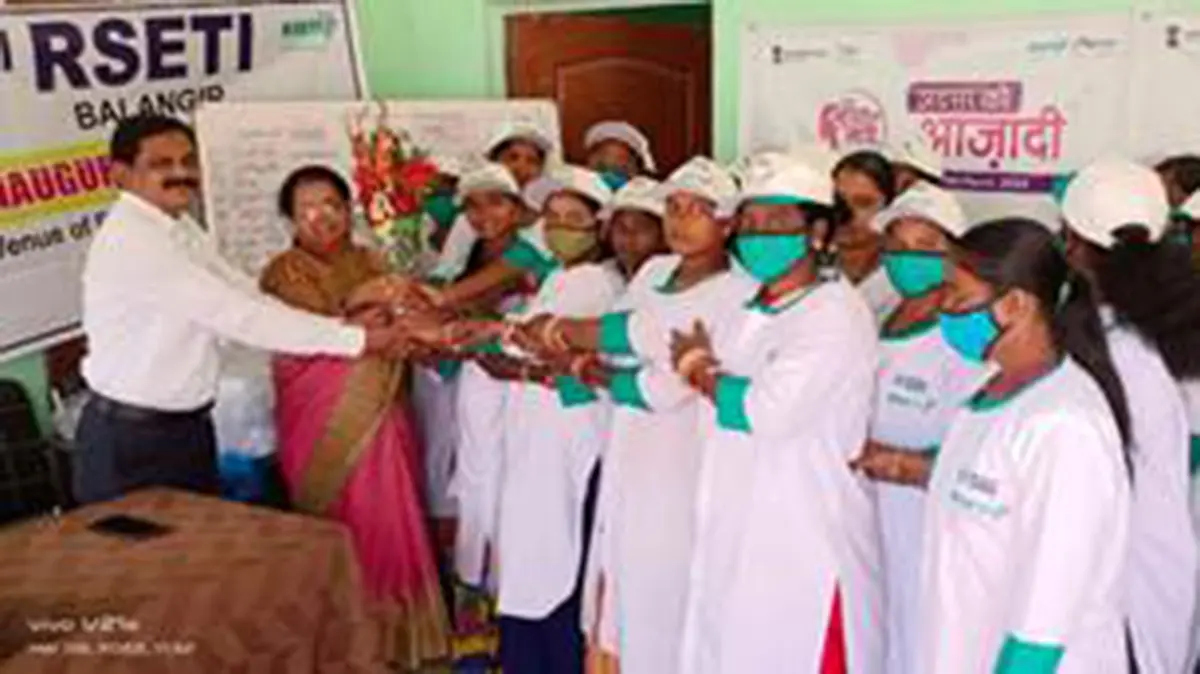
Why in news?
In a recent reply to the Rajya Sabha, the Minister of State for Rural Development highlighted the achievements of Rural Self Employment Training Institutes (RSETIs). Since their inception in 2009, these institutes have trained more than 60 lakh rural youth, with over 43 lakh participants setting up or expanding businesses using credit facilitated by sponsoring banks.
Background
RSETIs are institutional partnerships between banks and state governments that provide free, short‑duration, residential training to unemployed youth aged 18–50 years in rural areas. They draw inspiration from the Rural Development & Self Employment Training Institute (RUDSETI) model launched in the 1980s by Syndicate Bank and Shri Dharmasthala Manjunatheshwara Educational Trust. The RSETI programme was formally launched at the national level in 2009.
Key features include:
- Wide network: As of February 2026 there are 632 RSETIs operating in 619 districts across 33 states and Union Territories, sponsored by 25 banks.
- Diverse courses: The institutes offer 73 courses aligned with the National Skills Qualification Framework (NSQF). Courses cover agriculture (bee‑keeping, dairy farming, mushroom cultivation), manufacturing (tailoring, carpentry, electrical repairs), services (hospitality, beauty care, driving) and entrepreneurship development.
- Credit linkage: After training, participants receive hand‑holding support to prepare business plans and access bank loans. District‑level RSETI Advisory Committees and banking forums monitor credit sanction and ensure follow‑up.
- Adaptability: New‑age modules such as digital services, mobile repair and computer applications have been introduced to match evolving rural markets.
Achievements
- Training numbers: Between 2009 and February 2026, RSETIs trained 60.63 lakh candidates against a target of 60.81 lakh.
- Settlement rate: Approximately 43.89 lakh trainees have become self‑employed or wage‑employed. About 22.52 lakh beneficiaries obtained bank loans to start micro‑enterprises.
- Record performance: The financial year 2024–25 saw the highest training achievement with 6.21 lakh youths trained.
- Monitoring and support: RSETIs use a dedicated Management Information System (MIS) and conduct regular field visits to track the progress of former trainees and intervene when needed.
Significance
- Empowering rural youth: By imparting practical skills and linking trainees to credit, RSETIs foster self‑employment and entrepreneurship, reducing dependence on seasonal farm work.
- Inclusive development: The free residential model ensures participation of women and marginalised groups who may not have access to formal training facilities.
- Economic impact: Small businesses started by RSETI graduates contribute to local economies, generate employment and slow rural–urban migration.
Conclusion
RSETIs demonstrate how skill training coupled with credit linkage can transform rural livelihoods. Continued investment, updated curricula and robust follow‑up will be key to sustaining their success.
Source: Press Information Bureau