

Why in news?
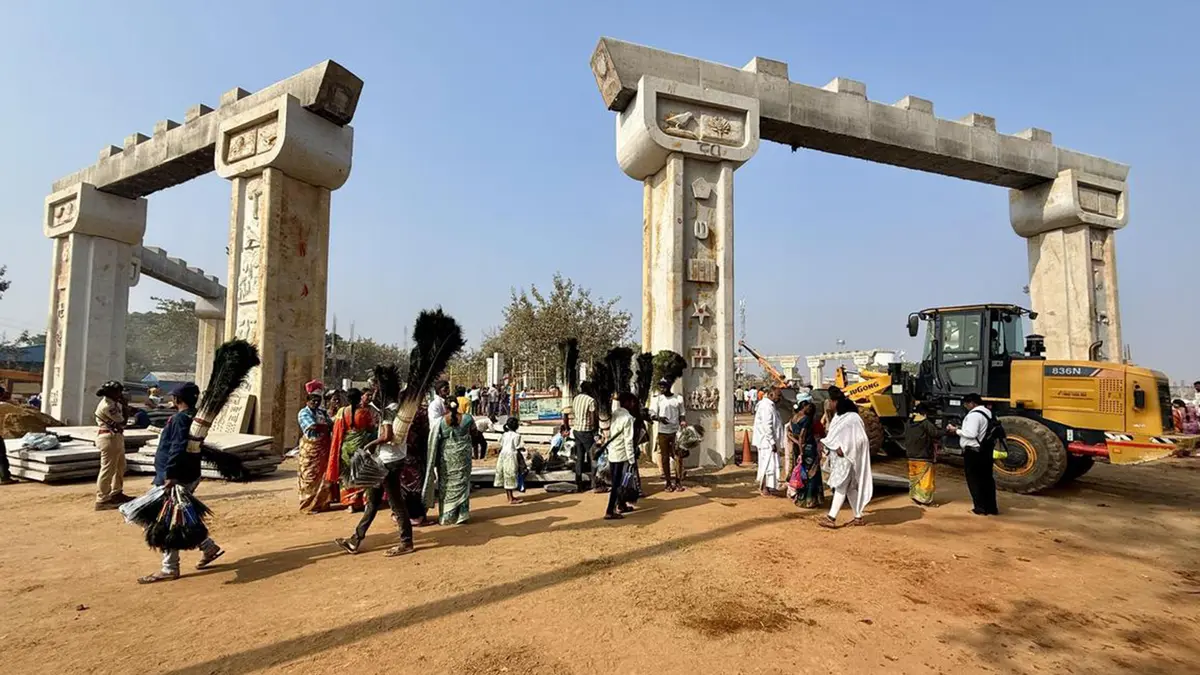
The Telangana government has begun preparations for the Sammakka–Saralamma Jatara, scheduled for 28–31 January 2026. Officials aim to improve infrastructure like roads, water supply and power while preserving the festival’s traditional character. Chief Minister Revanth Reddy has likened the event to the Kumbh Mela and promised smooth conduct.
Background
The Sammakka–Saralamma (also called Medaram) Jatara is held every two years at Medaram village in Telangana’s Mulugu district. It honours Sammakka and her daughter Saralamma (Sarakka), deified tribal women of the Koya community. Legend says that Sammakka, found as an infant under a bamboo bush, married the tribal chief Pagididda Raju. She later led a rebellion against the Kakatiya rulers to protect her people and disappeared into the forest, leaving only her ornaments. Her daughter Saralamma died in the battle. The tribal people believe the goddesses visit Medaram during the Jatara, and they worship them as symbols of courage and motherhood.
Rituals and significance
- Arrival of the deities: During the Jatara, representatives of the Koya tribe bring bamboo caskets containing vermilion and jewellery believed to belong to Sammakka and Saralamma. The caskets are placed on earthen platforms amidst beating drums and dances.
- Offerings: Devotees offer jaggery equal to their body weight, coconuts and animal sacrifices. Bathing in the Jampanna Vagu stream, named after Sammakka’s son, is believed to wash away sins.
- Scale: The Jatara draws millions of people—more than 10 million attended in 2012, making it the second‑largest congregation after the Kumbh Mela. Most visitors are from tribal communities across Telangana, Chhattisgarh and Maharashtra.
- Cultural heritage: The festival celebrates tribal resistance against injustice and the bond between mother and daughter. It has no Vedic or Brahmanical rituals, reflecting the autonomy of indigenous traditions.
2026 preparations
- Infrastructure upgrades: The government is widening approach roads, improving drinking‑water systems and installing additional toilets and lighting.
- Eco‑cultural focus: Officials plan to build sculptures, murals and information kiosks to showcase Koya legends and encourage tourism.
- High‑level coordination: Ministers, local leaders and community elders are involved in planning to maintain the festival’s authenticity.
Conclusion
The Sammakka–Saralamma Jatara is not just a religious gathering; it is a celebration of tribal identity and resistance. As preparations for the 2026 edition gather pace, balancing infrastructure development with respect for tradition will be key to preserving the festival’s unique spirit.
Sources: TH