Why in news?
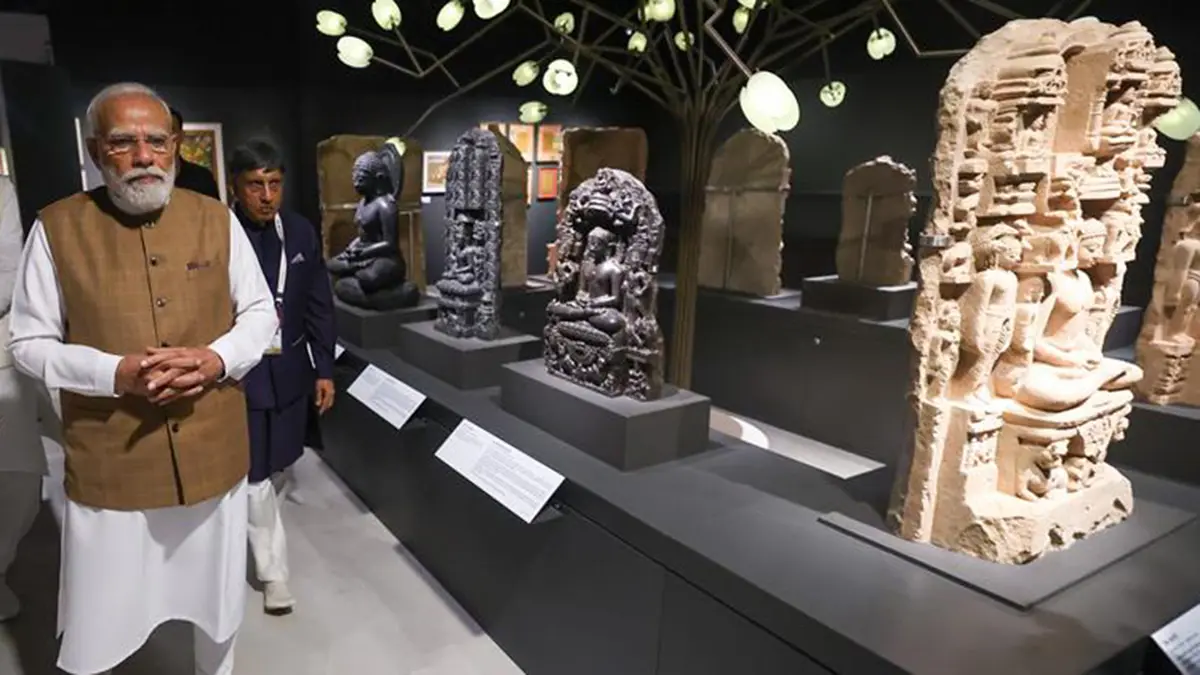
On 31 March 2026, the Prime Minister inaugurated the Samrat Samprati Museum at Koba Tirth in Gujarat. The museum honours the Mauryan ruler’s contribution to the spread of Jainism and non‑violence. The ceremony, held on Mahavir Jayanti, highlighted Samprati’s legacy and India’s rich tradition of religious and cultural diversity.
Background
Samrat Samprati (c. 224 – 215 BCE) was the grandson of Emperor Ashoka and ruled the Mauryan Empire after the short reign of his father Kunala. Historical accounts, particularly from Jain scriptures such as Sampratikatha, Parishistaparva and Prabhavakcharita, portray him as a devout Jain monarch. He converted to Jainism under the guidance of monk Suhastin and is revered as the “Jain Ashoka” for promoting the faith across his realm.
Samprati’s contributions
- Propagation of Jainism: Samprati commissioned thousands of Jain temples, stupas and idols across India, Sri Lanka, Iran and parts of Arabia. He sent monks and scholars to propagate Jain teachings, similar to how Ashoka spread Buddhism.
- Promotion of ahimsa: His rule emphasised non‑violence, truthfulness and generosity. He is credited with banning animal sacrifices and encouraging vegetarianism.
- Cultural integration: By supporting Jainism alongside existing Buddhist and Hindu traditions, Samprati demonstrated the Mauryan dynasty’s tolerance and inclusivity.
Key tenets of Jainism
Jainism is an ancient Indian religion that teaches liberation through the three jewels: right faith (samyak darshana), right knowledge (samyak jnana) and right conduct (samyak charitra). Monks and nuns follow five major vows, known as the Panchamahavratas: ahimsa (non‑violence), satya (truth), asteya (non‑stealing), aparigraha (non‑possessiveness) and brahmacharya (celibacy). Householders follow milder versions of these vows.
Significance of the museum
- Preserving heritage: The Samrat Samprati Museum showcases artefacts, sculptures and interactive exhibits illustrating the emperor’s life and Jain philosophy. It aims to inspire visitors about non‑violence and ethical living.
- Cultural education: The museum’s galleries highlight the Navpad (nine fundamentals of Jainism) and the life stories of the 24 Tirthankaras, promoting awareness of India’s diverse religious traditions.
- Tourism and economy: Located near Ahmedabad, the museum is expected to boost religious tourism and local livelihoods.
Conclusion
Samrat Samprati’s legacy underscores the historical importance of Jainism and the Mauryan Empire’s commitment to religious plurality. The new museum not only honours his contributions but also serves as a reminder that non‑violence and tolerance are enduring Indian values.
Source: The Hindu