

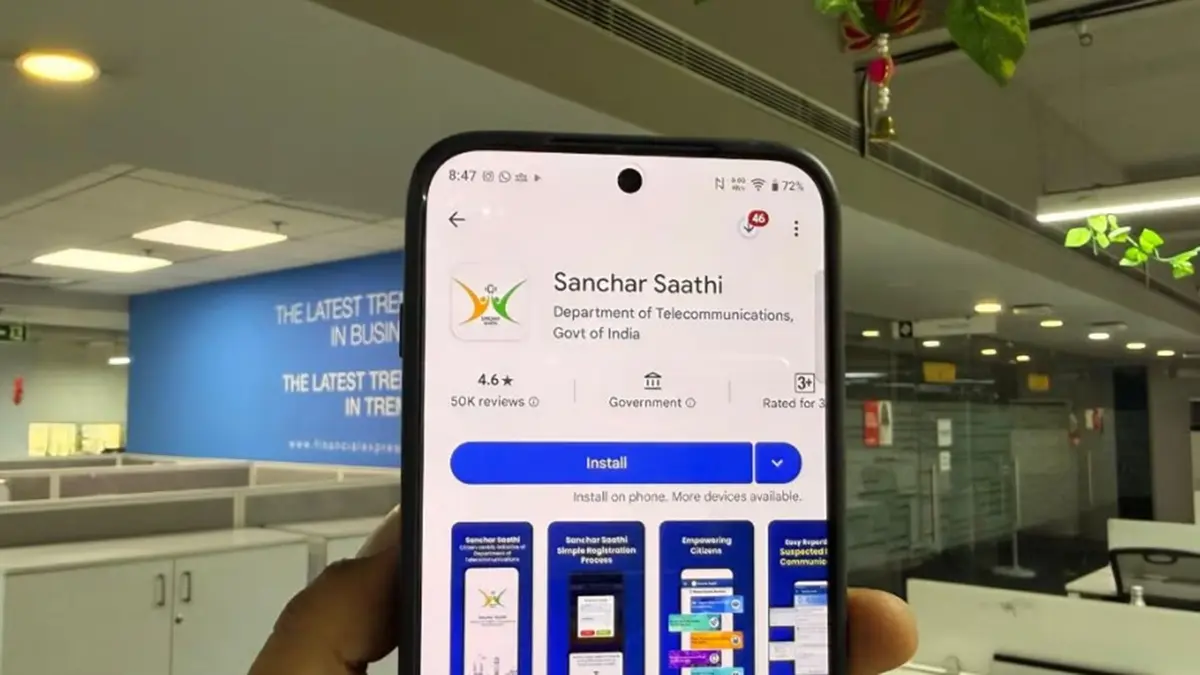
Why in news?
On 28 November 2025, India’s Department of Telecommunications (DoT) privately directed smartphone manufacturers to pre‑install the government’s Sanchar Saathi application on all new devices within 90 days. The directive sparked a public outcry over privacy and user choice. Within days the government withdrew the order, clarifying that installation of the app would remain voluntary. The episode brought renewed attention to the app’s features and to broader questions of digital rights and telecom security.
Background
Sanchar Saathi (literally “communication companion”) is a consumer portal and mobile application developed by the DoT to help people manage their mobile connections and combat fraud. Launched in January 2025, the portal integrates several modules:
- Central Equipment Identity Register (CEIR): Allows users to report lost or stolen phones and block them across all telecom networks by deactivating the device’s International Mobile Equipment Identity (IMEI) number. Blocking prevents criminals from using the handset or changing the SIM.
- Chakshu: A reporting tool for suspected fraud calls, SMS or WhatsApp messages. Users can flag phishing links, suspicious investment offers and other scams. Reports help authorities identify spammers and disable fake connections.
- Telecom Analytics for Fraud Management and Consumer Protection (TAFCOP): Enables people to check how many mobile connections are registered against their name and to request disconnection of unauthorised numbers.
- Know Your Mobile: Verifies whether a phone’s IMEI is genuine and not blacklisted, helping consumers avoid buying counterfeit or stolen devices.
- Local Service Provider Search: Helps users locate authorised internet service providers and obtain contact details for cable and broadband services in their area.
- Verified helplines: Provides a list of authenticated customer care numbers for banks, government agencies and e‑commerce firms, reducing the risk of phishing through fake helplines.
The November 2025 directive and reversal
According to a Reuters report, the DoT’s order required smartphone manufacturers to ship new devices with Sanchar Saathi pre‑installed and non‑removable. Companies were also asked to push the app to devices already in the distribution chain via software updates. Privacy advocates argued that forcing installation without user consent undermined digital rights and set a troubling precedent. Technology firms, including Apple and Samsung, reportedly resisted the directive. On 3 December 2025 the government revoked the order, saying pre‑installation would be optional and emphasising that millions of users were already using the service voluntarily.
Benefits of Sanchar Saathi
- Protecting against phone theft: By blocking stolen devices through the CEIR, the app prevents resale and discourages theft. As of October 2025 the portal had blocked more than 4 million lost devices and helped recover about 2.6 million phones.
- Reducing fraud: The Chakshu module and verified helpline list help users recognise and report fraudulent calls, SMS and investment scams, protecting consumers from cybercrime.
- Improving transparency: TAFCOP allows individuals to see how many SIM cards are linked to their identity and to deactivate unauthorised connections. This reduces misuse of identity documents and ghost SIMs.
- Consumer empowerment: By offering user‑friendly verification and reporting tools, the portal builds digital literacy and confidence in using telecom services.
Conclusion
Sanchar Saathi is a valuable public‑interest platform for safeguarding mobile users against theft and fraud. The controversy over mandatory installation highlights the need to balance security with privacy and user choice. Voluntary adoption, accompanied by public awareness campaigns and continuous improvement of the portal’s features, can help the initiative succeed without infringing individual rights.
Source: FE